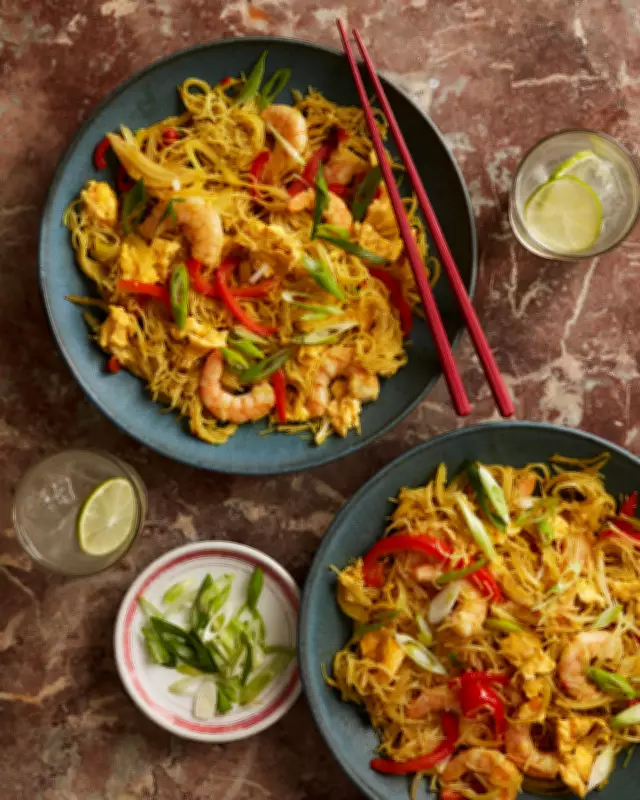
Enrol in the school of wok and elevate your home cooking with Jeremy Pang's sizzling stir-fry recipes. His latest cookbook, School of Wok – Jeremy Pang's Chinese Kitchen, offers simple techniques to master dishes like Singapore noodles and Sichuan chicken, both ready in about half an hour. The key to success lies in understanding wok hei, or the 'wok's air', which refers to the intense heat and skill required for perfect stir-frying.
Singapore Noodles: A Flavour-Packed Classic
Despite its name, Singapore noodles likely draw from various Asian culinary influences, but it's the Singapore vermicelli that gives this dish its identity. The goal is to achieve a dry yet intensely flavourful result. Jeremy Pang emphasises keeping your wok smoking hot throughout the cooking process to maintain that essential sizzle.
Ingredients and Preparation
For two servings, you'll need 100g dried Singapore vermicelli noodles, 2 eggs, half an onion, half a red pepper, 6 large prawns, a handful of beansprouts, vegetable oil, and a spring onion for garnish. The spice paste combines a bird's-eye chilli, light and dark soy sauces, sesame oil, madras curry powder, chilli powder, and salt.

Soak the noodles in hot water for three minutes, then drain and dry on a tea towel. Mix the spice paste ingredients in a small bowl. Build a 'wok clock' on a plate: start with beaten egg at 12 o'clock, followed by onion and red pepper at three, prawns, beansprouts, and noodles at six, and the spice paste at nine.
Cooking Method
Heat a tablespoon of vegetable oil in a wok until smoking. Add the beaten egg, scramble until cooked, then push to the side. Reheat the wok, add onion and red pepper, stir-fry for a minute, then add prawns for 30-60 seconds. Incorporate beansprouts, stir-fry briefly, add noodles, and cook for a minute. Stir in the spice paste until combined, letting the noodles dry slightly. Garnish with spring onion and serve.
Sichuan Chicken: A Spicy Delight
Originating from western China, Sichuan cuisine is influenced by Tibetan and northern Indian ingredients, notably Sichuan peppercorns. These provide a unique numbing sensation, known as ma la, and are widely available in supermarkets.
Ingredients and Preparation
For four servings, use 400g chicken thighs, half an onion, a red pepper, 10 dried red chillies, 2 tsp crushed Sichuan peppercorns, garlic, a bird's-eye chilli, 200g cashew nuts, vegetable oil, and a spring onion garnish. Marinate the chicken with cornflour, sugar, Chinese five-spice, light soy sauce, and sesame oil. Mix the sauce from Shaoxing rice wine, light soy sauce, hoisin sauce, and chilli paste.
Build the wok clock: onion, red pepper, and dried chillies at 12 o'clock; marinated chicken, peppercorns, and garlic at three; bird's-eye chilli and sauce at six; cashew nuts at nine.
Cooking Method
Heat oil in a wok, stir-fry onion, pepper, and dried chillies for 1-2 minutes. Push aside, add more oil, then chicken, cooking for 3-5 minutes until golden. Add peppercorns and garlic, stir-fry for two minutes. Incorporate chilli and sauce, cook until thickened, then add cashews for 30-60 seconds. Garnish with spring onion and serve.
These recipes are adapted from School of Wok – Jeremy Pang's Chinese Kitchen, published by Hamlyn at £25. They showcase how mastering wok hei can transform everyday ingredients into restaurant-quality meals in under 30 minutes.