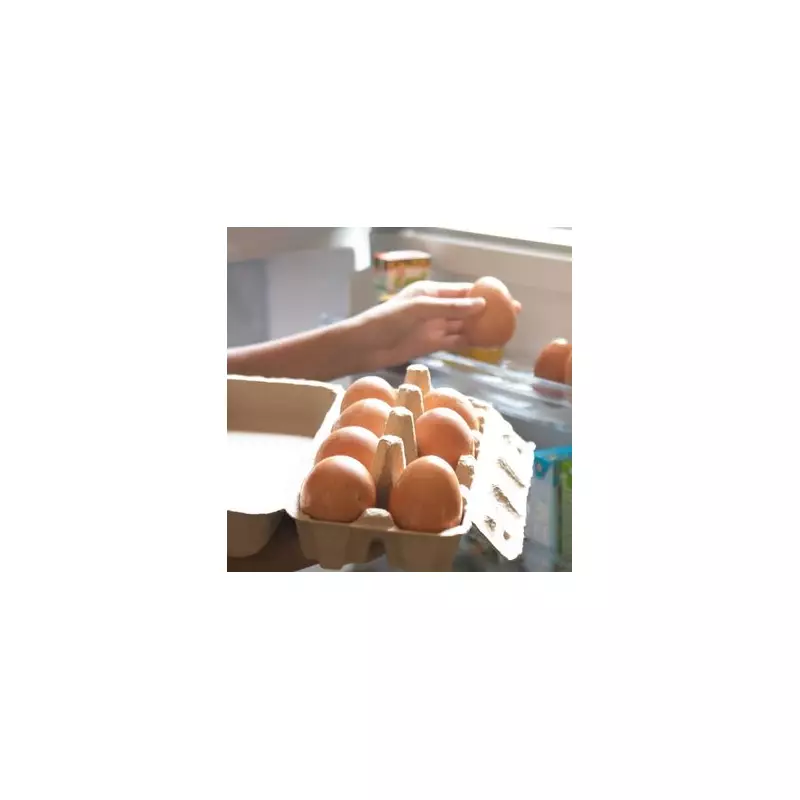
Culinary legend Dame Mary Berry has definitively resolved the perennial kitchen debate about where to store eggs, championing the American practice of refrigeration while issuing a crucial warning about a common storage error that could ruin your eggs.
The Great Egg Storage Debate Settled
For generations, British households have displayed eggs at room temperature on kitchen worktops, a stark contrast to American kitchens where refrigeration is standard. Now, Mary Berry, the revered former star of The Great British Bake Off and author of the esteemed 'Mary Berry's Complete Cookbook', has weighed in with authoritative advice that aligns with transatlantic methods.
Mary Berry's Official Storage Instructions
In her comprehensive cookbook, Mary provides clear, practical guidance: "Store eggs in their box in the refrigerator (away from strong foods so that they do not absorb flavours and odours through their shells.)" She adds an important technique: "If you place them pointed end down, the yolk will remain centered in the white. Always use them by their use-by date."

Why Refrigeration Wins for Freshness
The science behind Mary's recommendation is straightforward. Eggs kept at a consistent, cool temperature of approximately 4°C or lower maintain their freshness for significantly longer periods. While storing eggs at room temperature is acceptable, maintaining a steady, cool environment is paramount for extending shelf life and preserving quality.
The Critical Mistake to Avoid
Mary Berry issues a vital warning that many home cooks overlook: never store eggs in the refrigerator door. This common placement exposes eggs to temperature fluctuations every time the door opens and closes, potentially causing premature spoilage. Instead, she advises placing eggs on an interior shelf where temperatures remain more stable, ensuring maximum freshness.
Expert Support for Refrigeration
Jenna Kelly, a specialist from Essential Food Hygiene UK, reinforces Mary's advice, explaining that refrigeration prevents dangerous temperature variations that can lead to condensation forming on eggshells. This moisture creates an ideal environment for bacterial growth, potentially causing food poisoning. Jenna specifically cautions against door storage, noting that repeated temperature changes can accelerate spoilage and compromise food safety.
Freezing Eggs for Extended Storage
Mary Berry confirms that freezing eggs is perfectly acceptable, with frozen eggs remaining usable for up to six months. However, for optimal quality, she typically recommends using them within four months. In 'Mary Berry's Ultimate Cookbook', she notes: "Shelled raw eggs freeze very successfully, and can be stored for up to six months."
She provides specific freezing instructions:
- For whole eggs: Gently whisk to combine yolk and white
- For savoury dishes: Add a little salt to whole eggs or yolks
- For sweet dishes: Add sugar to whole eggs or yolks
- For egg whites: No additives necessary
For defrosting, Mary recommends thawing at room temperature and confirms that egg-based dishes like quiches, custards, and mousses can also be successfully frozen.
Selecting the Freshest Eggs
Mary Berry offers practical advice for choosing quality eggs at the supermarket. She emphasizes always checking labels carefully and looking for the British Lion mark – a red lion with a crown – which indicates rigorous food safety standards have been met.
She explains that egg labels must specify the farming method, whether:
- Free-range
- Barn
- Caged
- Organic
Mary advocates for ethical choices, advising: "Whenever possible, opt for organic or free-range eggs: not only is this the most ethical choice but the higher welfare standards also produce tastier eggs." Regardless of your selection, she recommends choosing eggs with the longest 'use by' date and carefully checking that none are damaged or cracked before purchase.