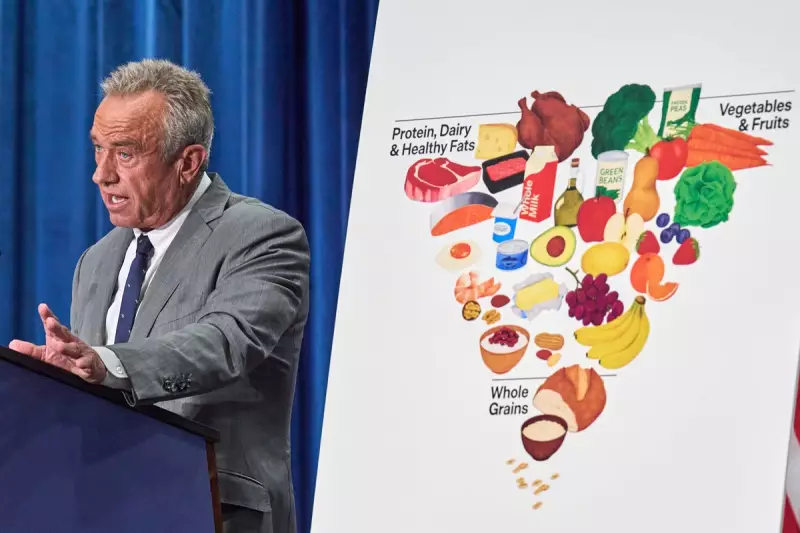
The United States has released a contentious new food pyramid, sparking significant debate among nutrition scientists and public health experts. Unveiled on Monday 19 January 2026, the latest Dietary Guidelines for Americans represent the official advice on what constitutes a healthy diet, but have been met with criticism for their contradictory messaging and a shift away from established science.
A Pyramid of Contradictions
At first glance, the change from the previous plate graphic to an inverted pyramid appears revolutionary. However, a deeper analysis reveals that much of the core advice—such as eating a variety of fruit and vegetables, limiting saturated fat to under 10% of energy, and reducing processed foods—remains similar to the 2020–25 guidelines. The dramatic shift lies in the presentation and new emphases.
The guidelines now actively recommend sources of saturated fat—including meats, full-fat dairy, butter, and beef tallow—as healthy fats. This directly contradicts decades of nutritional science which links saturated fat to increased risk of heart disease and stroke, leading causes of death in the US. Crucially, the advice fails to explain how individuals can consume these foods while still adhering to the 10% saturated fat limit, creating a fundamental mathematical inconsistency.

Questionable Recommendations and Omissions
Further controversy surrounds a near-doubling of protein recommendations, from 0.8g to 1.2–1.6g per kilogram of body weight per day. This increase appears to follow social trends rather than addressing a nutritional deficiency, as most Americans already consume adequate protein. The guidelines also contain baffling contradictions, such as suggesting food be flavoured with salt while simultaneously advising sodium restriction.
Key elements of a healthy diet are notably underplayed. Fibre and fibre-rich foods like pulses and legumes receive scant mention. While there is a heavy emphasis on reducing "highly processed" foods, the term is never clearly defined. Alcohol advice is similarly vague, urging reduced intake without specifying safe limits.
A Flawed Process and Global Implications
Perhaps the most problematic issue is the visual misrepresentation. In the inverted pyramid, wholegrains sit at the narrow bottom, suggesting low consumption, while the accompanying text recommends two to four servings daily. Meats and saturated fats occupy the wide top, implying high intake is advised. As the pyramid is the primary tool for public communication, this disconnect is deeply concerning for public understanding.
The entire guideline development process was overhauled. The US government rejected the usual scientific report from independent experts, instead hiring a new group of scientists who focused narrowly on nutrition science, ignoring broader factors like environmental impact and health equity. This is a stark departure from international trends, where dietary guidelines increasingly adopt a "food systems" approach, considering accessibility, affordability, and sustainability.
The stakes are high, as these guidelines inform government-funded programmes including school meals and military and veteran meals. With their confusing and contradictory advice, they risk impeding, not promoting, the health of millions. Given the questionable recommendations and flawed process, it is unlikely other nations will follow this new American direction in dietary policy.
This analysis is based on reporting by Cathal O'Hara and Gráinne Kent, Postdoctoral Research Fellows at the School of Population Health, RCSI University of Medicine and Health Sciences in Dublin.