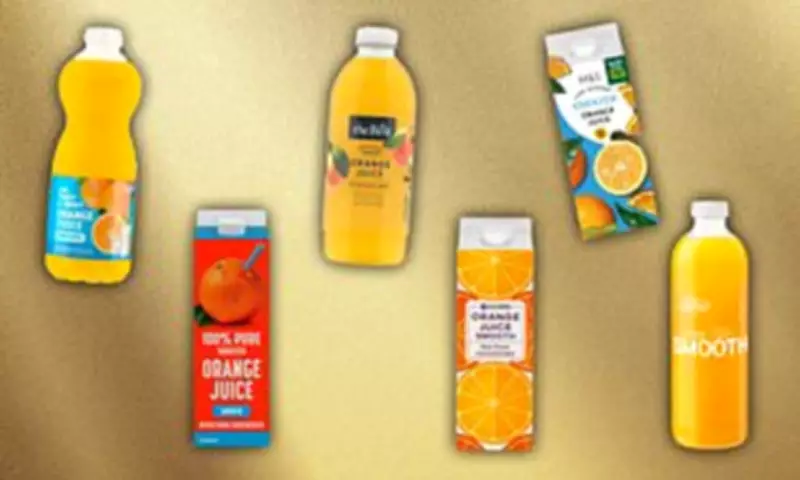
Britons are a nation of breakfast enthusiasts, frequently beginning their day with a bowl of cornflakes, overnight oats, or the classic full English fry-up. For countless individuals, a substantial glass of orange juice completes this morning ritual. Packed with vitamin C, potassium, and antioxidants, the fruity beverage has traditionally been viewed as a wholesome addition to the first meal of the day.
Not All Orange Juices Are Equal
However, a crucial distinction exists that many consumers overlook. Not every carton labelled with 'orange' contains pure fruit juice. Some products are authentically 100 per cent pure fruit juice, while others are categorised as 'juice drinks,' a classification that signifies a markedly different nutritional profile.
According to nutritional therapist Aliza Marogy, founder of the supplements provider Inessa, failing to scrutinise labels can lead to purchasing a drink laden with additives. "You might not realise you're actually buying a drink filled with sweeteners, flavourings, acids, colourings, or juice concentrates that have been heavily processed," she warned in comments to the Daily Mail.

Marogy elaborated on the fundamental difference: "100 per cent orange juice is simply juice extracted from oranges, retaining naturally occurring vitamins and minerals like Vitamin C and potassium. But some brands may offer 'juice drinks' as they are cheaper to produce and have a longer shelf life. Nutritionally, my advice would be to stick to pure orange juice as the healthier choice and always check the label for any added ingredients."
The 'Juice Drink' Landscape in UK Supermarkets
An examination of popular supermarket offerings reveals several products marketed as orange juice drinks. It is important to note that these beverages do not claim to be 'pure orange juice' or '100 per cent orange juice' on their labels. Their ingredients lists typically include orange juice from concentrate (often at 50% or less), water, sweeteners like sucralose, citric acid, flavourings, and added vitamin C.
Examples of such juice drinks include:
- Don Simon Orange Juice Drink (1L): Contains 50% orange juice from concentrate, water, citric acid, sucralose, ascorbic acid, flavouring, and beta-carotene colouring. A spokesperson for producer García-Carrión stated they offer this range to meet consumer demand for such products, alongside their main NFC (not from concentrate) 100% juice range.
- Stamford Street Co. Orange Juice Drink (1L, £1 at Sainsbury’s): Ingredients include 50% orange juice from concentrate, water, citric acid, vitamin C, flavourings, and sucralose. Sainsbury’s highlighted they also sell pure orange juice options.
- Growers Harvest Orange Juice Drink (1L, 95p): Similar formulation with 50% juice from concentrate, water, vitamin C, citric acid, flavourings, and sucralose.
- Iceland Orange Juice Drink (1L, £1.60): Contains a lower 45% orange juice from concentrate, alongside water, citric acid, vitamin C, flavourings, and sucralose.
- Co-op Honest Value Orange Juice Drink (1L, £1.20): Made with 50% orange juice from concentrate, water, citric acid, vitamin C, flavourings, and sucralose. A Co-op spokesperson clarified it is "very clearly labelled as a drink, not a pure juice."
- JUST ESSENTIALS by ASDA Orange Juice Drink (1L, 92p): Features 30% orange juice, water, flavouring, citric acid, sodium citrates, vitamin C, and sucralose.
- Morrisons Savers Orange Juice Drink (1L, 89p): Comprises 50% orange juice from concentrate, water, citric acid, vitamin C, flavourings, and sucralose. Morrisons noted the product makes no claim to be 100% juice and they offer pure alternatives.
Waitrose's Essential Pure Orange Juice (1L, £2) presents a borderline case. Its ingredients list orange juice from concentrate with water, orange concentrate, flavouring, and orange oil. A Waitrose spokesperson praised its customer ratings but distinguished it from their 100% juice ranges.
Authentic 100 Per Cent Orange Juices
For consumers seeking unadulterated fruit juice, numerous options are available across UK retailers. These products contain 100 per cent orange juice with no added sweeteners, flavourings, or colourings.

Notable pure orange juices include:
- Waitrose Smooth Orange Juice (1L, £2.20): Made from 100% squeezed juice, never from concentrate, using twelve globally sourced oranges per bottle.
- Tesco 100% Pure Squeezed Orange Juice (1.75L, £3.25): Composed of juice squeezed from 26 oranges selected at peak ripeness.
- Tropicana Smooth Orange Juice (900ml, £3.15): 100% pure pressed fruit.
- Don Simon Orange Smooth (1L, £2.20): 100% squeezed orange juice, distinct from the brand's juice drink.
- Iceland Smooth Orange Juice (1L, £2.25): Ingredients list simply as 'Orange Juice.'
- Sainsbury's Taste the Difference Freshly Squeezed Smooth Orange Juice (1L, £3.40): 100% freshly squeezed orange juice.
- Morrisons The Best Freshly Squeezed Orange Juice with Bits (1L, £3.40): Contains 100% orange juice.
- ASDA Smooth Orange Juice (1L, £2): Listed as 'Orange Juice.'
- Ocado Orange Juice Smooth Not From Concentrate (1L, £2): 100% orange juice.
- M&S Smooth Orange Juice (1.75L, £3.50): Made from 21 pure squeezed oranges per carton.
- Innocent Pure Orange Juice Smooth (£3.50): Contains the juice of 22 oranges per bottle.
The key takeaway for health-conscious shoppers is vigilance. While 'juice drinks' offer a budget-friendly and longer-lasting alternative, they are nutritionally inferior to pure orange juice. Experts advise carefully reading packaging labels to distinguish between 100% pure juice and processed juice drinks, ensuring your morning vitamin boost comes without unwanted additives.