Plant-Based Muscle: How a Former Footballer Debunks Gym Myths
For decades, the blueprint for building strength in gyms across the United Kingdom has been unwaveringly simple: consume copious amounts of chicken breast, rice, and broccoli. Protein, particularly from animal sources, has been elevated beyond a mere macronutrient to a virtual moral code within fitness circles. The prevailing wisdom suggested that to lift heavy weights, one must eat heavy, preferably animal-based, meals. Jeffrey Boadi, a former semi-professional footballer, once subscribed wholeheartedly to this belief system.
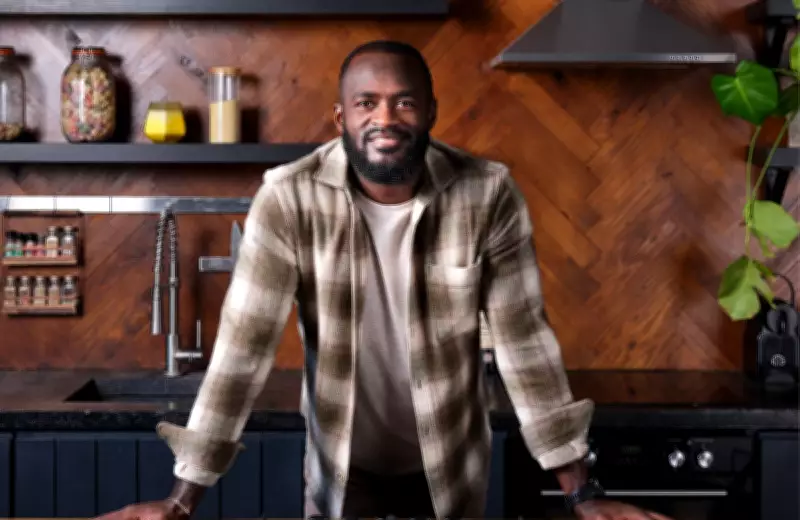
"I had such a visceral reaction," Boadi recalls, describing his initial response when a friend mentioned adopting a plant-based diet while training. "I was like, 'How are you going to do that?! There's no way you could do that. I would wilt away.'" Fast forward eight years, and Boadi is not only thriving but is heavier and stronger, having transitioned entirely to a plant-based lifestyle. His weight has increased from 84kg to 95kg, and he continues to lift regularly, recently publishing a cookbook titled Plant Fuel, which champions high-protein, whole-food plant-based eating.
A Shift in Perspective
Boadi's athletic background lends significant credibility to his message. He played semi-professionally in the UK, trained in the United States with aspirations for Major League Soccer, and later played in Norway and Austria. For him, sport was not a casual hobby but the central axis of his life. His nutritional knowledge at the time was rudimentary yet typical: "The extent of my experience and knowledge of nutrition was meat equalled protein and milk equalled calcium," he admits. Like many athletes, he ate for function, not curiosity, adhering to a simple plate of meat and carbohydrates.

This mindset shifted dramatically in 2017 after his sister recommended the documentary What the Health, which explores the connections between diet and disease. While Boadi now cautions against basing dietary changes solely on a single film, for him, it was a catalyst. He watched it twice in one day and switched to a plant-based diet overnight. The initial weeks brought transformative feelings: "My sleep was amazing. I was sleeping so much deeper. I had more energy. I felt lighter. I felt like I had more mental clarity as well."
Overcoming Early Challenges
The transition was not without its hurdles. Boadi's most significant early mistake was under-eating, a common pitfall when shifting from calorie-dense animal products to plant-based foods. "When you switch to a plant-based diet, you actually have to eat a greater volume of food," he explains, noting that he initially lost a kilo or two. The solution was straightforward: larger portions, better meal structure, and a conscious effort to fill his plate with plants. Today, he focuses on awareness rather than obsessive macro-tracking, knowing, for instance, that a 200-gram block of tofu provides approximately 38 grams of protein, which he complements with quinoa, greens, fats, and fermented foods.
Protein and Recovery: The Real Story
Scepticism around plant-based muscle building often centres on protein adequacy. Boadi addresses this directly: "It's not so much about the source of it. Yes, we need protein to build strength, to recover, to be well, etc, but you can get that from plant-based food." His diet relies on staples like tofu, tempeh, lentils, beans, edamame, hemp seeds, and seitan, not as mere substitutes but as foundational ingredients. He highlights edamame's impressive protein content of about 13 grams per cup and notes that soy is well-absorbed and high in protein quality. Seitan, with its origins in sixth-century China, offers upwards of 25 grams of protein per 100-gram serving.

However, Boadi emphasises that muscle building extends beyond protein alone; recovery is the critical, often overlooked component. "When [studies] compare an omnivorous diet to a vegan diet over 12 weeks, there is no significant difference in muscle strength and muscle mass," he states. The real advantage, in his view, lies in how a plant-based diet manages training stress. "One of the biggest factors wasn't even the protein side of things ... it was actually the increase in really antioxidant-rich foods." Berries, leafy greens, sweet potatoes, and colourful vegetables help reduce inflammation and oxidative stress, aiding muscle recovery. He cites research on blueberries, which are shown to lower inflammation and restore muscle strength post-training.
The Role of Fibre and Long-Term Health
Fibre, largely ignored in traditional gym culture, plays a pivotal role in Boadi's approach. He frames it as a recovery amplifier, noting that low fibre intake can contribute to low-grade inflammation. Certain fibres, like pectin from stewed fruits, are fermented by gut bacteria to produce short-chain fatty acids such as butyrate, which "helps to reduce inflammation and improve the integrity of the gut lining." This, in turn, enables consistent training without burnout. "Being able to recover well is one of the best things in terms of being able to increase your training load and not have to miss out on training or feel fatigued," he explains.
Boadi is pragmatic about veganism, critical of the surge in ultra-processed vegan products that followed its peak popularity in 2019-2020. "I would put stock in the long-term health outcomes of a health-conscious omnivore versus a junk food vegan. For me, there's no comparison," he asserts. He points out that 95% of people fail to meet the recommended 30 grams of daily fibre, underscoring that the focus should be on consuming vegetables, beans, whole grains, and fruits, regardless of meat consumption.
Cultural Insights and Future Goals
Boadi's Ghanaian heritage has facilitated his dietary transition, as many traditional Ghanaian dishes are inherently plant-rich. Staples like yams, waakye (rice with black-eyed beans), hausa koko (fermented millet porridge), and plantain make it "quite easy to be vegan," he says. He also challenges the gendered association of meat with masculinity, questioning its relevance to being a man, which he defines through family, citizenship, and decency.
Today, Boadi's focus has shifted from peak gym numbers to sustainable strength for life. "I'm just trying to be healthy for life," he shares. "You know, get to my 60s, 70s, be able to feel good, be able to run around with my grandkids. I've reduced my risk of disease now and for the future." He advocates for a flexible approach, suggesting that being 90% plant-based is still a significant achievement. His overarching message is clear: building muscle and maintaining strength do not require animal products; they demand a reevaluation of what truly fuels the body, emphasising whole foods, adequate protein, and optimal recovery.