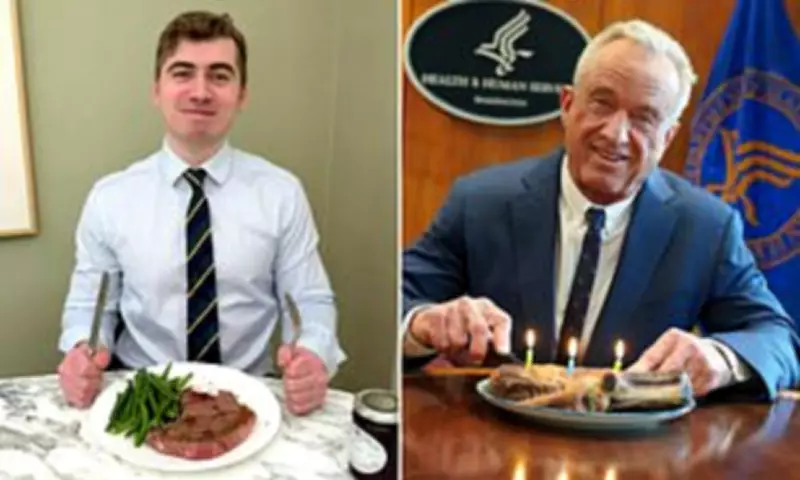
Testing RFK Jr's Carnivore Regime: A Three-Day Dietary Experiment
The idea struck during a punishing treadmill session, heart pounding and sweat dripping, as I pushed to a new personal best. Having just completed three days of eating precisely like Health and Human Services Secretary Robert F Kennedy Jr, I felt an unusual, fiery vitality. While many political diets inspire bafflement—consider President Donald Trump's fondness for Diet Coke and McDonald's—the HHS secretary's approach might contain genuine merit.
The RFK Jr Blueprint: Meat, Fasting, and Discipline
RFK Jr, who celebrated his 72nd birthday this month, adheres to a carnivore-leaning dietary framework. It centres on meat, whole foods, vegetables, and the occasional processed treat like bacon. A cornerstone is intermittent fasting, restricting eating to a window between noon and 7 pm. Scientific opinion on this practice is divided; some studies link it to weight loss, enhanced mental clarity, and reduced disease risk, while others warn of potential nutritional shortfalls, dehydration, and cardiac issues.
As a journalist accustomed to testing rigorous diet and exercise routines, I embarked on this plan to understand the mindset of America's top health official. Initially planned for a week, the experiment was curtailed to 72 hours due to significant cost—approximately $100 for just three days of food. Yet, even within this short period, I noticed pronounced effects: increased energy, sharpened focus, and a curiosity about the long-term impact on my younger, though not particularly athletic, physique.

A Day on the Plate: From Morning Hunger to Evening Steak
The regimen began with its greatest challenge: skipping breakfast. Multiple reports confirm RFK Jr consumes nothing until noon. As a devoted breakfast eater, this left me with intense stomach cramps. Following the secretary's lead, I attempted to subdue the hunger with his beverage of choice, black tea.
When the clock finally struck 12 pm, I voraciously consumed his 'breakfast'—a meal of bacon, four scrambled eggs, and more black tea. Delicious? Certainly, though whether due to culinary excellence or sheer starvation was debatable. Nutritionally, this meal provides roughly 400 calories and 32 grams of fat, about one-third of the FDA's recommended daily fat intake for a standard 2,300-calorie diet.
The afternoon involved grazing on snacks: three-quarters of a cup each of pistachios and peanuts, plus several dried mango slices. I consumed these post-breakfast, finding the peanuts unappealing but the mango satisfying a sweet craving. However, just nine mango slices contain an estimated 27 grams of natural sugar, equivalent to half the FDA's daily recommendation and matching the sugar in a Red Bull energy drink.
Lunch is conspicuously absent from the schedule. Dinner, taken just before 7 pm, consists of a 12-ounce rare ribeye steak cooked in beef tallow (rendered cow fat), accompanied by green beans and asparagus—reportedly without sauces or seasoning. Logistically, eating by 7 pm proved impossible with my work schedule, so I dined around 8 pm. Culinarily, I diverged from the secretary: I seasoned my steak with Montreal Steak seasoning and added redcurrant jelly, a British condiment, while substituting olive oil for the beef tallow due to fat concerns.
Physical and Mental Effects: Clarity, Thirst, and Productivity
The first day concluded with unexpected satisfaction—no desire for extra snacks—and remarkable mental clarity. Instead of lounging before Netflix, I worked on an article, vacuumed energetically, read rapidly, and even found time to call my mother. Scientists suggest this steady energy may stem from the diet's slow-release fuels, contrasting with the refined carbohydrates in standard American diets that cause sharp energy spikes and crashes.
This pattern of morning hunger followed by sustained energy and focus continued over the next two days, with identical meals each day. Work productivity improved, and my weightlifting performance remained unaffected despite the fasted mornings.

However, by mid-morning on day two, an intense, unquenchable thirst emerged, unresolved by copious black tea or water. This likely resulted from high salt intake. While RFK Jr's plan contains about 1,200 milligrams of salt, my added steak seasoning contributed an extra 1,000 milligrams per teaspoon, potentially exceeding the FDA's 2,300-milligram daily limit.
Nutritional Analysis and Medical Perspectives
My daily intake on this diet averaged 2,700 calories, surpassing the standard recommendations of 2,500 for men and 2,000 for women. It also included 150 grams of protein (well above the 69 grams advised for my weight) and 201 grams of fat, significantly exceeding daily guidelines.
Medical professionals caution that high-fat diets elevate risks for stroke, heart disease, obesity, and type 2 diabetes. Saturated fat from beef is a particular concern, as it may accelerate plaque buildup in blood vessels. Conversely, carnivore diet advocates argue it aids weight loss, improves insulin sensitivity, and reduces inflammation, potentially lowering heart risks.
The Cost of Eating Like a Cabinet Secretary
Financial accessibility is a major hurdle. A standard ribeye in Manhattan costs nearly $20, with premium cuts exceeding $40 per steak. This is feasible on a health secretary's $250,000 annual salary but challenging for the average American.
Despite drawbacks like cost, thirst, and dietary deviations, the experience was invigorating and educational. I gained insights into my body's responses and would consider repeating the experiment—though not immediately. RFK Jr's approach, while controversial, offers a provocative case study in how dietary extremes can influence energy and mindset, sparking broader conversations about nutrition, policy, and personal health.