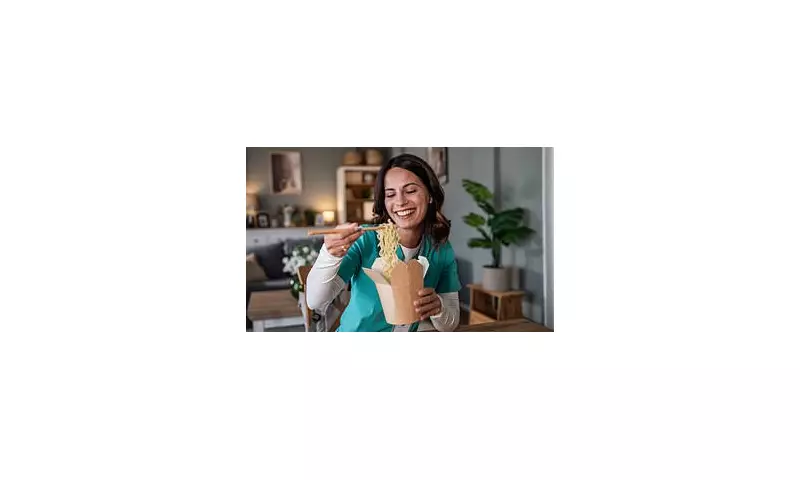
After enduring a demanding day at the office, many individuals instinctively reach for a generous glass of wine, draw a steaming bath, or unwrap a favourite chocolate bar. However, groundbreaking research from Anglia Ruskin University proposes a more compelling alternative for emotional restoration. Their latest study indicates that ordering a takeaway meal stands as the most potent method to elevate your spirits following a difficult day at work.
The Dual Appeal of Takeaway Indulgence
Remarkably, the investigation also discovered that a takeaway serves as the premier choice for commemorating a positive and successful workday. This dual functionality highlights its unique position in contemporary self-care rituals.
'The widespread popularity of takeaway food likely mirrors a twofold advantage,' elaborated Dr. Suzanna Forwood, the study's lead author. 'A takeaway merges the luxury of a desired meal with the elimination of the daily obligation to prepare and cook dinner. For numerous people, that combination may feel exceptionally attractive after either a triumphant or a taxing day at work.'

Investigating Self-Gifting Behaviours
The research team embarked on this project to comprehend how individuals elect to reward or comfort themselves in response to daily highs and lows. 'We understand that we are driven to self-gift either to celebrate our achievements or as therapeutic consolation following disappointments,' Dr. Forwood clarified.
'Grasping these behaviours is crucial, especially from a public health viewpoint, as managing our mental wellbeing on a daily basis constitutes a vital component of living a fulfilling life.'
Self-gifting can encompass a broad spectrum of activities, ranging from consuming food and beverages to engaging in sensory experiences like bathing, reading, or listening to music, or participating in exercise and sports. 'While all these activities can address our emotional requirements, they exert varied impacts on our health and physical wellbeing.'
Methodology and Participant Insights
The study involved 280 participants who were randomly assigned to visualise either a good, bad, or average day at their workplace. Subsequently, they were asked which of five self-gifting options they would most probably select. The five choices presented were: an alcoholic drink, a takeaway meal, a chocolate bar, a bubble bath, or an online shopping spree.
The findings demonstrated that participants imagining a bad workday were substantially more inclined to pamper themselves with a takeaway, an alcoholic beverage, a bubble bath, or a chocolate bar, compared to those visualising an average day.
However, a takeaway meal emerged as the sole treat that satisfied participants who envisioned both a good day and a bad day at work. Additionally, the researchers noted that online shopping is no longer perceived as a special indulgence, with individuals equally likely to select this option following an ordinary day.
Balancing Emotional and Physical Health
'Although our research examined only five specific behaviours, in reality everyone possesses personal preferences, and it is feasible to choose something beneficial for both your physical health and your mental health,' Dr. Forwood supplemented.
Before interpreting these results as a carte blanche to order a takeaway tonight, the researchers emphasise that this option is not invariably the optimal decision. 'Some choices in our study offer evident advantages for self-care, but others entail health risks,' Dr. Forwood concluded.
'Consuming takeaways, chocolate bars, and alcoholic drinks amplifies our intake of calories, sugar, salt, and alcohol – all elements that contribute to health challenges.'
Alternative Techniques for Soothing Nerves
Whether it's the anticipation of delivering a presentation at a crucial office meeting or the irritation of being stuck in traffic, stress has become an unavoidable aspect of daily existence. A straightforward breathing technique could assist in calming nerves within seconds by deceiving the body into believing it is relaxed.

A YouTube video entitled 'Mind Hack: Combat Anxiety with This Breathing Technique' explains how individuals can tranquillise themselves simply through a few inhalations and exhalations. In it, Jane McGonigal, bestselling author of SuperBetter and a video game designer, describes how the 'power breath' can help people attain a relaxed state akin to sleep.
While the benefits of deep breaths have been extensively documented, she contends that the ultimate strategy involves not merely how you breathe in but equally how you breathe out. The method adheres to one simple principle: exhale for double the duration you inhale.
Simply put, if you inhale and count to four seconds, you should then gradually exhale and count to eight seconds as you do so. This initiates a shift in the nervous system from 'sympathetic' mode – associated with fight or flight – to 'parasympathetic' – or 'rest and digest' mode.
If someone is particularly stressed or anxious, she recommends they inhale for two seconds and exhale for four seconds, then progressively increase this to inhaling for eight seconds and exhaling for sixteen seconds after some practice.