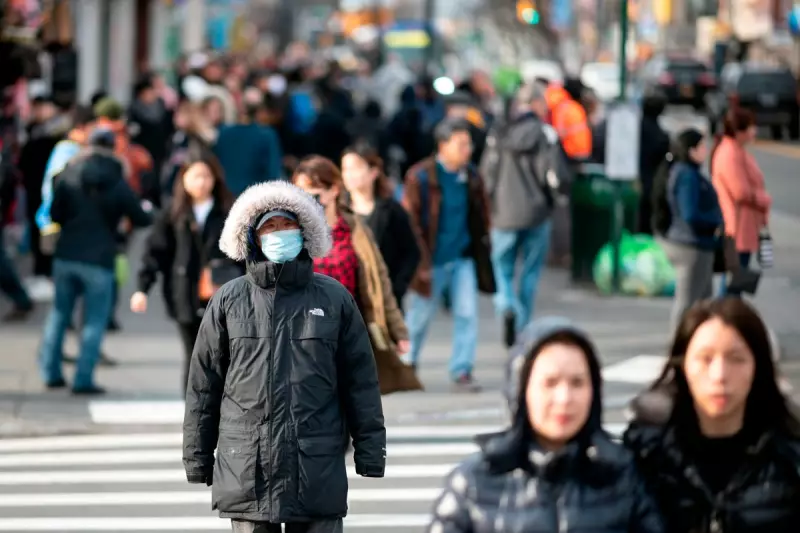
A new and highly contagious strain of influenza is fuelling a severe flu season across North America, with cases surging to record levels in parts of the United States and Canada.
Record-Breaking Surge Driven by New Variant
After a sharp increase began in mid-December 2025, flu activity remains alarmingly high. Data from the U.S. Centers for Disease Control and Prevention (CDC) indicates that while cases are starting to trend downward in Canada as of 9 January 2026, the season has not yet peaked in the U.S.
Emergency departments are reporting a dramatic explosion in cases. New York state recorded its highest number of weekly flu cases on record in early January, with states like Colorado also experiencing unprecedented levels. The CDC reports that 44 out of 55 states and jurisdictions are currently reporting high or very high flu activity.

This spike, widely termed a "superflu" in media reports, is largely attributed to a newly identified subtype: influenza subclade K. This variant, a subtype of H3N2, was first detected in Australia in July 2025 and is now responsible for 91.5% of infections in the U.S. this season, as well as the peak in Canada.
Why This Season is Hitting Children Harder
This flu season is notable for its severe impact on children, a shift from traditional patterns where the elderly and those with underlying conditions face the greatest danger. Pediatricians report children arriving at emergency rooms with high fevers exceeding 104 degrees Fahrenheit lasting 5-7 days, and complications including febrile seizures, croup, and severe dehydration.
The CDC confirms an especially high number of pediatric hospitalisations. As of 9 January, there have been 17 pediatric flu deaths in the 2025-2026 season. This follows the deadliest year on record for children in 2024-2025, when flu caused 289 pediatric deaths.
Nationally, the CDC estimates that this flu season has already resulted in 15 million illnesses, 180,000 hospitalisations, and 7,400 deaths as of 15 January.
Vaccination and Prevention Remain Crucial
Experts strongly recommend flu vaccination, despite the fact that the strains chosen for the 2025-2026 flu vaccine were not a perfect match for the dominant subclade K. Evidence suggests the vaccine still provides valuable protection, reducing the risk of serious illness, hospitalisation, and death.
For those still unvaccinated, the advice is to act immediately. It takes about two weeks for the vaccine to offer maximal protection, so a mid-January shot would provide peak coverage in late January and early February, while the season is still active.
In terms of managing illness, many medical professionals, including emergency room doctors, find at-home flu tests of limited use for most people. The treatment advice for flu-like symptoms—whether from influenza, RSV, or COVID-19—is largely the same: rest, hydration, and monitoring. Antiviral therapies like Tamiflu are rarely recommended in emergency settings due to limited effectiveness and side effects, though they may be considered for high-risk individuals.
The key public health message emphasises basic precautions due to subclade K's apparent high contagiousness:
- Frequent hand washing.
- Staying home if unwell, especially with a fever, until fever-free for 24 hours.
While this season has not coincided with major RSV or COVID-19 surges, the sheer infectiousness of the new subclade K variant underscores the importance of these measures to protect individuals and the wider community.