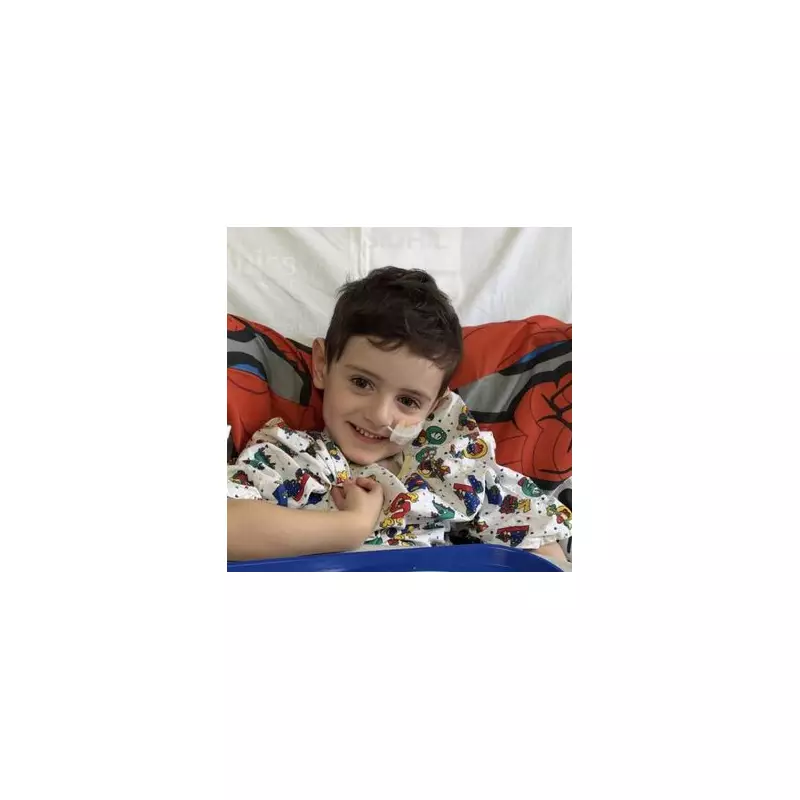
A mother from Coventry has shared the shocking story of her four-year-old son's battle with a rare disease more commonly associated with Victorian slums, after his symptoms were initially dismissed as attention-seeking behaviour.
'He was doing it for attention': A mother's dismissed concerns
Megan West first noticed her son Elliot developing an unusual way of walking in December 2024. The little boy from Coventry, West Midlands, began walking with his feet splayed out to the sides, swinging his hips and flaring his arms.
Concerned, Megan took Elliot to their GP on multiple occasions over the following months. She reported not just the "weird" gait, but also significant weight loss where "you could see his bones", and a worrying lack of strength in his legs.

"I took him to the GP so many times," Megan explained. Medical professionals repeatedly suggested Elliot was suffering from viral infections. On one visit, a doctor told Megan her son was "neurologically intact" and proposed that the strange walking might be a ploy for attention because he had a new baby sister.
The terrifying diagnosis: Spinal Tuberculosis
It wasn't until June 2025 that the true, alarming cause was discovered. After Elliot began saying "my legs don't work", Megan took him to A&E where an X-ray revealed the devastating truth.
Elliot was suffering from spinal tuberculosis, a bacterial infection affecting the bones in the spine. The X-ray also showed calcified lymph nodes in his lungs, indicating a previous TB infection there.
This disease, once rampant in the crowded, poorly ventilated slums of the Victorian era, is now exceptionally rare in developed countries like the UK. The diagnosis meant Elliot faced the risk of his spine collapsing and required immediate, intensive treatment.
Recovery and a warning to other parents
Elliot's treatment involved major surgery and a powerful, lengthy course of antibiotics. His recovery is ongoing, and he remains restricted to walking short distances, spending most of his time at home. He faces the possibility of another surgery within six months if the TB mass on his spine hasn't shrunk sufficiently.
Despite the ordeal and the initial missed diagnosis, Megan says she does not blame the GP, acknowledging that TB is notoriously difficult to diagnose in children. However, she urges other parents to trust their instincts.
"Listen to your child and push when you don't feel things are right," she advised. "No one knows their child better than yourself... Kids don't fake things for too long for attention."
Megan's key message is one of vigilance: she wishes medics had looked at the "bigger picture" with Elliot's history of symptoms, but is now focused on her son's recovery, thankful he is "on the right path".