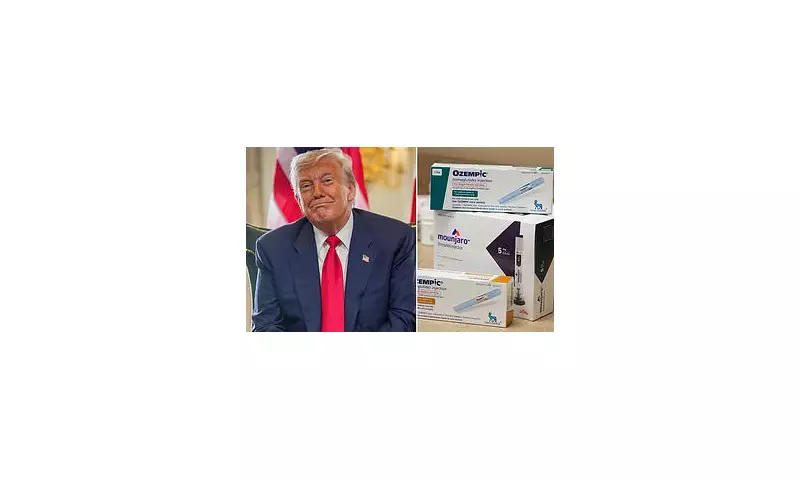
The financial burden of Scotland's fight against obesity has escalated to an unprecedented level, with a significant portion of the surge attributed to policies enacted by former US President Donald Trump. Newly disclosed data reveals that the Scottish National Health Service is now allocating close to £3 million every month to provide weight-loss injections to patients across the country.
Soaring Demand and Spiralling Costs
Since these pharmaceutical treatments became accessible via prescription approximately one year ago, there has been a dramatic increase in demand. Overweight individuals in Scotland are increasingly seeking medical assistance to manage their weight, leading to a substantial rise in the number of prescriptions issued.
Official prescribing statistics indicate that in September alone, nearly 20,000 pre-filled injections of medications such as Mounjaro, Ozempic, and Wegovy were dispensed to patients. However, the financial impact on the Scottish health service during that month was disproportionately severe, not merely due to heightened demand but also because of a contentious international pricing shift.

The Trump Effect on Pharmaceutical Pricing
The cost escalation is directly linked to a so-called 'America First' policy implemented during Donald Trump's presidency. This directive compelled American pharmaceutical companies to prioritise selling their drugs to US citizens and healthcare providers at the lowest available prices.
As a direct consequence, at the beginning of September, the manufacturer of Mounjaro, Eli Lilly, which had previously offered the drug at a lower cost in the United Kingdom compared to the United States, significantly increased its UK prices. This adjustment had an immediate and profound effect on the budget of Scotland's NHS.
Detailed analysis demonstrates that overnight, the average expense for the NHS to prescribe a single Mounjaro injection more than doubled, skyrocketing from approximately £99 to £215 per dose.
Government Response and Medical Justification
In response to the crisis, the Scottish Government has confirmed that it has urgently requested UK ministers to intervene and strive to maintain drug prices at the lowest feasible level. A government spokesperson emphasised that protecting the NHS in Scotland remains a non-negotiable priority in any ongoing or future trade negotiations between the UK and the US.
Concurrently, medical professionals continue to advocate for the use of these weight-loss injections, asserting their critical role in combating obesity. Dr Naveed Sattar, a professor of metabolic medicine at the University of Glasgow, provided a robust defence of the treatments.
"These medications do far more than assist patients with weight loss," Dr Sattar explained. "They substantially lower the risks of developing serious conditions including kidney disease, heart failure, heart attacks, sleep apnoea, liver diseases, and chronic issues like knee pain and fatigue. Investing in these prescriptions represents money spent wisely on long-term health outcomes."
A Year of Escalating Expenditure
The Scottish NHS initiated its programme to offer weight-loss drugs on prescription last year, targeting patients with severe obesity who also suffer from additional weight-related health complications. The subsequent prescribing data paints a clear picture of rapidly growing demand and associated costs.
- In January of the previous year, 8,207 injections were prescribed at a cost of £692,000 to the NHS.
- By August, the monthly prescription count had nearly doubled to 15,648, with costs rising to £1.4 million.
- The situation reached a new peak in September, with prescriptions hitting 18,251 and the monthly cost ballooning disproportionately to £2.71 million.
Mounjaro has emerged as the most frequently prescribed weight-loss injection in Scotland. It is noteworthy that Ozempic and Wegovy, produced by a Danish pharmaceutical firm, were not affected by the US-driven price increase, highlighting the specific impact of American policy on one key drug.

The financial shift is starkly illustrated by the figures for Mounjaro. In August, the Scottish NHS prescribed 7,460 doses at a total cost of £746,110, averaging £100 per injection. Merely one month later, in September, 9,505 doses were prescribed at a staggering total cost of £2,046,000, pushing the average cost per dose to £215.
This dramatic price hike underscores the vulnerability of national health budgets to international trade policies and corporate pricing strategies, presenting a significant challenge for healthcare providers striving to manage public health crises like obesity.