A catastrophic fire has left Hong Kong in mourning after flames tore through a residential complex in the suburb of Tai Po, claiming the lives of at least 128 people in one of the city's deadliest ever blazes.
A Community in Mourning
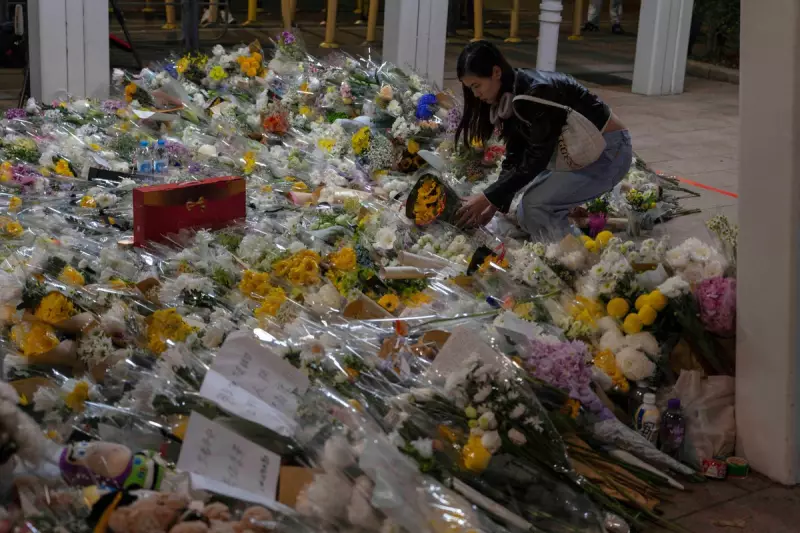
On Sunday, a steady stream of grieving residents arrived at a makeshift memorial outside the blackened Wang Fuk Court complex. They laid bouquets of white roses, carnations, and lilies, bowing towards the scene and offering short prayers. Handwritten notes were left amongst the flowers as the city united in an outpouring of sympathy and support for the victims.
The fire began on Wednesday afternoon and was not fully extinguished until Friday morning, a gruelling 40-hour operation that required more than 2,000 firefighters. The eight-building complex, home to over 4,600 residents in nearly 2,000 apartments, was undergoing renovations at the time. The structures were shrouded in bamboo scaffolding draped with nylon netting, and windows were covered with polystyrene panels, factors now under intense scrutiny.

Investigation and Immediate Fallout
Preliminary investigations indicate the fire started on the scaffolding netting on a lower level of one building. It then spread with terrifying speed inside as the highly flammable foam panels caught fire and windows blew out. Strong winds helped the flames leap from building to building, soon engulfing seven of the eight 31-storey towers.
In response, Hong Kong officials announced the immediate suspension of work on 28 building projects managed by the main contractor, Prestige Construction & Engineering Company (PC&E). A government statement cited a "lack of confidence" in the company's ability to ensure site safety, pointing to "serious deficiencies" and the "extensive use of foam boards" as key concerns.
The legal repercussions began swiftly. The day after the fire broke out, three men—directors and an engineering consultant from a construction company—were arrested on suspicion of manslaughter. Police suspected company leaders of gross negligence. Subsequently, Hong Kong's anti-corruption authorities re-arrested these three and detained a further eight suspects, including scaffolding subcontractors and renovation project managers.
Systemic Failures and National Response
First responders discovered that some fire alarms within the complex, which housed many elderly residents, failed to sound when tested. This has raised serious questions about the overall fire safety standards in the ageing building, which was constructed in the 1980s.
The tragedy has triggered a response that extends far beyond Hong Kong. In Beijing, the Ministry of Emergency Management announced a nationwide inspection of high-rise buildings to identify and remove fire hazards. The inspection will focus on bamboo scaffolding, non-flame-retardant safety nets, and critical firefighting equipment like hydrant and alarm systems.
Authorities confirmed on Saturday that 44 of the 128 recovered bodies still needed to be formally identified, with approximately 150 people remaining unaccounted for. The international community has also been affected; the dead include two Indonesian migrant workers and one Filipino domestic helper, whose government praised her "innumerable sacrifices" to provide a better life for her family.
Survivors of the blaze, many of whom have lost everything, are currently being housed in short-term emergency shelters and city hotels as authorities work on longer-term housing solutions.