Accidental Discovery Uncovers Bedbugs' Hidden Fear of Water
A serendipitous laboratory mishap has led to a groundbreaking revelation about bedbugs, showing that these notorious pests possess a deep-seated aversion to water and moisture. This unexpected finding, detailed in a new study published in the Journal of Ethology, could pave the way for innovative and simpler strategies to combat the global resurgence of these invasive insects.
The Global Bedbug Resurgence and Pesticide Resistance
The common bedbug, scientifically known as Cimex lectularius, is a blood-feeding insect that can rapidly infest homes and prove exceptionally difficult to eradicate. Over the past two decades, research indicates a worldwide increase in bedbug populations, largely attributed to the insects developing resistance to conventional chemical pesticides. This resistance has prompted scientists to delve deeper into bedbug behaviour to devise more effective control methods.
How the Discovery Unfolded
The breakthrough occurred during routine lab work at the University of California, Riverside, where researchers maintain bedbug colonies in small vials. An artificial feeder filled with blood was placed atop these vials, allowing the insects to climb and feed through a thin membrane. However, a slight damage to the membrane caused blood to leak onto a piece of paper inside the vial, intended for the bugs to grip.

"I thought the bedbugs would be happy to drink the blood from the paper," explained Dr. Dong Hwan Choe, an entomologist and study author. "But what I saw was very different. They were actively avoiding the part of the paper that became wet with blood. They wouldn't even walk near the wet areas."
Scientific Confirmation of Moisture Aversion
Intrigued by this observation, scientists conducted further tests by dampening the paper with water. The results were consistent: bedbugs uniformly avoided the moistened sections. Additional experiments confirmed that all bedbugs—regardless of sex, age, or life stage—exhibited this behaviour, often performing "rapid U turns" to retreat from wet surfaces more quickly than they approached them.
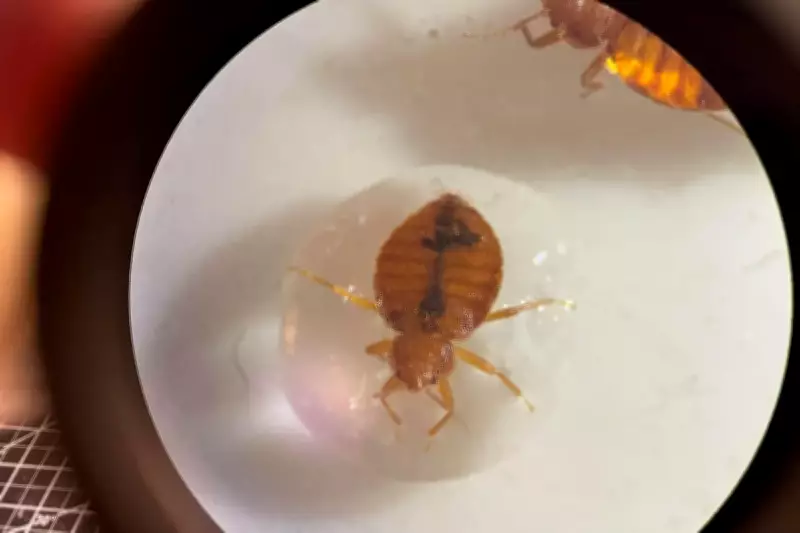
Dr. Choe elaborated on the physiological reasons behind this aversion: "If they physically contact a body of water, they'll get stuck to its surface, blocking their respiratory openings. Due to its strong adhesive power, water could be very dangerous from a bedbug's perspective. So, it is not surprising to learn that they're extremely averse to moisture."
Implications for Pest Control Strategies
This discovery holds significant potential for influencing bedbug management techniques. Researchers suggest that moisture-based approaches could complement existing methods, offering a non-chemical alternative. For individuals suspecting bedbugs on their person, Dr. Choe proposes a straightforward solution: "Take a bath. It'll solve the problem. Of course, the bedbugs in the room or on the bed will require different approaches."
The study underscores the importance of understanding pest behaviour to develop targeted, effective interventions. As bedbug infestations continue to challenge households globally, this accidental finding provides a fresh perspective on combating these resilient insects through their innate fear of water.