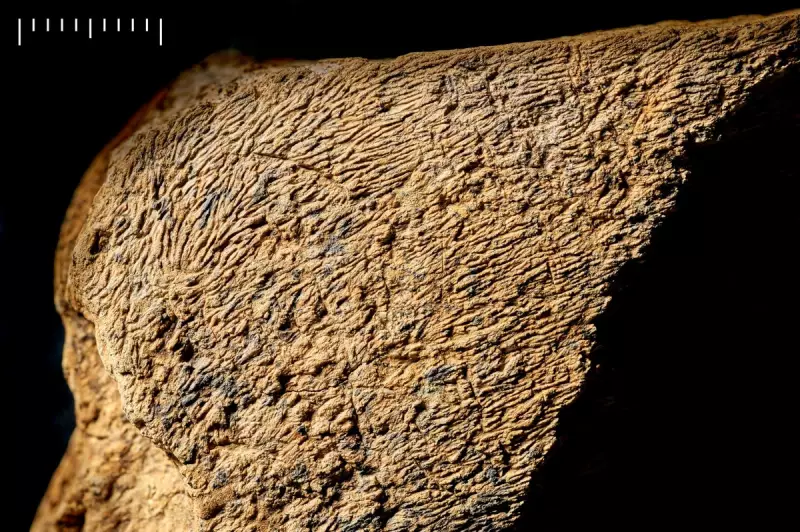
Archaeologists have made a groundbreaking discovery that rewrites our understanding of early human technological development in Europe. A remarkable 500,000-year-old elephant bone tool, now confirmed as the continent's oldest implement crafted from such material, has been identified at a significant archaeological site in West Sussex.
Unearthing Prehistoric Ingenuity
The extraordinary 11-centimetre-long bone fragment was originally excavated during the 1990s at the Boxgrove dig site near Chichester, but its true importance remained unrecognised for decades. Only through recent advanced analysis have researchers from University College London and the Natural History Museum established its exceptional significance as a deliberately fashioned prehistoric tool.
Sophisticated Analysis Reveals Ancient Craftsmanship
Employing cutting-edge 3D scanning technology and electron microscopes, the archaeological team meticulously examined the bone fragment's surface. Their investigation revealed distinctive notches and marks that clearly indicate intentional shaping for practical use. The researchers concluded this was no ordinary bone fragment but a carefully crafted hammer, demonstrating that its ancient creator possessed specific knowledge about elephant bone's superior strength properties.

Lead researcher Simon Parfitt emphasised the tool's exceptional nature, noting that elephants and mammoths were uncommon in prehistoric England. This rarity suggests the implement represented considerable value to its makers, who demonstrated remarkable resourcefulness in utilising available materials.
A Tool of Considerable Significance
The bone hammer served as what archaeologists term a "retoucher" – a specialised implement used to strike the edges of dulled stone tools. This process, known as knapping, involved detaching flakes to restore tools' sharpness and shape. The discovery provides compelling evidence that prehistoric communities possessed not only practical knowledge of local materials but also sophisticated understanding of tool maintenance and refinement.
Dr Silvia Bello, Merit Researcher at the Natural History Museum and co-author of the study, highlighted the advanced cognitive abilities this discovery reveals. "Our ancient ancestors demonstrated sophisticated tool use that required complex thinking and abstract thought," she explained. "Collecting, shaping, and repeatedly using this elephant bone fragment to maintain other tools shows they were resourceful gatherers who understood material properties and optimal applications."
Broader Archaeological Context
This discovery follows other significant findings that continue to reshape our understanding of prehistoric technological advancement. Recently, researchers identified what may be the earliest known use of poison-laced weapons by human hunters in South Africa, with arrowheads dating to approximately 60,000 years ago showing traces of plant-based toxins. Together, these discoveries paint a picture of increasingly sophisticated prehistoric communities developing advanced knowledge of materials and their practical applications across different continents.
The Boxgrove elephant bone tool stands as a testament to human ingenuity stretching back half a million years, offering fresh insights into how our ancestors adapted to their environment, valued rare resources, and developed complex technological solutions that would shape human development for millennia to come.