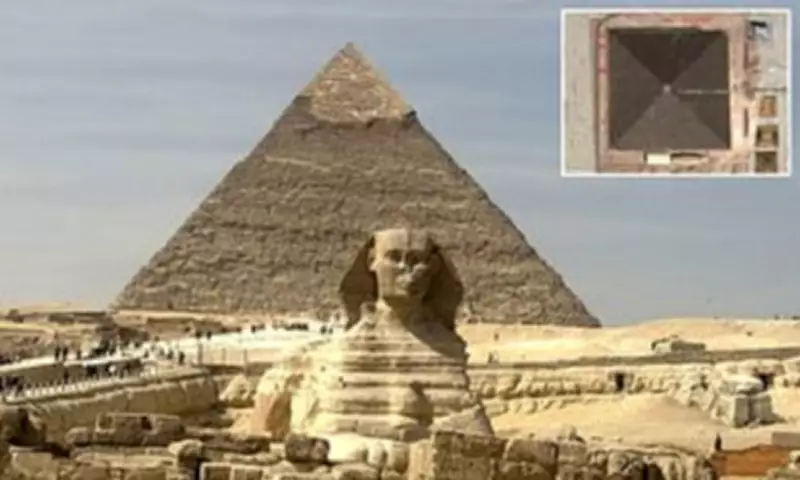
For over a century, mainstream Egyptology has firmly dated the construction of the Great Pyramid of Giza to approximately 2580 BC, placing its age at around 4,600 years. This timeline has been a cornerstone of our understanding of ancient Egyptian civilization during the Fourth Dynasty under Pharaoh Khufu. However, a provocative new study is challenging this established chronology with claims that could fundamentally reshape our perception of human history.
Radical New Dating Method Challenges Centuries of Consensus
Italian engineer Alberto Donini from the University of Bologna has introduced a groundbreaking approach that suggests the iconic monument might be dramatically older than previously believed. His research indicates the pyramid could have been constructed between 20,000 and 40,000 years ago, potentially predating not only Khufu's reign but the emergence of any known advanced civilizations.
The Relative Erosion Method: A Scientific Alternative
Donini's innovative technique, called the Relative Erosion Method (REM), represents a significant departure from traditional archaeological dating practices. Rather than relying on historical records, carbon dating of organic materials, or stylistic comparisons with other monuments, REM focuses exclusively on the physical weathering of the pyramid's limestone structure.

The method involves comparing erosion patterns between stones that have been exposed since the pyramid's original construction and adjacent surfaces that were only revealed when outer casing blocks were removed approximately 675 years ago. By measuring the volume of eroded material on both surfaces and calculating a ratio, researchers can estimate how long the older stones have been subjected to environmental forces.
Detailed Measurements Reveal Surprising Results
The comprehensive study examined twelve distinct points around the pyramid's substantial base, with each location producing varying age estimates ranging from approximately 5,700 to over 54,000 years. While these individual measurements showed considerable variation, the statistical average pointed toward a remarkable conclusion.
The data analysis revealed a 68 percent probability that the Great Pyramid was constructed between roughly 11,000 and 39,000 years ago, with an overall average age estimate of about 24,900 years. Donini emphasizes that REM doesn't provide a precise construction date but rather establishes a probable age range with associated statistical confidence.
Implications for Historical Understanding
These findings carry profound implications for our comprehension of ancient history and architectural development. If validated, they would suggest that sophisticated construction techniques existed tens of thousands of years earlier than currently documented, raising fundamental questions about the timeline of human technological advancement.
Donini has proposed an intriguing alternative interpretation: rather than being the original builder, Pharaoh Khufu might have undertaken significant renovations on a structure that already existed for millennia. This perspective challenges the traditional attribution of the pyramid's construction and opens new avenues for understanding ancient Egyptian restoration practices.
Academic Debate and Methodological Considerations
The study, which has not yet undergone formal peer review, has ignited vigorous debate within archaeological, historical, and engineering communities. Some scholars have noted that conventional dating of the pyramid has historically relied heavily on textual sources, including later inscriptions found within the monument that may not accurately reflect the original construction period.
Donini acknowledges several factors that introduce uncertainty into the calculations, including climate variation across millennia, potential effects of acid rain, foot traffic from visitors and researchers, and periods when portions of the structure were partially buried under desert sands. Despite these variables, the consistent results across twelve measurement points strengthen the argument that the pyramid's base has endured tens of thousands of years of environmental exposure.

Reopening Archaeology's Enduring Mysteries
The Great Pyramid of Giza, standing alongside the Pyramid of Khafre, the Pyramid of Menkaure, and the enigmatic Great Sphinx, has long fascinated researchers with its precise astronomical alignment, unusual construction methods, and debated purpose. This new research adds another layer to these enduring mysteries.
Whether Donini's findings will ultimately overturn centuries of Egyptological consensus remains uncertain, but the study has undoubtedly reopened one of archaeology's most captivating questions. As the academic community examines these claims through rigorous scrutiny, the research represents a significant challenge to established historical narratives and demonstrates how innovative scientific approaches can provide fresh perspectives on ancient wonders.
The controversy surrounding the pyramid's age continues to highlight how much we still have to learn about humanity's distant past and the remarkable achievements of ancient builders whose full story may be more complex than previously imagined.