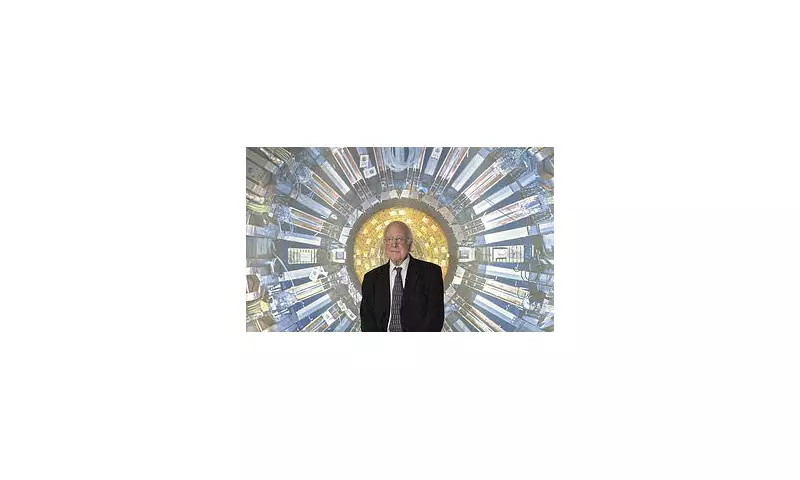
The globally celebrated physicist who unlocked the mystery of mass in the universe has left a multi-million pound legacy, with a significant portion dedicated to charitable causes. Professor Peter Higgs, the Nobel Prize-winning scientist who predicted the existence of the fundamental 'God particle', passed away in April 2024, leaving behind an estate valued at £3,227,516.
A Scientific Giant's Final Bequests
Details from the professor's will, now made public, show his thoughtful distribution of his wealth. In total, £200,000 of his fortune was designated for charitable donations. Among the beneficiaries are some of the world's most prominent humanitarian and research organisations.
Substantial legacies of £45,000 each were gifted to Oxfam and Médecins Sans Frontières (Doctors Without Borders). Closer to home, he donated £35,000 to Cancer Research UK and £35,000 to Shelter Scotland, the homeless charity.

Further generous gifts of £15,000 were made to a diverse range of causes, including:
- The Martin Ryle Trust research fund
- The University of Edinburgh Development Trust
- The Royal Society of Edinburgh
- Save the Children
- The British Red Cross
- Age Scotland
- Amnesty International
- The Civil Liberties Trust
The remainder of his substantial estate will be inherited by his family.
A Lasting Tribute to Edinburgh and Science
In a poignant gesture that underscores his lifelong connection to the institution, Professor Higgs left specific instructions for his Nobel Prize in Physics medal, awarded in 2013, to be gifted to the University of Edinburgh. It was at this university where he was a researcher in 1964 when he penned his ground-breaking paper predicting the particle that would bear his name.
The estate's papers reveal the professor owned two properties in Edinburgh worth a combined £1.3 million, alongside personal effects and cash valued at £1.4 million. He also held additional assets exceeding £500,000.
The Life and Legacy of a Reluctant Icon
Born in Newcastle in 1929, Peter Higgs joined the University of Edinburgh in 1960. His revolutionary theory came to him during a walk in the hills surrounding the city. The particle he predicted, known as the Higgs boson, would not be experimentally confirmed until 2012 by scientists at the Large Hadron Collider at CERN in Switzerland.
For this monumental achievement, he was jointly awarded the Nobel Prize in Physics with Francois Englert in 2013. Despite the acclaim, Higgs was famously uncomfortable with the fame, even turning down a knighthood from then-Prime Minister Tony Blair in 1999. He lived modestly, without a television, and used public transport.
Professor Higgs died 'peacefully' at his home in Edinburgh at the age of 94, following a short illness. Last month, a collection of his personal items, including his academic gown and Nobel badges, raised £37,632 at auction, adding a final chapter to the story of a man whose work explained the fabric of the cosmos and whose generosity extended to helping those on Earth.