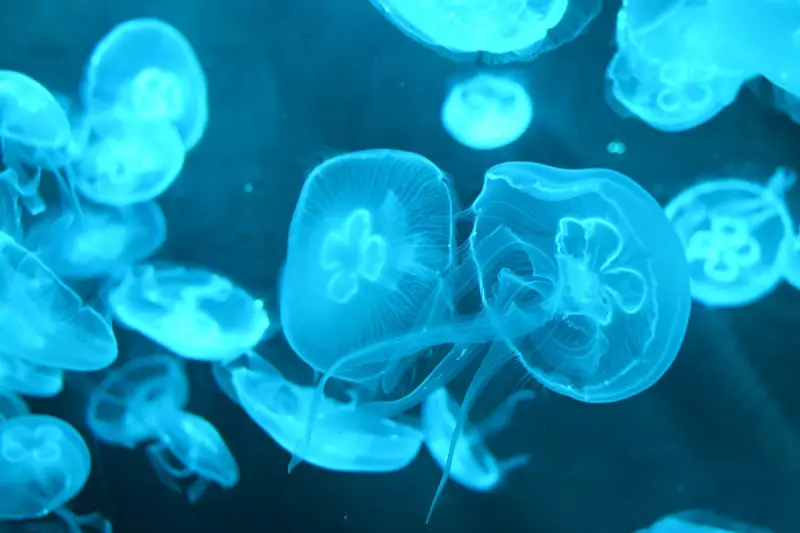
A groundbreaking study published in Nature Communications has uncovered that jellyfish and sea anemones, despite their lack of complex brains, display sleep-like states, shedding new light on the ancient origins of sleep. This research suggests that the fundamental purpose of sleep, particularly for cellular self-defence and DNA repair, dates back more than 600 million years, predating the evolution of sophisticated neural systems.
Sleep-Like Behaviour in Brainless Creatures
Researchers observed that these invertebrates exhibit reduced responsiveness during periods of rest, a key characteristic of sleep. Experiments demonstrated that sleep deprivation in these animals led to an accumulation of DNA breaks in their nerve cells, followed by a compensatory 'sleep rebound' effect when allowed to rest normally.
DNA Damage and Repair Mechanisms
The study found that DNA damage accumulates in the nerve cells of jellyfish and sea anemones during wakefulness. This damage is subsequently repaired while the creatures are in a dozing state, indicating that sleep serves a critical role in maintaining cellular integrity and preventing genetic errors.

Role of Melatonin in Sleep Induction
Intriguingly, the sleep hormone melatonin was shown to induce sleep in these brainless animals. This discovery implies that melatonin's soporific function evolved much earlier than previously understood, highlighting its deep-rooted role in regulating rest across diverse species.
Implications for Understanding Sleep Evolution
These findings challenge long-held assumptions about sleep being solely a brain-based phenomenon. By demonstrating that sleep-like states exist in creatures without complex brains, the research suggests that the core biological need for sleep, such as DNA repair and cellular maintenance, originated in early animal life forms over half a billion years ago.
The study provides compelling evidence that sleep's primary function for self-defence and repair is an ancient evolutionary adaptation, offering new insights into why sleep is essential across the animal kingdom.