Groundbreaking Discovery of Ancient Wooden Implements in Greece
Archaeologists have made an extraordinary breakthrough with the recovery of what are now confirmed as the world's oldest wooden tools, unearthed from a lakeside site in Greece. This remarkable find, consisting of two distinct wooden artifacts preserved for approximately 430,000 years, provides an unprecedented window into the technological capabilities of early human ancestors.
Detailed Analysis of the Ancient Artifacts
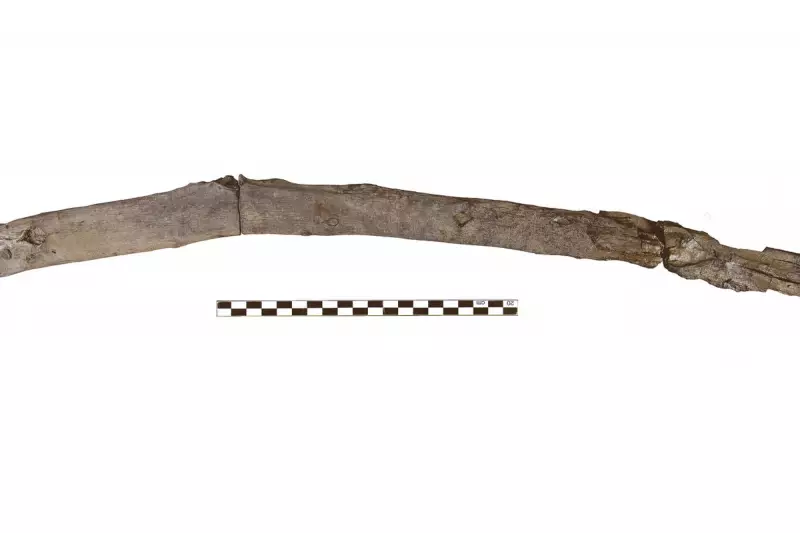
The larger of the two discoveries is a slender wooden stick measuring approximately 80 centimetres in length, which researchers believe may have served as a digging implement for probing mud or soil. The second artifact presents more of an archaeological puzzle - a compact, handheld piece crafted from either willow or poplar wood that potentially functioned as a shaping tool for stone implements.
These findings, detailed in a comprehensive study published in the prestigious Proceedings of the National Academy of Sciences, represent a significant advancement in our understanding of prehistoric technology. As study author Annemieke Milks from the University of Reading expressed, "I've always just been thrilled to be able to touch these objects," highlighting the profound connection these artifacts provide to our distant past.

Exceptional Preservation Conditions
The survival of these wooden tools represents a minor archaeological miracle, given wood's natural tendency to decompose rapidly under normal conditions. These particular artifacts owe their preservation to the unique environmental circumstances of Greece's Megalopolis basin, where they were likely buried swiftly under sediment and maintained in a consistently wet environment that prevented deterioration over millennia.
As archaeologist Jarod Hutson from the Smithsonian National Museum of Natural History noted, "The site in Greece probably has more gems from the past that are waiting to be found." This preservation context offers hope for future discoveries at the location, which has already yielded stone tools and elephant bones bearing cut marks from ancient butchery practices.
Challenges in Interpretation and Historical Context
Despite their archaeological significance, these tools present interpretative challenges. Hutson observed that "It's difficult to get excited about these because they don't strike you immediately as wooden tools. And we don't know what they were used for," acknowledging the subtle appearance that belies their historical importance.
The identity of the toolmakers remains uncertain, with possibilities including Neanderthals, early human ancestors, or other hominin species. No human remains have been discovered at the site thus far, leaving this crucial question unanswered for now.
Broader Implications for Understanding Prehistoric Technology
This discovery significantly expands our knowledge of early human toolkits, which scientists believe included implements made from stone, bone, and wood. As study author Katerina Harvati from the University of Tübingen explained in correspondence, the find offers a rare glimpse into "a little known aspect of the technology of early humans."
The Greek artifacts join other notable examples of ancient wooden tools, including a collection of spears discovered in Germany and 300,000-year-old Chinese digging sticks potentially used for plant harvesting. Together, these discoveries paint a more complete picture of the diverse survival strategies employed by early human populations across different geographical regions.
This groundbreaking research contributes substantially to our understanding of human technological evolution and adaptation, demonstrating that wooden tools played a significant role in prehistoric life far earlier than previously documented.