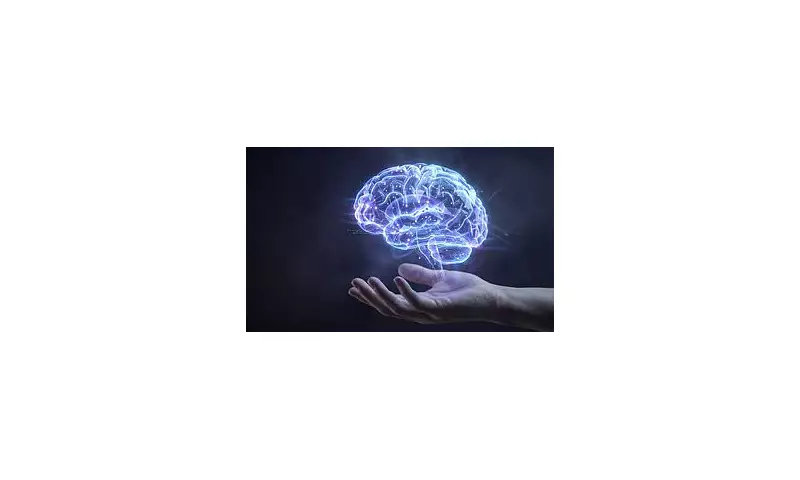
Whether it is a cherished childhood recollection or the simple knowledge of what you had for breakfast, our memories often appear as the only certainties in life. However, a group of leading physicists now propose a startling idea: all of your memories could merely be an illusion. According to this bold theory, your recollections are more likely to arise from random fluctuations in space than from real past events.
The Boltzmann Brain Hypothesis Explained
Scientists and philosophers refer to this concept as the Boltzmann Brain hypothesis, named after the Austrian mathematician Ludwig Boltzmann. It suggests that the most probable scenario is that your brain, complete with all its memories, sprang into existence at this very moment out of random chaos. This might seem absurd, but researchers argue it is an unavoidable consequence of key laws of physics.
In a paper published in the journal Entropy, the scientists state: 'At present, there is no fully rigorous argument that relies only on established physics to dispel the possibility of the BB [Boltzmann Brain] hypothesis.' Essentially, the hypothesis posits that a random collection of particles can form any possible structure given enough time, including the exact state of your brain with all its memories, beliefs, thoughts, and desires.

Why This Theory Is So Compelling
Intuitively, the odds of such a brain occurring seem impossibly small compared to the likelihood of our memories being real. Yet, a bizarre outcome of physical laws indicates it is almost infinitely more probable that you are, in fact, a Boltzmann Brain. This stems from the second law of thermodynamics, which states that disorder, or entropy, always increases over time.
For modern physics to function correctly, this rule must be symmetrical with respect to time. Lead author Professor David Wolpert of the Santa Fe Institute and his co-authors explain: 'In other words, the most probable situation, given current observations, is that we happen to be precisely at a special point in the dynamics of the universe’s entropy.' This implies we might just be an entropy fluctuation, making our memories more likely false than genuine.
Implications for Reality and Memory
The scientists do not claim to have proven we are Boltzmann Brains, but they argue the hypothesis is consistent with modern physics. Their analysis uses probability and randomness tools to show that confidence in not being a Boltzmann Brain relies heavily on the Big Bang theory. If the universe has a definitive start with fixed disorder, we can orient ourselves in time and avoid being mere random fluctuations.
Prior to the 20th-century discovery of the Big Bang via the Cosmic Microwave Background, the idea of false memories was as certain as the second law of thermodynamics. However, considering the present moment, avoiding the Boltzmann Brain hypothesis would require discarding this fundamental law, leaving no physical basis to rule it out.
The authors conclude: 'In this aspect, the Boltzmann brain hypothesis and the second law are equally legitimate (or not).' This potentially casts doubt over all our memories, suggesting they might have no more bearing on reality than dreams or fantasies.
Training Your Brain to Manage Memories
In related research, a 2020 study by Dartmouth and Princeton showed people can intentionally forget past experiences by altering how they think about memory context. Participants viewed outdoor scenes while studying word lists, and when told to forget, brain scans revealed they 'flushed out' scene-related activity.
To apply this, if a song reminds you of a break-up, listen to it in a new environment like the gym to create positive associations. Similarly, for haunting horror film scenes, watch them during daylight or with comedic audio overlay. These techniques help retrain the brain, though they don't address the deeper philosophical questions raised by the Boltzmann Brain theory.