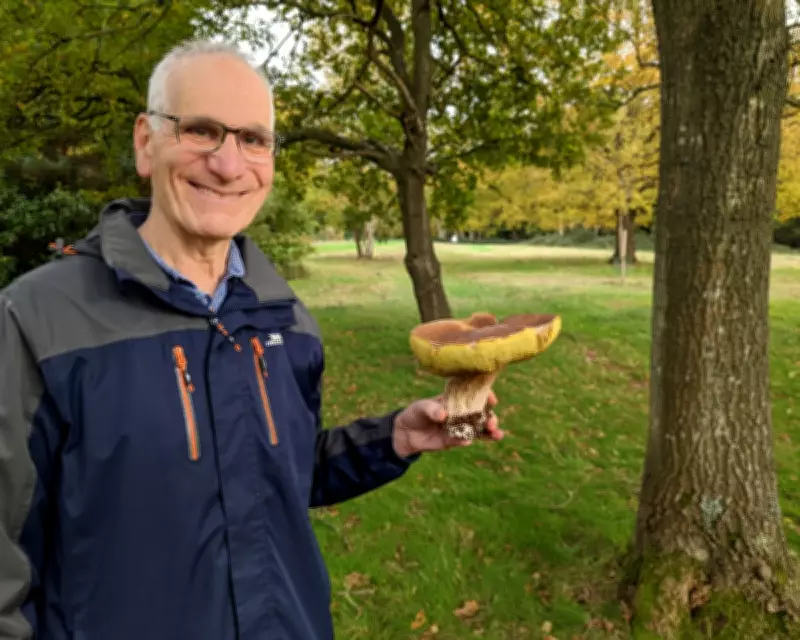
Virologist Robin Weiss, Pioneer of HIV Test and Research, Dies at 86
The virologist Robin Weiss, whose groundbreaking work was instrumental in the UK's response to the AIDS pandemic, has died at the age of 86. In 1984, he led the team that identified the CD4 molecule as the cellular receptor for HIV, the virus that causes AIDS. This discovery was a critical step in understanding how the virus infects human cells.
Key Scientific Contributions
Weiss established productive growth of HIV in an immortalised cell line, enabling the development, with Richard Tedder, of the UK's first antibody test for the virus. This test, later commercialised by the Wellcome Foundation, allowed for accurate and large-scale identification of HIV-infected individuals, transforming public health efforts. He was also the first to demonstrate antibody neutralisation of HIV, laying a fundamental basis for vaccine development.
These achievements were made while Weiss served as the youngest-ever director of the Institute of Cancer Research in London from 1980 to 1989. His leadership extended beyond HIV; he recruited scientists like Chris Marshall and Alan Hall, who reported the novel oncogene N-RAS, contributing to cancer research that underpinned later anti-cancer drugs.

Early Life and Career
Born in 1940 to German-Jewish refugees, Weiss was interned as an enemy alien in Scotland during his childhood. He pursued zoology at University College London, earning a first-class degree. Advised by Nobel laureate Peter Medawar, he embarked on a research career, completing a PhD on Rous sarcoma retrovirus in chickens, which introduced him to retroviruses.
As a lecturer at UCL, Weiss published a landmark paper on endogenous retroviruses, hypothesising their integration into normal cells—a concept initially rejected but now recognised as comprising nearly 10% of the human genome. His work took him to the University of Southern California and later to the Imperial Cancer Research Fund, where he co-authored the influential book RNA Tumor Viruses.
Impact and Legacy
Weiss's laboratory became a UK centre for HIV retrovirology, training numerous scientists who went on to professorial appointments. He served as an expert adviser to organisations like the Medical Research Council and the Department of Health, and his articles in Nature were widely respected for their clarity and influence.
In 1999, he returned to UCL as a professor, exploring diverse topics such as endogenous retroviruses in pigs and canine venereal sarcoma, which he traced back to a single dog from 1,000 years ago. His research earned him fellowships in the Royal Society and other prestigious institutions, along with honorary degrees and awards.
Personal Life
Weiss married Margaret D'Costa in 1964, and their home in Finchley was known for welcoming scientists and sharing his homemade foraged jams. In retirement, he enjoyed music and historical research, discovering a family connection to Gregor Mendel. He is survived by his wife, two daughters, and three grandchildren.
Robin Weiss's legacy as a scientist and mentor continues to inspire the fields of virology and medical research, marking him as a key figure in the fight against HIV and cancer.