A Time Capsule from the Roman Frontier
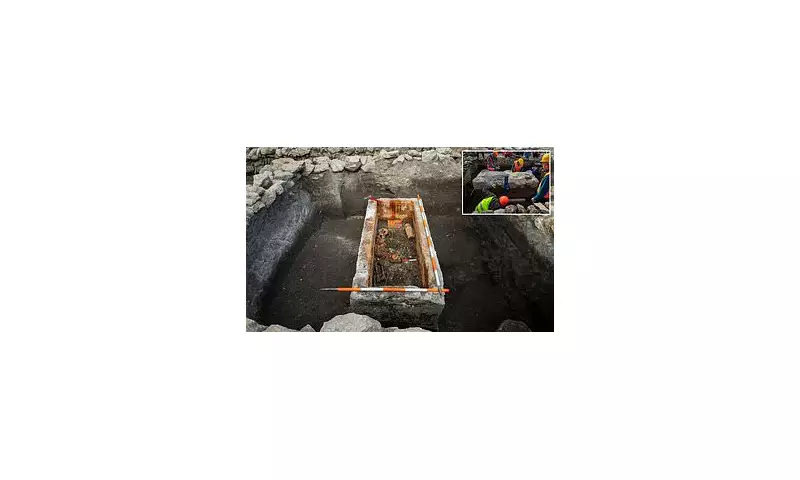
Archaeologists in Hungary have performed a delicate operation, lifting the lid from a sealed ancient Roman sarcophagus that had remained untouched for 1,700 years. Inside, they discovered the perfectly preserved skeleton of a young woman, surrounded by a rich collection of funerary goods. This remarkable find offers an unprecedented window into life and death in one of the Roman Empire's most crucial frontier settlements.
A Wealthy Burial Untouched by Time
The team from the Budapest History Museum made the discovery during a large-scale excavation in Óbuda, a northern district of the Hungarian capital. This area was once part of Aquincum, a bustling Roman settlement on the Danube frontier. The limestone coffin was found in an area that had been repurposed from abandoned houses into a burial ground in the 3rd century.
What makes this find so exceptional is its pristine condition. Untouched by looters and sealed for centuries, the sarcophagus was found with its stone lid still firmly fixed in place, secured by metal clamps and molten lead. Gergely Kostyál, a Roman-period specialist and co-leader of the project, emphasised the rarity of such a discovery. He stated, 'It is truly rare to find a sarcophagus like this, untouched and never used before, because in the fourth century it was common to reuse earlier sarcophagi. It is quite clear that this sarcophagus was made specifically for the deceased.'

When researchers carefully lifted the lid, they uncovered a complete skeleton, which its size indicates belonged to a young girl. She was accompanied by dozens of artefacts, suggesting she came from a family of high social status. The grave goods included:
- Two completely intact glass vessels
- Several bronze figures
- 140 coins
- A bone hairpin
- A piece of amber jewellery
- Traces of gold-threaded fabric
Unlocking More Secrets from the Mud
The investigation is far from over. Anthropologists will now examine the young woman’s remains, a process expected to reveal more about her precise age, health, and origins. Furthermore, excavators removed a layer of mud roughly 1.5 inches thick from inside the coffin. The archaeologists hope that sifting through this sediment could yield even more treasures, such as earrings or other small items of jewellery that have yet to be found.
The emotional impact of the discovery was not lost on the team. For the archaeologists, it provided a poignant insight into the devotion displayed by people in ancient times. One researcher reflected on the care and expression of love evident in the burial, shuddering to think of the pain felt by those who laid the young woman to rest.
The city of Aquincum, now part of modern Budapest, was a major Roman outpost and administrative centre. Its strategic location along the Danube River, which served as the critical northern frontier for the Roman Empire, allowed Rome to project power into Central Europe. This discovery adds a profoundly personal and richly detailed chapter to our understanding of the vibrant community that lived, traded, and thrived there nearly two millennia ago.