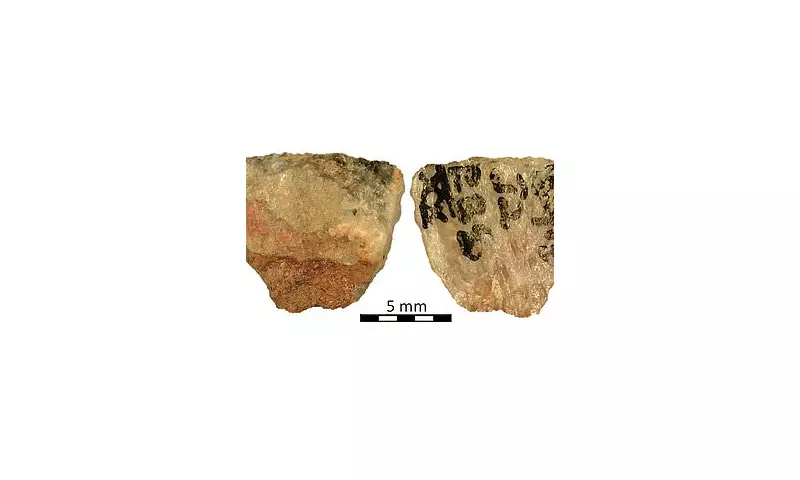
Archaeologists have made a groundbreaking discovery that rewrites the history of early human technology and hunting practices. Researchers have identified the world's oldest known arrow poison, preserved as chemical residues on 60,000-year-old stone arrowheads unearthed in South Africa.
A Toxic Discovery from the Deep Past
The remarkable find was made at the Umhlatuzana Rock Shelter in KwaZulu-Natal, South Africa. A team analysing a collection of ancient quartz arrowheads found minute but definitive chemical traces of a toxic substance. The poison originates from a plant known as gifbol, scientifically named Boophone disticha. This highly poisonous species is still utilised by traditional hunters in the region today, demonstrating an incredible continuity of knowledge.
Professor Sven Isaksson from Stockholm University, a key figure in the research, explained the significance to the Daily Mail. 'The compounds we have detected…are active components and they are poisonous,' he stated. 'However, they are today only present as minute traces on these Stone Age artifacts in way too low concentrations to be deadly.' The residues were identified within organic remains on the artefacts, appearing as a reddish colour under analysis.

Revolutionising Stone Age Hunting
The implications of this discovery are profound. It pushes back the earliest direct evidence for the use of poison on arrows by tens of thousands of years. Previously, the oldest known poisoned arrows from Africa were dated to roughly 7,000 years ago. This new evidence suggests that early humans in southern Africa had invented the bow and arrow far earlier than previously believed and possessed sophisticated botanical knowledge.
'This is the oldest direct evidence that humans used arrow poison,' said Professor Marlize Lombard from the University of Johannesburg. 'It shows that our ancestors in southern Africa not only invented the bow and arrow much earlier than previously thought, but also understood how to use nature's chemistry to increase hunting efficiency.'
The gifbol poison is potent. In humans, it can induce nausea, visual impairment, respiratory paralysis, and coma. For small prey like rodents, even a tiny quantity can be lethal within 20 minutes. The researchers believe hunters used it not necessarily for instant kills, but to slow down larger prey animals, making them easier to track and secure.
A Thread of Knowledge Across Millennia
Fascinatingly, the research draws a direct line from the Stone Age to the relatively recent past. The team found that the same plant poison was used on 250-year-old arrowheads held in Swedish collections, gathered by travellers in the 18th century. This indicates a staggering long-term continuity of tradition and practical knowledge.
'Finding traces of the same poison on both prehistoric and historical arrowheads was crucial,' Professor Isaksson noted. The chemical stability of the compounds allowed them to survive in the ground for millennia. 'It's also fascinating that people had such a deep and long-standing understanding of the use of plants.'
This study moves beyond indirect speculation, providing the first direct chemical evidence of hunting with poisoned arrows in the deep past. It reveals that these early hunters required more than just technical skill to craft the quartz points, which bear microscopic impact scars. They needed advanced planning, patience, and a complex understanding of cause and effect – hallmarks of modern human cognition.
'Using arrow poison requires planning, patience and an understanding of cause and effect. It is a clear sign of advanced thinking in early humans,' commented Professor Anders Högberg from Linnaeus University.
The findings, published in the prestigious journal Science Advances, fundamentally alter our perception of Stone Age innovation. They paint a picture of resourceful, intelligent ancestors who mastered their environment by blending mechanical invention with a deep, empirical knowledge of their natural world's chemistry.