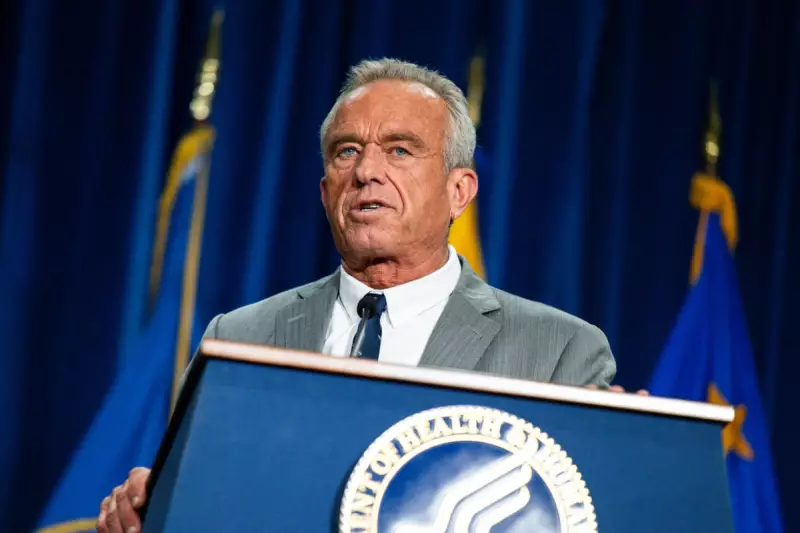
The administration of President Robert F Kennedy Jr has ignited a fierce debate within America's public health community by appointing three high-profile vaccine sceptics to a pivotal advisory panel at the Centers for Disease Control and Prevention (CDC).
A Controversial Reshuffle of Key Health Advisers
In a move confirmed on Wednesday, the White House announced the appointment of Dr Joseph Mercola, an osteopath and influential alternative health figure, along with authors and activists Mary Holland and Del Bigtree to the CDC's Advisory Committee on Immunization Practices (ACIP). This committee holds significant sway, as its recommendations directly influence which vaccines are routinely administered to American children and adults and are often adopted by insurance providers.
The appointments mark a stark departure from the panel's traditional composition of infectious disease doctors, paediatricians, and epidemiologists. Dr Mercola, a prolific online voice, has repeatedly made claims about vaccines that have been debunked by mainstream science and has been a frequent target of regulatory warnings from the Food and Drug Administration. Mary Holland, president of the non-profit Children's Health Defense, which was chaired by RFK Jr until his presidential run, is a long-time campaigner questioning vaccine safety. Del Bigtree is the producer of the controversial film "Vaxxed" and a vocal critic of immunisation mandates.

Immediate Backlash from Medical Establishment
The reaction from leading public health bodies and experts was swift and overwhelmingly critical. The American Academy of Pediatrics issued a statement expressing "profound concern," warning that the appointments risk undermining public confidence in vaccines that have saved countless lives. Several former ACIP members, speaking anonymously to the press, described the move as "unprecedented" and potentially "dangerous," fearing it could politicise the committee's scientific deliberations.
Proponents of the decision, including spokespeople for the appointed individuals, argue that the panel has long suffered from "groupthink" and that dissenting voices are necessary for robust scientific debate. They contend that the new members will provide balance and scrutinise pharmaceutical industry influence on vaccine policy. However, critics counter that scientific debate belongs in peer-reviewed literature, not on a committee tasked with making direct, evidence-based public health recommendations.
Potential Ramifications for Public Health Policy
The long-term implications of this reshuffle remain uncertain but are a major source of anxiety for immunisation advocates. Key concerns centre on whether the committee's future guidance on routine vaccines for diseases like measles, HPV, and Covid-19 could be altered or watered down. There are also fears that contentious internal debates could lead to delays in issuing crucial recommendations during public health emergencies.
This development is seen as a direct fulfilment of campaign promises made by RFK Jr, who built a substantial political base on vaccine-sceptic views. It represents one of the most concrete steps his administration has taken to reform federal health agencies he has previously accused of corruption and excessive closeness to the pharmaceutical industry. The coming months will be a critical test of how the reconfigured ACIP operates and whether it can maintain its scientific credibility while accommodating deeply sceptical perspectives.
Public health officials are now bracing for potential knock-on effects, including increased vaccine hesitancy among the public and possible shifts in state-level immunisation policies that often follow the CDC's lead. The situation underscores the deep and ongoing divisions in American society over science, authority, and public health that have persisted long after the Covid-19 pandemic.