

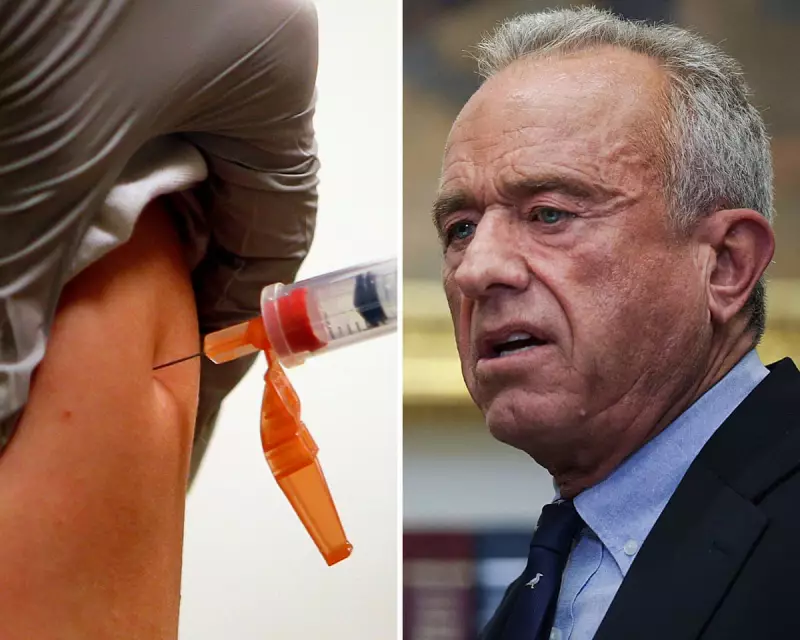
Public health experts in the United States have expressed profound alarm as federal officials scale back strong recommendations for the seasonal flu vaccine during a severe outbreak, a move that threatens to further depress vaccination rates.
Officials Cast Doubt Amid Severe Season
The US is experiencing record-breaking levels of flu-like illness, with hospitals under intense pressure. Despite this, recommendations for the flu shot have been softened. In early January, guidance for children was changed to "shared clinical decision-making", a term that typically signals a less urgent stance.
This shift was compounded by public comments from top officials. Robert F Kennedy Jr, the Secretary of Health and Human Services and a longtime vaccine critic, suggested it might be "a better thing" if fewer children were vaccinated, falsely claiming there was no scientific evidence the shot prevents serious outcomes in children. This contradicts extensive CDC studies.

Similarly, Mehmet Oz, administrator for the Centers for Medicare & Medicaid Services, publicly questioned the vaccine's efficacy on Newsmax, recommending self-care instead. The CDC's own press statements have emphasised the decision as a "personal one", a departure from previous robust public health campaigns.
High Burden of Disease and Falling Protection
The dominant strain this season is H3N2, subclade K, which tends to cause severe illness and has mutated to evade some immune defences. In the week ending 9 January, the CDC estimated 15 million illnesses, 180,000 hospitalisations, and 7,400 deaths nationally, including at least 17 children.
Vaccination rates are worryingly low. Only 42.5% of children and 43.5% of adults have received the shot this season, a significant drop from peaks in 2019-20. Megan Berman, a professor at the University of Texas Medical Branch, noted that hospitalised patients she sees share one trait: they were unvaccinated.
Concerningly, the use of antiviral medications for flu has also declined, especially in children. The CDC reports only 28% of children under five sick enough to see a doctor receive antivirals. This is happening as paediatric flu mortality rises; nearly 300 children died last season, the highest non-pandemic toll on record.
Experts Urge Use of Available Tools
Scientists stress the vaccine remains a crucial tool. Early UK data, where flu season is abating, shows the shot was 70-75% effective at preventing hospitalisation in children. Seema Lakdawala of Emory University emphasised that while it may not stop all transmission, it is very effective against severe illness.
Experts warn the mixed messaging will likely further reduce uptake. "It gives the message that it's not important," said Professor Berman, adding, "Nothing has changed from the science... Children should not be dying from a preventable illness."
Beyond vaccination, Lakdawala points to lessons from the Covid-19 pandemic: masks, ventilation, hand hygiene, and staying home when sick can control flu's spread. "We have every tool in our arsenal," she said, urging their use.






