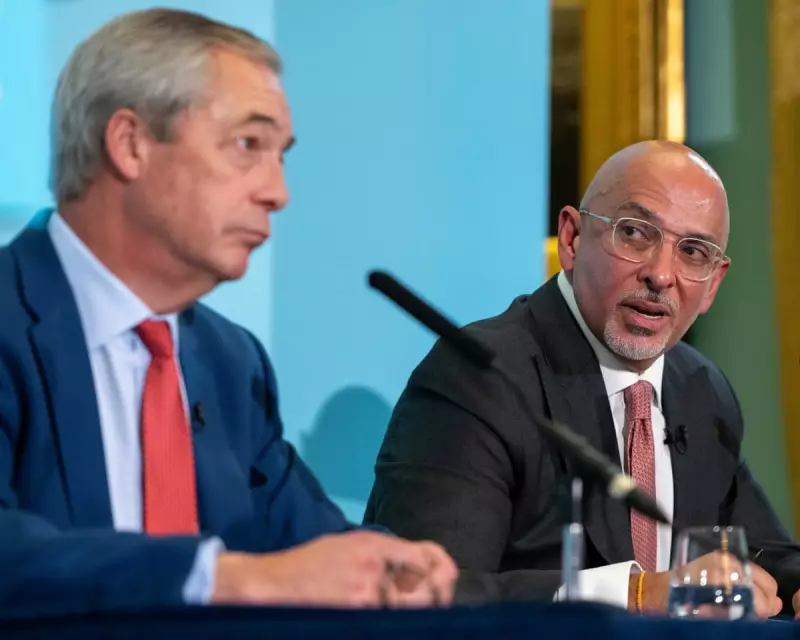
The unveiling of former Conservative chancellor Nadhim Zahawi as Reform UK's newest recruit has thrust the party's internal divisions over Covid-19 vaccines into sharp focus, sparking a backlash from members and highlighting a significant policy rift.
Defection Unveils Deep-Seated Tensions
At a press conference in Westminster on Monday, flanked by Nigel Farage, Zahawi faced repeated questions about his stance on Reform's vaccine-sceptic elements. Reporters pressed him on whether he rejected the views of Dr Aseem Malhotra, a controversial figure who used Reform's main conference stage to claim Covid vaccines caused cancer in King Charles and the Princess of Wales. Zahawi, who served as vaccines minister during the pandemic rollout, dismissed the queries as "a really stupid question" that did not deserve an answer.
However, away from the plush unveiling venue, his recruitment caused immediate disquiet among the party faithful. In private Reform Facebook groups, including one with 135,000 members, a significant number declared they would resign their membership. The backlash fused vaccine scepticism with strands of Islamophobia, as some members framed the recruitment of Zahawi, a Muslim, alongside the party's head of policy Zia Yusuf and London mayoral candidate Laila Cunningham, as evidence of a "Muslim takeover".

A Party Divided on Science and Safety
Reform's leadership has cultivated a sceptical stance towards Covid vaccines. While Nigel Farage initially offered qualified support, he later shifted towards a more hostile position, recently falsely claiming people were being told to have vaccinations every six months. Party chair Richard Tice has long raised doubts about vaccine safety and necessity. A recent investigation found a third of Reform's council leaders have expressed vaccine-sceptic views.
The issue reached a nadir when Dr Aseem Malhotra, described by Reform chair David Bull as having helped write the party's health policy, delivered his conference speech linking vaccines to royal cancers. This stands in direct conflict with Zahawi's legacy as the minister who oversaw the UK's vaccine rollout.
New Recruits Seek Evidence-Based Change
The defection highlights a growing internal conflict. Among 20 councillors who joined Reform last week was Dr Chandra Kanneganti, a former chair of the British International Doctors Association. While citing immigration and public services as reasons for his defection, Kanneganti told the Guardian he would seek to share his expertise on health policy, explicitly disagreeing with figures like Malhotra.
"I will hopefully be able to express my views and guide a policy that is actually evidence based," Kanneganti said. "All the scientific evidence shows that getting vaccinated is much, much safer than not getting vaccinated."
Zahawi repeatedly refused to say if he received assurances on Reform's vaccine stance before joining. However, he stated he would not be sitting alongside Nigel Farage if they did not agree "we did the right thing to get the vaccine programme to the nation." David Bull, under pressure from angry TalkTV callers, offered a more measured response, noting Zahawi had no formal role and that the leadership's stance against compulsory vaccines remained unchanged.
The episode exposes a fundamental tension within Reform UK between its anti-establishment, sceptical grassroots and a leadership seeking political credibility through high-profile defections. How this rift over science, public health, and policy is managed may prove critical to the party's cohesion and electoral appeal.