The Unbeatable Challenge of Youthful Eyes
Hollywood stars in their 50s and beyond frequently maintain remarkably smooth, unlined complexions that rival those of people decades younger, thanks to advanced cosmetic interventions like injectables, laser treatments, and premium skincare products. However, there exists one facial region that consistently defies even the most sophisticated anti-aging efforts, creating a noticeable contrast that can betray a person's true age.
The Curse of 'Tired Eyes'
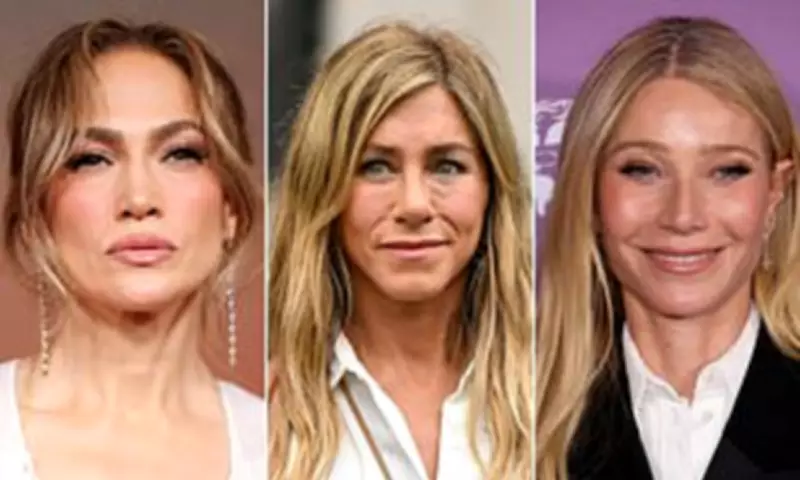
High-profile celebrities including Jennifer Lopez, Heidi Klum, and Jennifer Aniston have all fallen victim to what aesthetic professionals term the 'tired eyes' phenomenon. This condition creates the appearance of sleep deprivation and fatigue around the eyes, despite the individual otherwise radiating a collective youthful glow. The visual effect can be particularly striking when contrasted against otherwise perfectly smooth facial skin.
According to leading aesthetic experts, treating the delicate eye area presents unique challenges that test even the most skilled practitioners. Dr. Gizem Seymenoglu, a medical aesthetician at Longevita, explained to the Daily Mail that the under-eye region is "uniquely challenging to treat" due to its anatomical characteristics.
Anatomical Limitations and Treatment Complications
The skin beneath the eyes represents one of the thinnest areas on the human body and is in constant motion during blinking, smiling, and squinting. This combination of fragility and perpetual movement means this region often shows the earliest visible signs of aging, even when the remainder of the face appears smooth and youthful.
"The under-eye region is very delicate," Dr. Seymenoglu emphasized. "Botox, for example, can't be applied directly under the eye, only at the outer corners. This means the fine lines beneath the eye often remain untouched."
Dr. Devine, an aesthetic doctor and founder of Devine Clinic in London, further explained that aging naturally thins the skin through collagen and elastin loss, creating a 'crepey' appearance under the eyes that resists conventional treatments.
The Hydration Factor and Makeup Complications
Dr. Seymenoglu noted that even mild dehydration can dramatically increase the visibility of fine lines and wrinkles, particularly in the under-eye area. "If the skin is slightly dehydrated, and then layered with foundation, concealer, or anything similar, it can create a slightly uneven or textured appearance," she explained.
Recent photographs of Jennifer Lopez revealed signs of this mild dehydration in her under-eye region, according to Dr. Seymenoglu's analysis. "She may have had typical Botox in some areas, but the under-eyes might not have received filler or other interventions," the aesthetician observed. "This could make fine lines slightly more noticeable, particularly if makeup is layered over the area, which might accentuate texture."
The Orbicularis Oculi Challenge
Explaining why refreshing the under-eye area proves so difficult, Dr. Seymenoglu highlighted the role of the orbicularis oculi—the circular muscle surrounding the eye. "With Botox, we only relax the outer part of this muscle. Because the rest remains active, this can limit the eye's natural drainage capacity, meaning fluid is not cleared as efficiently," she told the Daily Mail.
This limitation can lead to noticeable puffiness, especially in first-time patients, which Dr. Seymenoglu described as the eye "finding alternative ways" to manage lymphatic drainage when conventional pathways are compromised.
The Filler Dilemma and Volume Contrast
Dermal fillers present a "particularly tricky" choice for under-eye treatment, according to Dr. Seymenoglu. When applied superficially or in incorrect locations, fillers can attract water and create unwanted puffiness, while simultaneously making surrounding facial areas appear gaunt by comparison.
Dr. Devine elaborated on this contrast effect: "When volume is added to other areas of the face—like the cheeks—it can 'make the under-eye appear more hollow by contrast.' If filler is placed too heavily in the mid-face, it can create a fuller or slightly puffy appearance in the cheeks while the tear trough area remains unchanged. That contrast can make the eyes look more sunken or fatigued."
The limited natural fat in the under-eye area also makes underlying shadows more visible, contributing to an older, more mature appearance. "Even if someone doesn't have dark circles, the thin, translucent skin can make veins and shadows appear more pronounced," Dr. Seymenoglu explained. "This is why modern aesthetic treatments are increasingly focusing on improving skin quality around the eyes rather than simply adding volume elsewhere."
Alternative Treatment Approaches
For those seeking subtle improvements to the under-eye area, Dr. Seymenoglu recommends non-invasive treatments including microneedling, retinol applications, or salmon DNA therapies. Salmon PDRN (polydeoxyribonucleotides), derived from salmon sperm DNA, has gained significant popularity in Korean skincare for its purported regenerative and anti-inflammatory effects, including increased skin elasticity and enhanced collagen production.
Meanwhile, Dr. Devine advocates for collagen-stimulating treatments for patients with crepey under-eye skin. "Fractional CO₂ laser, for example, works by resurfacing damaged skin while heating the deeper layers of tissue to stimulate collagen production," he explained. "Over time, this helps rebuild the skin's structure and improve texture, which can also help makeup sit much more smoothly."
The collective expert consensus reveals that while celebrities may achieve remarkably youthful complexions through advanced cosmetic interventions, the eyes continue to present an enduring challenge that even the most sophisticated treatments struggle to overcome completely.