

Finger Length Could Indicate Sexual Orientation, Major Study Finds
A groundbreaking scientific review has revealed that the relative lengths of your index and ring fingers might provide clues about your sexual orientation. Researchers from Memorial University of Newfoundland and Labrador conducted an extensive meta-analysis examining the connection between digit ratios and human sexuality.
The 2D:4D Ratio Explained
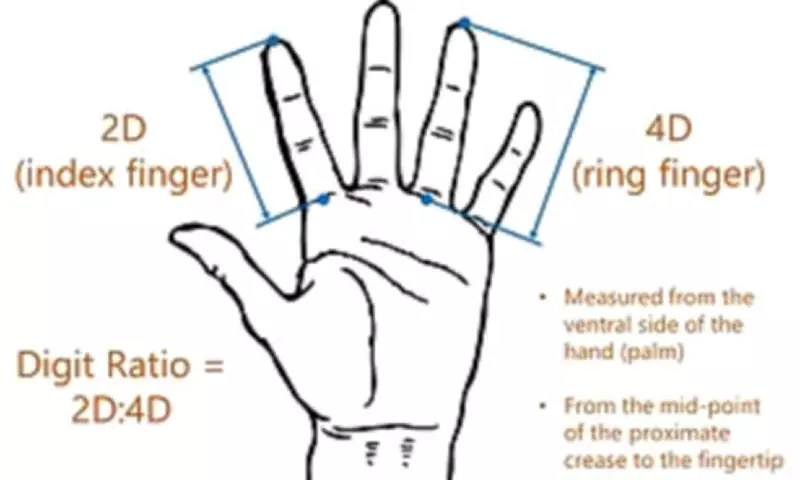
The study focuses on what scientists call the second-to-fourth digit ratio (2D:4D), which measures the relative difference between your index finger (second digit) and ring finger (fourth digit). This ratio is established during early fetal development and has been linked to prenatal hormone exposure, particularly testosterone levels.
"2D:4D is consistently lower in males and converging evidence links prenatal androgens to its development," the researchers explained in their paper published in Frontiers in Psychology.

Clear Patterns Emerge from Massive Data Set
The research team analyzed 51 previous studies involving a staggering 227,648 participants to identify consistent patterns. Their findings revealed distinct differences between heterosexual and homosexual individuals:
- Women with lower 2D:4D ratios (meaning their ring fingers are longer relative to their index fingers) are more likely to be lesbian
- Men with higher 2D:4D ratios (meaning their index fingers are longer relative to their ring fingers) are more likely to be gay
- Bisexual women showed more complex patterns, with some resembling heterosexual women in digit ratios and others resembling lesbians
Prenatal Hormones as the Common Link
The researchers propose that prenatal hormone exposure may simultaneously influence both finger development and sexual orientation. "Specifically, relatively higher levels of prenatal androgen signaling may simultaneously masculinize digit ratios and increase the probability of gynephilia [sexual attraction to women] in females," they explained.
Conversely, they suggest that "relatively lower levels of androgen signaling and/or higher levels of estrogen signaling may feminize digit ratios and increase androphilia [sexual attraction to men] in males."
Beyond Sexuality: Other Finger Length Associations
This isn't the first time finger length ratios have been linked to various traits and behaviors. Previous research has connected the 2D:4D ratio to numerous characteristics:
- Athletic Performance: Individuals with longer ring fingers relative to index fingers tend to excel at sports
- Personality Traits: Certain finger ratios have been associated with aggression, psychopathic tendencies, and opioid abuse disorder
- Pain Tolerance: People with longer index fingers relative to ring fingers may have better pain management abilities
- Weight Management: Those with longer index fingers might find weight loss more challenging
Additional Research Findings on Finger Length
Other studies have revealed even more surprising connections:
- Women with longer index fingers on their left hands are more likely to have affairs, according to Oxford University research
- Children with longer ring fingers relative to index fingers tend to be less likely to share toys and may display more selfish behaviors
- Women with longer ring fingers are more likely to pursue traditionally male-dominated careers like law or management
- Vocal pitch in adulthood may be influenced by finger length ratios established in the womb
While the researchers emphasize that finger length alone cannot definitively determine sexual orientation, their comprehensive analysis suggests a significant statistical relationship worth further investigation. The study represents one of the largest examinations to date of how prenatal development might influence adult characteristics and preferences.






