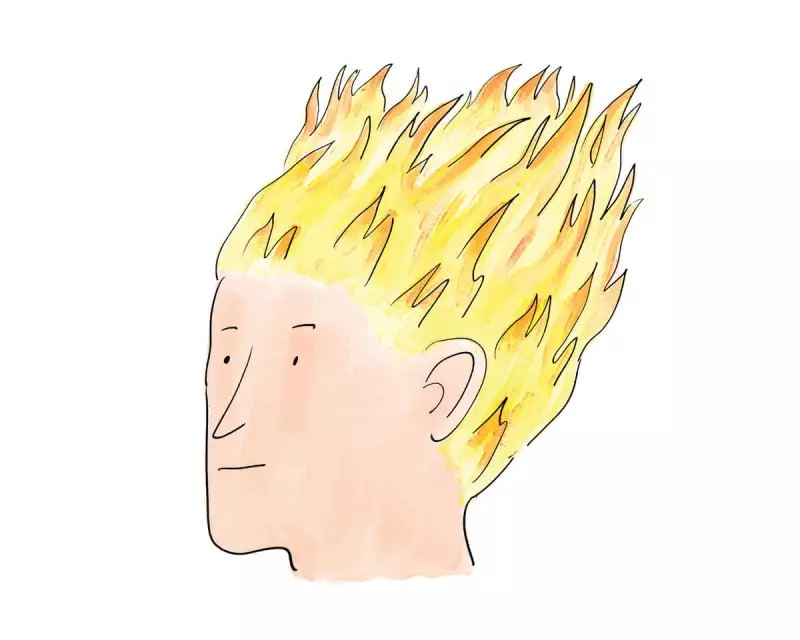
For decades, a piece of cold-weather advice has been passed down as gospel: always cover your head because you lose most of your body heat through it. This widely held belief, however, is more folklore than scientific fact, according to experts.
The Origin of a Persistent Winter Myth
The notion that 40–45% of body heat escapes from an unprotected head can be traced back to a 1970s US Army Survival Manual. Professor John Tregoning, an expert in vaccine immunology at Imperial College London, confirms this is the likely source of the enduring idea. The manual's stark warning to "Always keep your head covered" has shaped winter behaviour for generations, but the reality of human thermoregulation is more nuanced.
The Simple Science of Heat Loss Explained
The fundamental principle, Professor Tregoning clarifies, is that there is nothing uniquely special about the head when it comes to losing warmth. Heat loss is primarily governed by exposure. Any area of the body left uncovered will lose heat faster than parts protected by clothing. If you venture into the cold wearing a snowsuit but no hat, your face and head will cool rapidly because they are exposed, while the suit insulates the rest of your body.

"But if you went to the Arctic in a swimming costume, you'd lose more heat from your legs than your head because their surface area is bigger than your head's," Tregoning illustrates. This underscores that the rate of cooling is proportional to the amount of skin exposed to the elements, not the body part itself.
Is the Head Slightly More Vulnerable?
While the extreme '45%' claim is a myth, some scientific discussion suggests the head might have minor vulnerabilities. Tregoning references a 2008 article in the British Medical Journal which posits two factors. Firstly, the head generally has less subcutaneous fat than other areas, providing slightly less natural insulation. Secondly, the process of vasoconstriction – where blood vessels narrow to conserve core heat – may be less efficient in the head's blood vessels.
Nevertheless, experimental evidence supports the broader point. "There's a study where researchers put peoples' heads in cold water, and then looked at the speed of cooling down, and it wasn't particularly faster than anywhere else," the professor states.
The Practical Takeaway for Cold Days
Despite debunking the percentage myth, the core advice remains sound: covering up in the cold is crucial. "If it's very cold and you're not wearing a hat, you are going to get cold – just as you would if you went out without a jumper on," Tregoning affirms. He adds an often-overlooked tip: "People probably need to cover their face as well, if they can. You lose quite a lot of heat through your face."
The conversation around cold exposure often extends to practices like cold-water plunges, touted for boosting immunity. While that is a separate area of study, the key message for winter warmth is straightforward. Effective insulation depends on covering exposed skin. So, while your head isn't a magical heat-leaking chimney, donning a warm hat and scarf is still one of the smartest moves you can make when the temperature plummets.