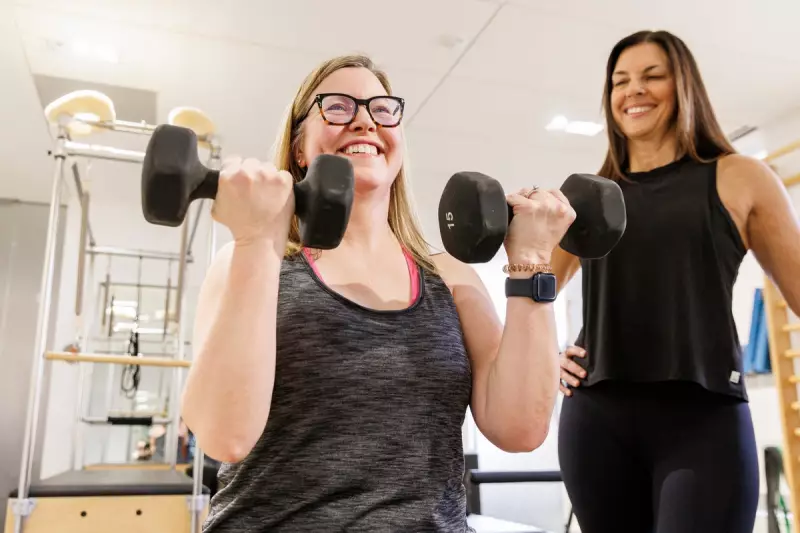
Medical professionals are issuing a powerful call to action for women navigating midlife: embracing strength training is not just beneficial, but absolutely vital for long-term health. This form of exercise is crucial for countering the natural decline in bone density and muscle mass that accelerates after menopause.
The Transformative Power of Resistance
The story of Sarah Baldassaro, 52, from Alexandria, Virginia, serves as a potent testament. She discovered a new peak of physical strength after taking up resistance training at the age of 50. "Now I would say I’m stronger overall than I ever have been at any age," Baldassaro stated, attributing her fitness, which rivals that of her early thirties, to guidance from a coach.
Dr. Christina DeAngelis, an OB-GYN at Penn State Health, underscores the often-underestimated impact: "People underestimate how powerful it is." The science is clear: declining oestrogen levels post-menopause hasten bone density reduction and muscle loss. Strength training directly combats this, stimulating bone-building cells and preserving critical muscle mass, all while aiding in weight management.

How to Build an Effective Routine
So, what does an effective strength training workout entail? Physical therapist Hilary Granat, who owns Core Total Wellness in Washington, D.C., explains that the key is to work "close to muscle failure." This means selecting weights heavy enough to be challenging, allowing for somewhere between six and 30 repetitions per exercise.
Granat advises that you know you're working hard enough if your tempo slows or you cannot complete another repetition with good form. For a beginner exercise like a bicep curl, starting with weights between 5 pounds (2.3 kilograms) and 20 pounds (9.1 kilograms) is a good rule of thumb. Baldassaro herself has progressed to using 20-pound weights for some movements, incorporating techniques learned from her physical therapist.
No Equipment? No Excuse
Building strength doesn't strictly require a gym membership or weights. Effective bodyweight exercises include:
- Pushups, squats, and lunges
- Situps, crunches, and planks
- Wall sits (squatting with your back against a wall)
Dr. DeAngelis notes that even the simple act of rising from a chair engages your core and works on coordination and balance. Granat also highlights "impact training"—activities like brisk walking, hiking, running, jumping, or climbing stairs. A controlled "rebound jump" from a step, repeated 10 to 30 times, done about three times weekly, can be highly beneficial for bone health.
The Critical Role of Balance
Experts unanimously stress that middle-aged women must incorporate balance exercises to prevent falls, which can lead to serious bone fractures. Simple practices can make a significant difference:
- Practising tai chi or yoga.
- Standing on one leg while brushing your teeth for about 30 seconds.
These exercises are valuable for younger individuals as well, given that bone mass peaks between ages 25 and 30 and begins to diminish around 40. The foundation built earlier in life pays dividends later.
Having experienced the life-enhancing benefits firsthand, Sarah Baldassaro's advice to other women is succinct and compelling: "Don't wait. Get started." For women in midlife, integrating strength, impact, and balance training is a powerful prescription for sustaining health, independence, and vitality for years to come.