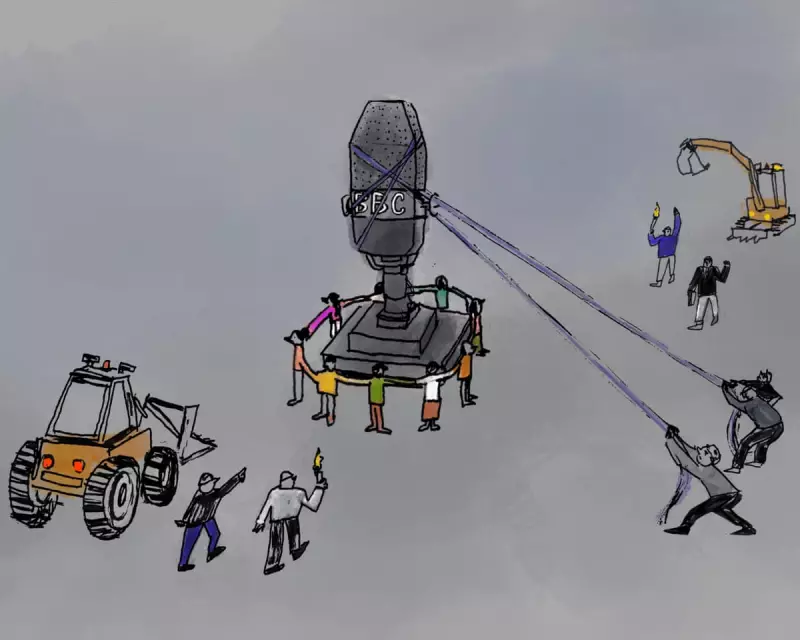
BBC Confronts Unprecedented Challenges in Digital Age
The British Broadcasting Corporation faces threats unlike any in its century-long history, according to Pat Younge, chair of the British Broadcasting Challenge. While the BBC has weathered political pressure and criticism from newspaper publishers for decades, the current landscape presents entirely new dangers that demand urgent action.
The corporation now contends with legal threats from the US president alongside the growing power of six American tech billionaires who control the platforms where most media content is distributed. These platforms include X, Facebook, Instagram, WhatsApp, Amazon Web Services, TikTok USA, YouTube and Google.
Four-Point Rescue Plan for National Broadcaster
The British Broadcasting Challenge has outlined comprehensive proposals to secure the BBC's future against these mounting pressures. The plan addresses governance, funding, and the broadcaster's fundamental principles.

First, the organisation calls for a permanent BBC charter that would establish the corporation in perpetuity while protecting its core values of independence, public service and universality. A supplementary agreement with the culture secretary, renewable every decade, would set service parameters while maintaining these essential principles.
Second, a new governance structure would separate regulatory and management functions. An independently appointed governance board would oversee editorial performance and strategic direction, while the director general would chair a separate management board handling daily operations. Board members would represent different UK regions and face parliamentary scrutiny.
Protecting Universal Access and Quality Content
The proposal emphasises maintaining BBC universality in both geographical coverage and content diversity. This ensures services remain free throughout the UK while providing quality programming that reflects all nations and regions.
Popular programmes like The Traitors, Match of the Day and Gavin and Stacey must continue alongside content the commercial market neglects, according to the plan. This includes programming for minority audiences, prime-time current affairs, creative risks promoting new talent, and coverage of women's and disabled sports.
Funding represents a critical component of the rescue plan. The BBC has suffered a 30% real-terms funding cut over the past 15 years, despite the licence fee representing exceptional value at just £3.35 weekly. The broadcaster reaches 95% of British adults monthly while supporting over 50,000 jobs in the creative sector.
The proposed reforms aim to create a more confident BBC that genuinely listens to audiences while being insulated from partisan political interference. With the charter-renewal process approaching, the government has an opportunity to demonstrate vision and courage in protecting this national institution.