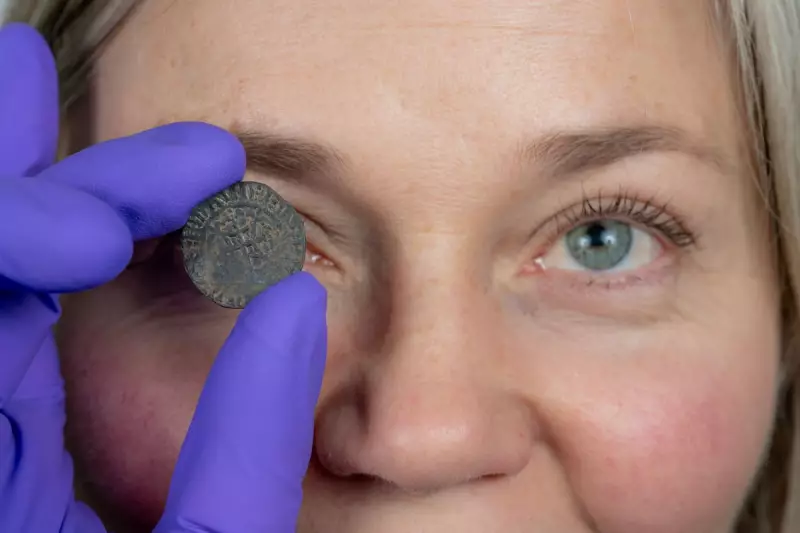
A piece of Scottish history, almost nine centuries old, has been secured for public heritage following a remarkable discovery by a metal detectorist. The artefact in question is the earliest known coin minted in Scotland, a silver penny from the reign of King David I, which has now been allocated to National Museums Scotland (NMS).
A Discovery That Rewrites History
The medieval coin was unearthed in a wooded area near Penicuik, Midlothian, in 2023. Its significance was immediately apparent to experts. Dating from the second half of the 1130s, the coin features a portrait of the monarch on one side and a cross-based design on the other. However, its true historical value lies in the inscription it bears: +E(A?)BALD:E[…]ONESBVRG, with the crucial ESBVRG confirming it was minted in Edinburgh.
This detail has fundamentally altered historical understanding. Until this find, scholars believed all of King David I's earliest coinage was produced at a mint in Carlisle, Cumbria, which the king controlled in the 1130s. "This coin is really significant," explained Dr Alice Blackwell, senior curator of medieval archaeology and history at NMS. "It's the first of that earliest type, the earliest coins to actually have been minted outside of Carlisle. It was minted in Edinburgh, so it's the first time that we have Scottish coinage being minted in what was a core part of the Scottish kingdom."

The Dawn of Scottish Coinage
King David I, who reigned from 1124 to 1153, is credited with introducing Scotland's first native coinage. Before his reign, any coins circulating in Scotland were produced elsewhere, from Roman and Viking ages to other medieval realms. "Scotland had never produced coinage before," Dr Blackwell emphasised. The coins themselves are a primary source, as there are virtually no documentary records detailing the early minting processes.
The discovery of this Edinburgh-minted coin therefore fills a critical gap. "What makes this really significant is that until we found this, we thought all of David’s first coinage was produced in Carlisle," Dr Blackwell noted. This single find expands expert understanding of how and where coinage was established in medieval Scotland, revealing Edinburgh's role from the very beginning.
From a Woodland to the National Collection
The coin's journey to the national collection followed the legal process for treasure finds in Scotland. The detectorist who found it reported the discovery to the Treasure Trove unit. In autumn 2025, the Scottish Archaeological Finds Allocation Panel allocated it to National Museums Scotland. The Crown paid a reward of £15,000 to the finder, via the King’s and Lord Treasurer’s Remembrancer, reflecting the coin's substantial value and importance.
It is believed the silver penny was simply dropped by someone passing through the Midlothian area in medieval times, lying undiscovered for nearly 900 years. While it will be used for vital research, there are hopes it will go on public display in the future. The reign of David I was a period of major reform, including the foundation of royal burghs like Perth and Stirling. Later in his rule, mints were established in other centres including Perth, Berwick-upon-Tweed, and Aberdeen, but this coin stands as the pioneering evidence of Edinburgh's central financial role from the outset of Scotland's monetary history.