The European Union's highest court has delivered a landmark judgement against Poland, declaring its Constitutional Tribunal is not an independent and impartial judicial body. The ruling, issued on Thursday 18 December 2025, centres on appointments made during the tenure of the previous conservative government.
Core of the Controversy: Politicised Appointments
In its detailed ruling, the EU's Court of Justice stated that the way three judges and the president of the Polish Constitutional Tribunal were appointed under the former ruling party, Law and Justice (PiS), compromised the court's status. The period between 2015 and 2023 saw PiS enact sweeping changes to Poland's justice system, bringing top courts under greater political influence.
The Court found this infringed the principle of effective judicial protection and meant Poland had disregarded the primacy, autonomy, and uniform application of EU law. The Constitutional Tribunal, which verifies the compatibility of national laws with Poland's constitution, is a cornerstone of the country's legal framework.

Collision Course with Brussels and Domestic Stalemate
These judicial reforms had already placed Poland on a collision course with the European Commission. The EU executive previously challenged the changes in court and suspended the payment of certain EU funds to Warsaw. Thursday's ruling theoretically obliges Poland to implement national reforms to restore the Tribunal's independence, a fundamental requirement of EU membership.
However, in practice, progress has stalled. Despite a new liberal government taking power in 2023, two of its successive justice ministers have been unable to reverse the changes. A key obstacle is that both Poland's current and immediate past presidents, who hold veto power and are politically aligned with Law and Justice, have blocked or vowed to block any legislative attempts to restore the Tribunal's independence.
Reaction and the Path Forward
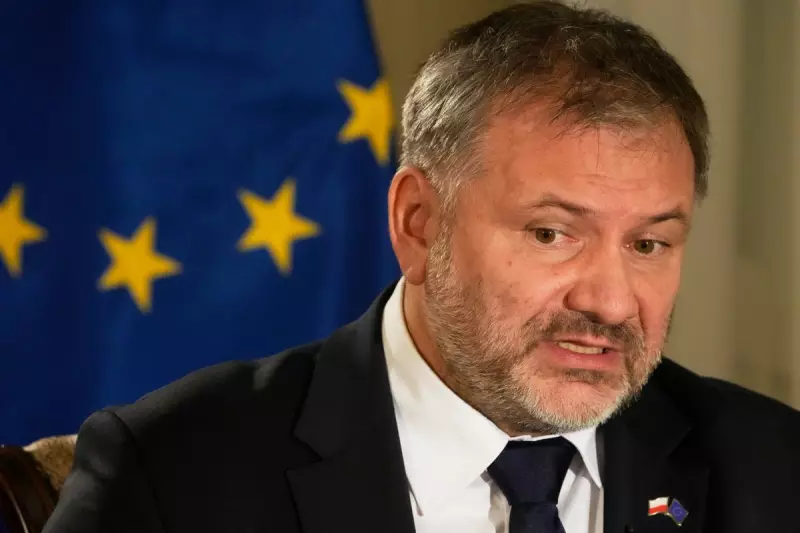
Poland's current Justice Minister, Waldemar Żurek, welcomed the EU court's decision. He stated on social media platform X that the ruling obliges the state to act. "We must rebuild a genuine, independent Tribunal together," Żurek commented. "This is a fundamental issue for the state and citizens. We are ready for this task."
The ruling intensifies the long-standing dispute between Warsaw and Brussels over the rule of law, with the independence of the judiciary now formally in question at the EU's highest legal level. The pressure is now on Polish authorities to find a constitutional solution that satisfies both domestic political realities and the country's obligations as an EU member state.