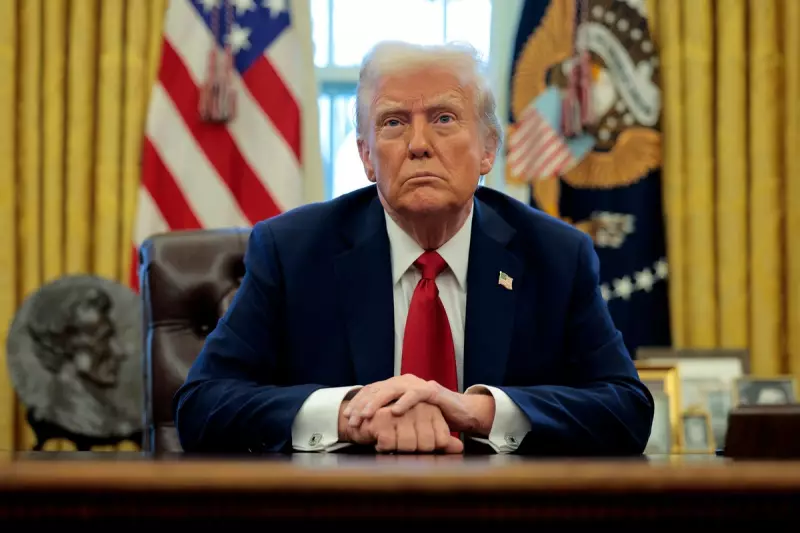
As Donald Trump's first year back in the Oval Office draws to a close, the sheer volume of headlines and rapid-fire policy shifts has made it difficult to keep track. This strategy, once described by former aide Steve Bannon as 'flooding the zone', has been in full effect throughout 2025. From sweeping governmental changes to startling international proposals, here is a look back at some of the most extraordinary stories from a tumultuous year.
The Friday-Night Massacre of Federal Watchdogs
Just five days after his inauguration on a cold January day, President Trump executed what critics termed a 'Friday-night massacre'. In a late-night purge, he removed the independent inspectors general from nearly every major Cabinet-level agency. These officials are tasked with rooting out waste, fraud, and abuse within the federal government.
The move violated a longstanding law requiring 30 days' notice to Congress before such a dismissal. Only the watchdogs at the Department of Justice and the Department of Homeland Security were spared. The purge cleared the way for Trump to install loyalists in key oversight roles at agencies including Defence, State, Transportation, and the Environmental Protection Agency.

Defending his actions to reporters aboard Air Force One, Trump called the firings 'very common' and suggested some watchdogs were 'not doing their job'. This echoed his first-term efforts to weaken independent scrutiny of his administration.
A Bizarre Proposal: The U.S. 'Takeover' of Gaza
In a move that stunned Middle East analysts, President Trump used a February press conference with Israeli Prime Minister Benjamin Netanyahu to float an unprecedented plan. He suggested the United States should 'take over' the Gaza Strip, displacing its 2.1 million Palestinian residents to rebuild it as 'the Riviera of the Middle East'.
Trump claimed 'everybody' he spoke to loved the idea of the U.S. 'owning that piece of land'. The proposal was met with immediate and fierce international condemnation. Saudi Arabia rejected the forced displacement, while Hamas branded the idea 'ridiculous and absurd'.
The White House was forced to walk back the plan less than 24 hours later. It was ultimately superseded by a ceasefire agreement negotiated between Israel and Hamas later in the year.
Weaponising the Executive Order for 'Retribution'
True to his campaign promise of being supporters' 'retribution', President Trump took an unprecedented step in April. He signed an executive order specifically targeting Miles Taylor, a former Homeland Security official who became a vocal critic during Trump's first term. Taylor had anonymously authored a New York Times op-ed and a book detailing efforts to resist the president's directives.
The order stripped Taylor of his security clearances and directed the Department of Justice to investigate him for any potential wrongdoing, despite no specific allegations of classified information breaches. On the same day, a similar order targeted Chris Krebs, the former cybersecurity chief who contradicted Trump's false claims of 2020 election fraud.
Eight months on, neither man has been charged with a crime. However, Trump's 'retribution tour' has continued, with attempts to prosecute other figures like former FBI Director James Comey, though these have been stymied by federal judges.
Invoking Napoleon: A Dubious Claim of Legal Immunity
In February, as federal courts began blocking his administration's aggressive executive actions, President Trump turned to social media with a curious defence. He posted, 'He who saves his Country does not violate any Law.'
The phrase appears to be lifted from the 1970 film Waterloo, where actor Rod Steiger, playing Napoleon Bonaparte, justifies his rule. Trump's invocation of a line used by a historical despot raised immediate eyebrows and seemed to suggest he believed his goals placed him above legal constraints.

Days later, after his administration moved to withhold federal funds from New York City over its congestion pricing scheme, Trump declared 'CONGESTION PRICING IS DEAD' on Truth Social, adding 'LONG LIVE THE KING!' The White House social media account amplified the message with a mocked-up Time magazine cover of Trump wearing a crown. New York's transport authority subsequently sued, and a federal judge blocked the fund withholding, a legal battle that continues.
As 2025 ends, these stories exemplify a year defined by chaotic headlines, controversial actions, and a relentless pace that has left many struggling to process the profound changes enacted from the White House.