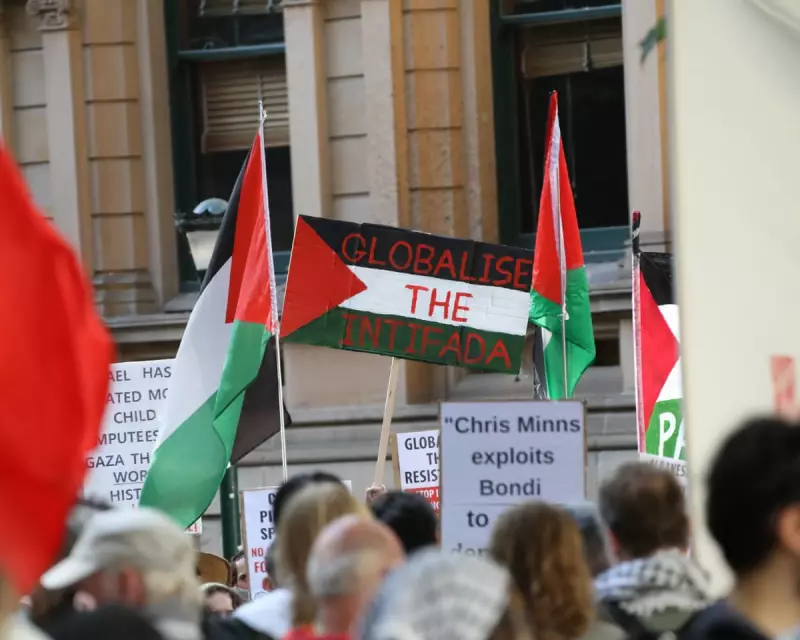
A New South Wales parliamentary inquiry is poised to recommend criminalising the controversial slogan 'globalise the intifada', as it investigates measures to prohibit phrases deemed to incite hatred. The inquiry's chair, Labor MP Edmond Atalla, has stated his draft report will advocate for the ban, a move supported by leading Jewish organisations who are also calling for the prohibition of chants like 'from the river to the sea' and 'death to the IDF'.
Inquiry Process and Secrecy Criticisms
The state parliamentary inquiry, tasked with reviewing hate speech with a specific focus on the 'globalise the intifada' phrase, closed to public submissions last week. It will not hold any public hearings. Chair Edmond Atalla has defended the decision to keep individual submissions secret, stating that only expert and organisational submissions would be published. Approximately 150 have been uploaded so far, with six marked as confidential.
This approach has drawn criticism from the NSW opposition, which has labelled the process 'rushed' and lacking in public transparency. The inquiry was initiated following the Bondi beach terror attack in mid-December. Opposition legal affairs spokesperson Damien Tudehope expressed 'grave doubts' about the government's ability to outlaw the phrase without facing a constitutional challenge and accused the inquiry of having a 'predetermined outcome'.

Divergent Views on Slogans and Meaning
In its submission, the NSW Jewish Board of Deputies argued for a new hate speech offence to cover the three specified phrases, describing them as 'so inherently hateful in that they call for violence, ethnic cleansing or death'. This position was endorsed by the Executive Council of Australian Jewry (ECAJ).
However, other groups have pushed back against the proposed bans. The Palestine Action Group stated it had not led the 'globalise the intifada' chant at rallies and rejected the notion that it was threatening. The progressive Jewish Council of Australia noted that while 'intifada' has been associated with violence historically, this is not its 'inherent or exclusive meaning'. Similarly, the Australian National Imams Council warned that banning specific phrases would disproportionately affect Arab and Muslim Australians, arguing the word 'intifada' carries different meanings in various contexts.
Atalla, who speaks Arabic, countered this view, stating, 'I don't accept that this affects the Islamic community, because 'globalise the intifada' is a direct attack on the Jewish community. It's not an attack on the Islamic community.' He also personally linked the Bondi attack to the concept of intifada.
Legal Hurdles and Committee Decision
Constitutional law expert Professor Anne Twomey from the University of Sydney cautioned that banning particular political chants raises 'difficult legal issues'. She advised the NSW government to rely on content-neutral laws tied to preventing serious harm instead.
The committee, comprised of four Labor members, two crossbenchers, and one National MP, is expected to deliver its final report to the government by 31 January. This timeline would allow for legislation to be voted on when parliament returns in February. NSW Premier Chris Minns has repeatedly called for a ban on 'globalise the intifada' since the Bondi attack.
Atalla emphasised that his pro-ban position was his own, not the committee's, and that the Labor-majority group would decide whether to amend his draft report before tabling it. The state Greens justice spokesperson, Sue Higginson, criticised the process, arguing that if public hearings were held, constitutional lawyers would warn that outlawing political slogans would likely fail in the courts.