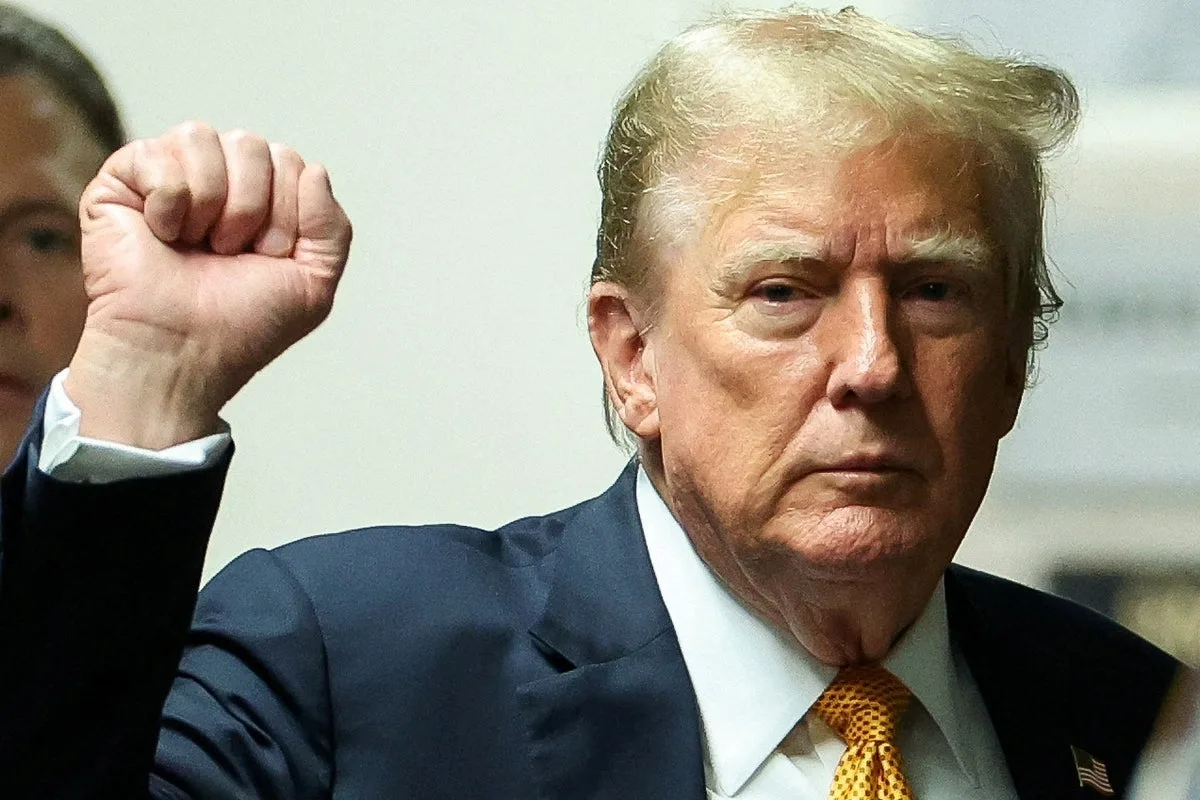
President Donald Trump’s first year back in the White House has been marked by a relentless push to expand executive power, dismantling long-standing institutions and norms that have defined the U.S. federal government for generations. From gutting agencies and targeting political foes to freezing federal funds and issuing blanket pardons, the 79-year-old president has moved at a pace that has left even seasoned Washington observers struggling to keep up.
Experts say these actions reveal a consistent trend: an effort to consolidate and expand presidential authority. Critics argue it undermines the constitutional system of checks and balances, with Norman Ornstein of the American Enterprise Institute describing the past year as “a sprint toward an autocracy.” Supporters, however, counter that Trump is reclaiming control from an entrenched class of unelected bureaucrats. White House Communications Director Steven Cheung said, “Trump is going to go down in history as the most successful and consequential president in our lifetime.”
Domestically, Trump created the Department of Government Efficiency, empowering billionaire Elon Musk to eliminate entire agencies, including USAID, and force nearly 300,000 federal workers out of their jobs. He also froze billions in congressionally approved funds for universities, medical research, and foreign aid, much of it bound for Democratic-led states. Larry Jacobs, director of the Center for the Study of Politics and Governance at the University of Minnesota, noted, “The most central, unwavering power of Congress is the power of the purse. And Donald Trump has refused to spend money that was approved.”

Trump’s second term has seen a record-breaking 124 executive orders in his first 100 days, several deemed unconstitutional by critics and courts, including one ending birthright citizenship and another requiring proof of citizenship for voter registration. He has also aggressively wielded his pardon power, granting clemency to thousands, including nearly all 1,600 people charged in the January 6 Capitol riot, as well as figures convicted of fraud, bribery, and tax evasion—many politically aligned with him.
In another break from norms, Trump has publicly pressured the Department of Justice to investigate political adversaries. In September, he blasted Attorney General Pam Bondi over the lack of charges against ex-FBI Director James Comey, New York Attorney General Letitia James, and Senator Adam Schiff, writing on Truth Social: “JUSTICE MUST BE SERVED.” Soon after, both Comey and James were indicted by federal grand juries. Earlier this month, the Justice Department opened a criminal investigation into Federal Reserve Chairman Jerome Powell, a frequent target of Trump’s ire. John Bolton, Trump’s former national security advisor, cited these as examples of the president’s boundary-pushing approach.