

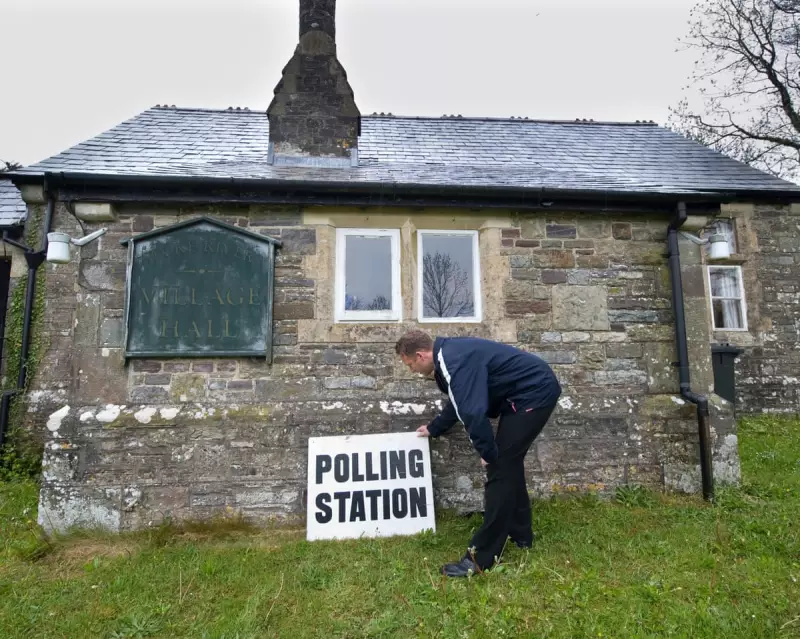
Local elections will be delayed for more than 4 million voters across 29 council areas in England, as confirmed by a cabinet minister on Thursday. This postponement is part of the government's broader shake-up of English councils, affecting polls scheduled for May.
Impact on Voters and Councils
Steve Reed, the Local Government Secretary, stated that while the vast majority of elections will proceed as planned in May, specific areas will see their votes postponed. Among the affected authorities are city councils in Lincoln, Exeter, Norwich, Peterborough, and Preston. Additionally, several districts, including Cannock Chase, Harlow, Welwyn Hatfield, and West Lancashire, along with county councils in East Sussex, West Sussex, Norfolk, and Suffolk, will not hold elections on 7 May.
This decision builds on a previous move to delay elections in nine council areas in 2025, such as East Sussex, West Sussex, Essex, Thurrock, Hampshire, the Isle of Wight, Norfolk, Suffolk, and Surrey. Consequently, some voters will experience a two-year delay in participating in local polls, raising concerns about democratic representation.

Political Reactions and Legal Challenges
The postponement has sparked significant controversy, with Nigel Farage, leader of Reform UK, condemning the decision. Farage accused Keir Starmer of colluding with Labour and Tory councils to cancel elections, claiming that millions of people's right to vote has been stripped away. In response, Reform UK is challenging the move through a judicial review in the High Court, arguing it represents a denial of democracy.
Reform UK's stance is bolstered by its recent electoral successes, including winning over 600 seats and controlling 10 councils in last May's local elections, such as Kent and County Durham. The party also made headlines by overturning a substantial Labour majority in a parliamentary by-election.
Concerns from Labour and Other Voices
Florence Eshalomi, the Labour chair of the committee on housing, communities and local government, also raised alarms. She warned that democracy should not be treated as an inefficiency to be eliminated during the reorganisation process. Eshalomi emphasised that councils should not face the dilemma of choosing between providing frontline services and holding elections.
In some areas, elections will proceed after a one-year delay, including for Essex County Council, Hampshire County Council, and the Isle of Wight Council. Reed addressed criticisms by clarifying that he has not imposed cancellations across the board and is considering further representations before finalising decisions.
Government Rationale and Future Plans
The Ministry of Housing, Communities and Local Government aims to overhaul the two-tier system of local government in much of England, where district and county councils share responsibilities. This system will be replaced with single-tier unitary authorities to streamline governance. Reed announced that once these new unitary councils are established, elections will be held in 2027.
James Cleverly, the Conservative shadow housing, communities and local government secretary, criticised Reed's approach, accusing him of seeking a political advantage by shifting blame. Cleverly argued that Reed's actions are designed to avoid direct responsibility for the delays.
In defence, Reed asserted that he has pursued a locally led approach without imposing top-down decisions, focusing on improving local government efficiency for residents.






