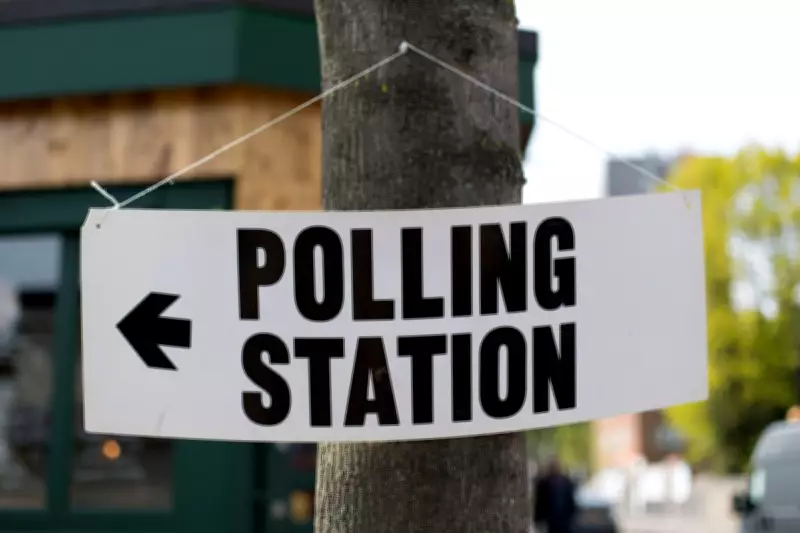
The Government has made a dramatic U-turn, abandoning its controversial plans to postpone council elections scheduled for this May across 30 local authorities. This reversal comes directly in response to a legal challenge mounted by Reform UK and follows critical advice received from government lawyers.
Legal Pressure Forces Election U-Turn
Local Government Secretary Steve Reed had previously approved proposals to delay the May 7 polls, intending this postponement to facilitate a major reorganisation of local authority structures. However, in a significant development on Monday, Mr. Reed wrote to council leaders confirming the Government was withdrawing this decision "in light of recent legal advice." The Government has also formally notified the High Court of this withdrawal.
Financial Support and Political Fallout
Alongside the policy reversal, the Government announced it will make £62 million available to support those local authorities undergoing the planned structural changes. Mr. Reed stated that officials would contact affected councils to assess if any additional practical support is required.

The political ramifications were immediate. Reform UK leader Nigel Farage declared the decision a victory for his party, stating on social media platform X: "We took this Labour government to court and won." The Government has agreed to pay Reform UK's legal costs incurred during the challenge.
Affected Authorities and Judicial Proceedings
The postponed elections would have impacted city councils in Lincoln, Exeter, Norwich, Peterborough, and Preston, alongside several district councils including Cannock Chase, Harlow, Welwyn Hatfield, and West Lancashire. County council voters in East Sussex, West Sussex, Norfolk, and Suffolk would also have seen their polling day delayed.
Judicial proceedings had been moving forward rapidly. In a January court order, Mr. Justice Chamberlain noted that Reform UK was seeking an interim order to block the Government from changing election dates pending a full hearing. The party had requested the full claim be determined before the end of March, when formal election notices are published, with another hearing scheduled for Thursday.
Opposition Criticism and Proposed Reforms
Opposition leaders seized on the Government's reversal as evidence of incompetence. Conservative leader Kemi Badenoch described it as "predictable chaos from a useless Government that cannot make basic decisions," adding that "even the simple stuff that should be business as usual gets messed up."
Liberal Democrat leader Sir Ed Davey went further, stating the Government had been "forced into a humiliating U-turn" and should be stripped of its power to "cancel elections on a whim." He revealed that the Liberal Democrats have brought forward a legislative amendment designed to remove this ministerial power and protect the public's voting rights through statute rather than ministerial discretion.
Government's Stated Priority
Following the reversal, the Ministry of Housing, Communities and Local Government emphasised that "providing certainty to councils about their local elections is now the most crucial thing." This statement underscores the administrative importance of maintaining the electoral calendar despite the ongoing reorganisation plans.
The episode highlights the complex interplay between local government reform, electoral law, and political accountability, with the Government's initial postponement plans ultimately collapsing under legal pressure and political opposition.