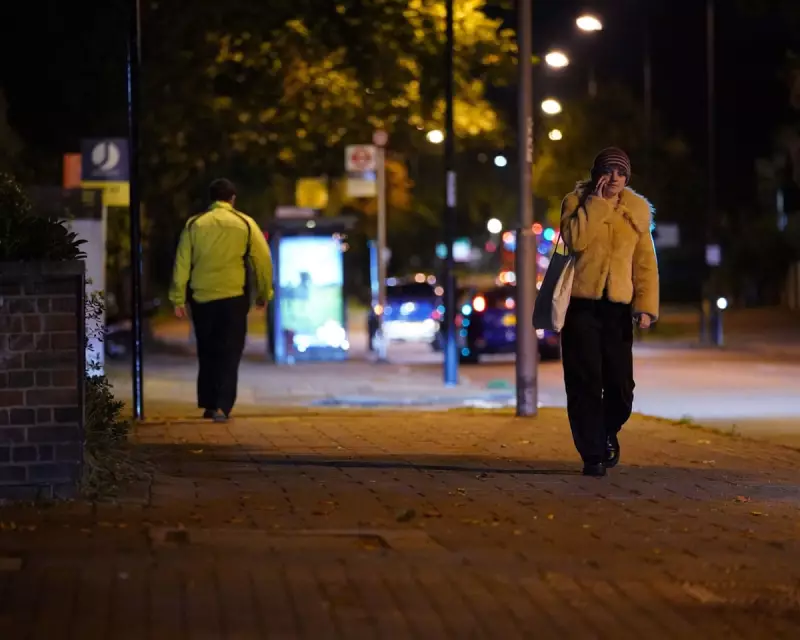
Critics have raised significant concerns that the government's draft proposals to overhaul England's planning system completely fail to mention women or girls, ignoring crucial recommendations made to enhance safety in public spaces following the tragic death of Sarah Everard.
Omission in Draft Planning Framework
The draft National Planning Policy Framework (NPPF), which outlines the government's ambitious plans to substantially increase housebuilding across England, contains "no references whatsoever to women, girls, gendered safety, or violence against women in the built environment," according to Liberal Democrat MPs Anna Sabine and Gideon Amos. This oversight occurs despite the government's own Violence Against Women and Girls (VAWG) strategy, published just two days before the planning proposals, which explicitly states that "design and planning are critical tools" in protecting women.
Contradiction with Official Recommendations
The VAWG strategy and part two of the Angiolini inquiry, both released in the same month as the planning draft, strongly advocate for embedding women's safety into the planning of public spaces. The strategy emphasises that "well-lit streets, accessible transport, and thoughtful urban design can deter violence, reduce opportunities for harm, and send a clear message that public spaces belong to everyone."

In a letter addressed to Housing Minister Matthew Pennycook and Safeguarding Minister Jess Phillips, the MPs argued that "planning policy is one of the most powerful structural tools the state has to prevent harm before it occurs. If the NPPF is silent on gendered safety, we embed risk and inequality into the fabric of every new development."
Government Response and Criticism
When questioned by the Guardian about these concerns, a spokesperson for the Ministry of Housing, Communities and Local Government (MHCLG) stated that "the NPPF is a planning document" focused on guidelines for housebuilding, while "the VAWG strategy is about protecting women and girls from violence and misogyny." The spokesperson added that it was "unclear as to why anyone would expect the two things to be combined," making it difficult to address the criticism directly.
Anna Sabine described this response as "incredibly arrogant," remarking that "if you don't understand how women's safety ties in with how we design new spaces, you shouldn't be working at MHCLG."
Expert Analysis and Warnings
Susannah Walker, a gender planning consultant who identified the omission, highlighted that the proposals disregard both the VAWG strategy and the Angiolini inquiry's findings. The inquiry, commissioned after Everard's murder by serving police officer Wayne Couzens in March 2021, noted that promises to enhance women's safety had been hindered by a "paralysis," with crime prevention officers sometimes being ignored.
Walker warned that without specific instructions in the NPPF, local councils are unlikely to prioritise women and girls' safety. "Councils are underfunded, so if it doesn't go in the NPPF, then it just gets left out because it's not mandatory," she explained. "Coming after two high-level government reports which both talk about designing space to keep women safe, this is the most extraordinary omission."
Cross-Departmental Collaboration Needed
Jess Phillips has consistently argued that achieving the government's goal of halving violence against women and girls within a decade requires involvement from all government departments. Sabine expressed confidence in Phillips's commitment to fostering cross-departmental cooperation but urged her to "march into" Pennycook's office to amend the draft framework.
"We have a world that's largely designed by and for men," Sabine observed. "But if you take into account women and girls' safety, you can make very practical decisions that will really benefit women and girls' lives."
The ongoing debate underscores a critical gap between policy intentions and practical implementation, with campaigners and urban planners asserting that the current draft proposals risk perpetuating inequality and embedding danger into the very infrastructure of new developments across England.