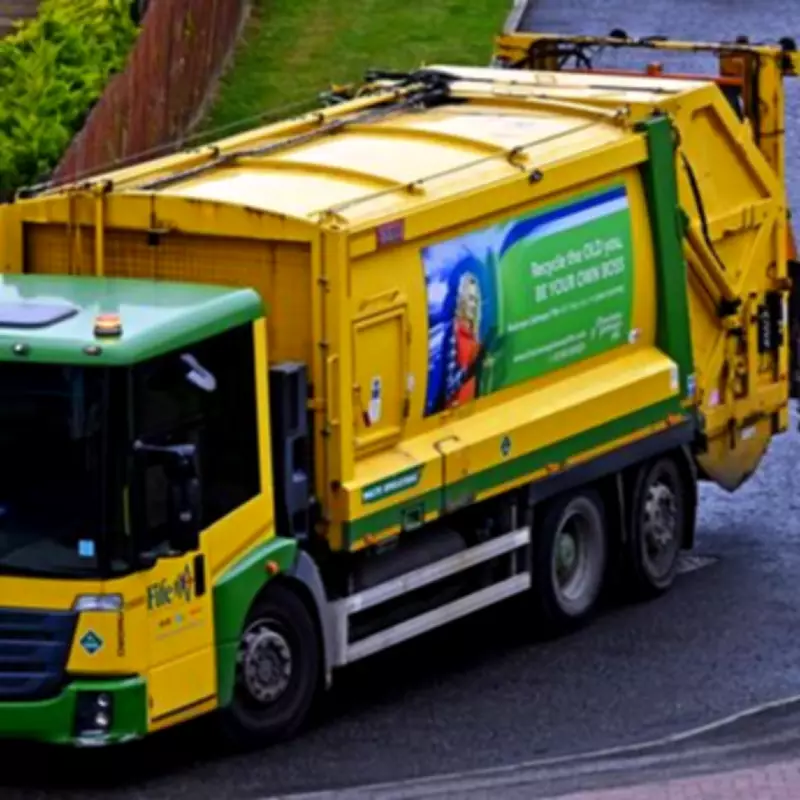
A woman left a nine-word note to get her binman to take the wrong colour bin on collection day. With waste only being collected every other week in most areas across the UK, many people have experienced the issue of having too much rubbish to fit in their general waste or recycling bins.
Why the Wrong Bin Was Used
Whether it has just been somebody's birthday, you have done a clear-out in your home, or had a party, there are times when the standard size bin is not enough. People with access to a car may choose to go to a refuse centre to get rid of their spare waste, while others may put it in a shed or garden and wait until it has been emptied. However, some individuals decide to try their luck with refuse workers to see if they can get rid of it all in one go. This was true for one woman, who filled up the wrong colour bin with waste to be collected.
The Note That Worked
Barbara, who describes herself as a cake business owner and a gypsy wife, left a nine-word note on the bin and watched her home's CCTV to see what happened next. To her surprise, her video showed the binman reading the note before opening the lid of her bin and wheeling it towards the refuse truck. The woman shared the full nine-word note she wrote to the man, which said: "Please empty me, I identify as a black bin", before signing off with a polite "thank you."

Online Reactions
Barbara said the worker "understood the assignment" while others called him a "legend" when commenting on the video. One commenter said: "No because I thought I was the only one. Why do they sometimes not take my bin... what am I doing wrong help a young girl out." A second said: "Not all heroes wear a cape, some wear a hi viz and grey cap." A third said: "He really said okay that's cool with me and moved along with his day. Love him." Another added: "Nooo cause I've previously paid mine a fiver lol."
New Bin Rules in England from August 1
English households could now have as many as four bins and have been notified about six categories of items that are not recyclable. Officials warn that misuse of bins could lead to hefty fines. Bin collectors will be tasked with separately collecting food and garden waste, paper and card, all other dry recyclables, and general rubbish. Any banned items discovered in recycling bins could result in a penalty of up to £400.

Items Prohibited from Recycling Bins
- Candles
- Drinking glasses
- Flat glass
- Glass cookware (such as Pyrex)
- Light bulbs and tubes
- Microwave plates
- Mirrors
- Vases
- Window glass
- Ceramics, such as crockery or earthenware
- Laminated foil, like pet food pouches and coffee pouches
- Electrical items and batteries
- General kitchenware like cutlery, pots and pans
- Kettles
- Irons
- Pipes
- Metal packaging that has contained white spirits, paints, engine oils or antifreeze
- Plastic packaging or non-packaging items labelled 'compostable' or 'biodegradable'
- Plastic bottles that have contained white spirits, paints, engine oils or antifreeze
- Bulky rigid plastics such as garden furniture, bins and plastic toys
- Polystyrene (expanded and high impact) packaging, such as packing beads
- Polyvinyl chloride (PVC) packaging
- Food and drinks cartons made of a fibre-based composite (these should be collected in the plastic stream)
- Absorbent hygiene products (AHPs), including nappies, period products and incontinence products
- Cotton wool or makeup pads
- Tissue or toilet paper
- Wet wipes
- Animal bedding
- Bulky waste (including garden furniture and fencing)
- Garden tools or other gardening equipment
- Plant pots
- Plastics
- Sand
- Sawdust
- Stone, gravel or brick
- Tea bags or coffee grounds
- Branches and trees over a certain size may have to be cut into smaller pieces to follow local guidance