

As evening descends upon Horse Guards, the historic epicentre of British military tradition, the ancient Admiralty building glimmers with lights while the equestrian statue of 1st Viscount Wolseley gradually disappears into the gathering darkness. This is no mere museum piece frozen in time. Within an elegant office that once served as the inner sanctum for the Duke of Wellington, now occupied by the General Officer Commanding London District, a crucial conversation unfolds about the enduring psychological toll of warfare.
Challenging The Narrative
Lieutenant-General Sir Tom Copinger-Symes, a senior officer and Colonel Commandant of The Rifles, has taken a firm stance against recent newspaper reports suggesting his regiment faces a disproportionate suicide crisis. "The statistics are very clear," the Lieutenant-General asserts. "There is no disproportionate problem for The Rifles in terms of suicide, among either serving riflemen or veterans. Every single death is a tragedy, and we take them all with the utmost seriousness. What we do have is a disproportionate level of effort within the Regiment to address these issues and prevent further loss of life."
The Human Cost
The recent suicide of Serjeant Andrew Borthwick, whose funeral took place last Tuesday, has brought these concerns into sharp focus. Borthwick served with distinction in both Iraq and Afghanistan, surviving a gunshot wound to the chest in Helmand during 2009 that cost him part of a lung. Refusing medical discharge, he recovered and returned for another tour in Afghanistan in 2013. More recently, he served with the 4th Battalion Ranger Regiment as part of the Army Special Operations Brigade.

This exemplary light infantry NCO, a father of three, took his own life at home in November last year at age 41. "Borth was given a second chance once, but life became too heavy in the end," lamented a former comrade online. "I wish he had known how much he meant to the lads and how deeply he is missed."
Conflicting Perspectives
Former Army warrant officer Jim Wilde of Veterans United Against Suicide told the Daily Mail in December: "There is a problem with the number of suicides in The Rifles, as the figures clearly show. We have raised this with the MoD and government but have been ignored, while the death toll continues to mount."
Two days after this statement, another Rifleman reportedly took his own life on New Year's Day after learning of Borthwick's passing, though the two men had not served together according to regimental sources.
Statistical Complexities
Measuring military suicide rates presents significant challenges due to limited public data availability. No comprehensive database exists for comparing deaths across different units, and veterans' groups and official bodies often use conflicting methodologies that produce misleading results.
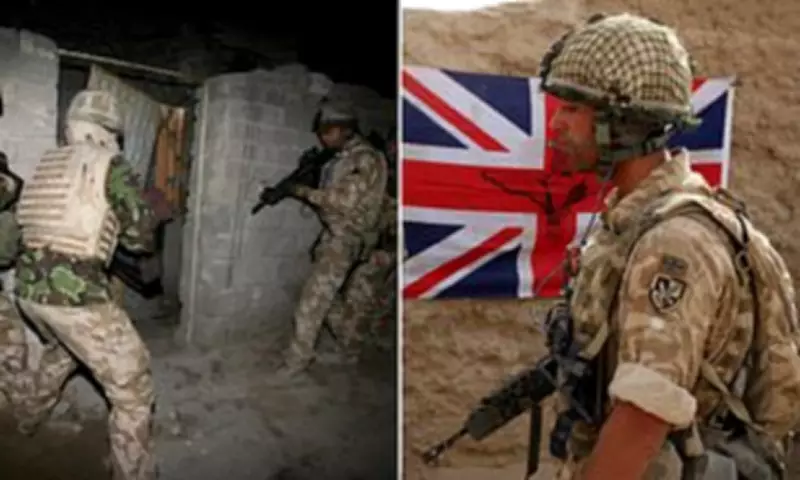
The Rifles, formed in 2007 through the amalgamation of several historic regiments including the Royal Green Jackets and The Light Infantry, represents Britain's largest infantry regiment with over 3,800 soldiers across four regular and three reserve battalions. As the most decorated regiment in the Army with more than 900 battle honours and 117 Victoria Crosses to its name, The Rifles has seen extensive combat in Iraq and Afghanistan, sustaining more casualties than any other regiment during those conflicts with 62 soldiers killed.
Understanding The Factors
Professor Edgar Jones of King's College London, an expert on the psychological consequences of modern warfare, explains: "The subject of suicide in the military remains somewhat taboo. Those left behind often struggle with difficult emotions like guilt and shame. I'm not sure the military will ever eliminate suicide completely because armed forces will always be exposed to combat trauma."
According to regimental data provided to the Daily Mail, one in three Riflemen who died by suicide had never been deployed on operations, suggesting combat-related PTSD represents just one contributing factor among many. Social background, childhood experiences, and post-service transition challenges all play significant roles.

Pioneering Prevention Efforts
Chloe Mackay, CEO of military mental health charity Combat Stress, reveals they support 20,000 cases annually, with 70% involving veterans of Iraq or Afghanistan. "Veterans typically carry on apparently holding things together on the surface," she notes, "but on average it takes 14 years after deployment for a soldier to come forward for help."
Within The Rifles, retired Lieutenant-Colonel Baz Melia heads the groundbreaking Always a Rifleman Programme (AARP), a unique 24/7 suicide prevention initiative funded and operated by the regimental community. Founded in 2021 following a spike in military suicides, AARP maintains a helpline and a team of ten former Riflemen ready to intervene at a moment's notice when comrades show signs of distress.
"My job is to stop suicide," Melia states plainly. "It matters not how many lives we save, only those we didn't. Many who take their own life have experienced childhood trauma overlaid with adult difficulties like family tragedy or divorce. Operational trauma often becomes the final straw."
The Ripple Effect
Melia emphasises the phenomenon of "suicide contagion," where one death can trigger others. "One death touches about 250 people on average," he explains. "We must analyse the 50 closest to any serviceman to prevent one suicide turning into a cluster."
The establishment of AARP represents what Melia calls "a very brave move because it brought the issue into the open. Both serving and veteran Riflemen resent the implication that we have a bigger problem than anyone else. If anything, we have less of an issue."
Personal Tragedies
The devastating long-term impact on families emerges clearly in the case of Teresa Cole, whose husband Lance Corporal Jonny Cole served with 2 Rifles in Afghanistan. After witnessing traumatic events in Sangin during 2009 and being wounded in a rocket attack, Jonny received treatment where Prince Charles visited his ward and commended his service.
His mental health deteriorated significantly thereafter, leading to medical discharge in 2013 due to hearing loss. Despite five previous attempts, his sixth suicide attempt in 2018 proved fatal, three years before AARP's establishment. A subsequent inquest ruled that his departure from the Army without a PTSD diagnosis constituted "a failure."
Teresa continues fighting legal battles against the MoD and healthcare providers while grappling with her loss. "I didn't choose this," she says. "If Jonny had been helped more, I would still have him. How much more do the authorities want me to endure?"
The Statistical Reality
During a difficult week involving both a funeral and an inquest for Riflemen lost to suicide, The Rifles shared internal statistics with the Daily Mail showing 44 confirmed suicides since 2007. Of these, 15 involved serving soldiers (including four reservists) and 29 were veterans. Five had served in regiments merged to form The Rifles but not in The Rifles itself.
According to Rifles Regimental Secretary Peter Balls, the Office for National Statistics recorded 253 veteran suicides in 2021, with only one certainly from The Rifles and possibly two others. "That is not a high percentage," Balls notes. With the MoD unable to provide detailed breakdowns of other units' suicide rates for comparison, context remains limited, though serving Army personnel suicide rates remain significantly lower than in the general population.
Perhaps these statistics ultimately reveal less about any single regiment and more about war's enduring capacity to destroy happiness. The fundamental truth remains that every self-inflicted death represents a profound tragedy, and looking after one another represents our most essential duty.





