A leading defence analyst has issued a stark warning that Australia is dangerously ill-equipped for a potential conflict in the Indo-Pacific, as China commences major military exercises encircling Taiwan.
Military Drills and a Stark Warning
Maritime security specialist Jennifer Parker, a former senior official in Australia's Department of Defence, told the Daily Mail that Beijing's latest manoeuvres represent a troubling trend that Canberra can no longer afford to overlook. 'Conflict in this region is not inevitable, but it's increasingly likely, and Australia is not prepared,' Parker stated bluntly.
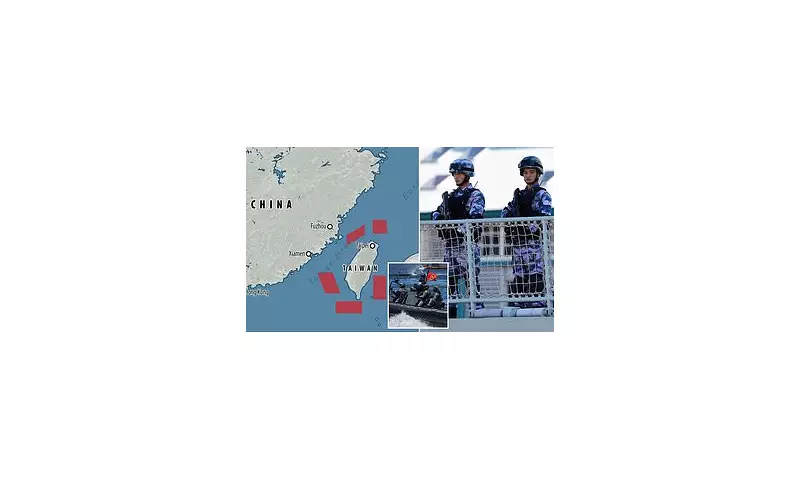
Her warning coincides with Taiwan mobilising its troops and activating emergency response centres to counter China's large-scale exercises, codenamed 'Justice Mission 2025'. The People's Liberation Army (PLA) confirmed the drills involve its Army, Navy, Air Force and Rocket Force under the Eastern Theatre Command, with live-fire exercises scheduled across five zones near Taiwan.

PLA spokesman Colonel Shi Yi said the operations send a strong message to pro-independence factions on the island. Taiwan's Presidential Office condemned the actions as 'military intimidation', with spokeswoman Karen Kuo stating, 'Taiwan expresses its strong condemnation.'
Beyond Taiwan: A Regional Threat and Australian Vulnerability
Parker emphasised that the significance of these exercises extends far beyond the Taiwan Strait. 'China has been intensifying its military coercion since 2022. Every year these exercises become more complex and comprehensive,' she explained. 'What's different this time is that a Chinese spokesperson openly admitted they're rehearsing sealing off Taiwan. That's a first.'
While not an immediate invasion, Parker cautioned the drills highlight a mounting risk. 'If China ever decided to invade, it would likely do so under the guise of an exercise. That's why Taiwan is so concerned.'
She argued that Australia is woefully unprepared for any regional escalation, criticising an over-focus on the AUKUS pact. 'It's important, but it's a technology transfer program. If a regional conflict erupts tomorrow, Australia will be involved, whether to protect our trade routes or honour alliance commitments.'
A Call for Urgent Action and Whole-of-Nation Preparedness
The alarm follows the 2023 Defence Strategic Review, which found Australia's military was 'not fit for purpose'. Although the Albanese Government has pledged an extra A$50.3 billion over the next decade, aiming to lift defence spending to about 2.3% of GDP by the early 2030s, experts contend this is insufficient. Analysts argue spending must reach 3% of GDP to counter rising threats.
Parker called for an urgent shift from rhetoric to concrete action, advocating for a 'whole-of-nation approach'. This requires:
- Increasing defence spending beyond current commitments.
- Accelerating the delivery of critical military capabilities.
- Investing seriously in societal and civil resilience.
'Australians need to understand the stakes,' she stressed. 'Our economy and security depend on maritime trade routes through contested waters. If conflict erupts, it will affect every household.'
Beyond hardware, she urged stronger security ties with regional partners like Japan and the Philippines. 'We can't just rely on the US alliance - we need a network of security relationships,' Parker said. 'The world is changing fast. Every year we delay is a year lost. Australia must prepare now, or risk being caught flat-footed in the most dangerous strategic environment since World War II.'