Europe is gradually moving towards asserting its independence from America while confronting the persistent Russian threat to its democracies. According to world affairs editor Sam Kiley, the time has come for monumental strides rather than cautious steps in addressing this challenge.
A Bold Proposal for European Security
The most significant immediate measure would be granting NATO membership to Ukraine, Georgia and Bosnia-Herzegovina. However, this initiative would likely face immediate vetoes from the United States, alongside Hungary and Slovenia, both governed by pro-Putin autocrats.
An alternative solution gaining traction involves creating a non-NATO, NATO-style alliance among Western nations. Such an entity would represent a formidable force that could give Vladimir Putin serious pause for thought, particularly if it operated with the same confidence the Kremlin has demonstrated on the global stage.

From Putin himself to ordinary Russian citizens, there exists a deeply ingrained belief that "the West" constitutes their enemy. His supporters, including Western sympathisers, maintain that NATO expanded into former Soviet-dominated Eastern Europe through underhanded methods as part of a march toward Moscow.
Challenging Russian Narratives
This perspective fundamentally misrepresents reality. Former Eastern bloc nations emerged from Soviet domination as democratic states and freely chose to join a military alliance specifically designed to prevent future Russian invasions.
Since Russian leadership refuses to acknowledge this truth, there's little reason for NATO to avoid expanding its protective umbrella over frontline states bordering the Russian federation. Such expansion would help rebalance peace negotiations away from exclusively Russian perspectives toward incorporating Ukrainian and European priorities.
Russia's unprovoked invasion of Ukraine represents a blatant attempt to strip the nation of its sovereignty. The justification about protecting Russian-speaking populations rings hollow when evidence shows that most civilian casualties and destruction have been inflicted by Russia upon Russian-speaking communities in eastern Ukraine.
Shifting Global Alliances
The United States under President Trump has demonstrated pronounced pro-Russian tendencies while abandoning the multilateral approach that previously underpinned its leadership of the free world. This leadership role is rapidly diminishing.
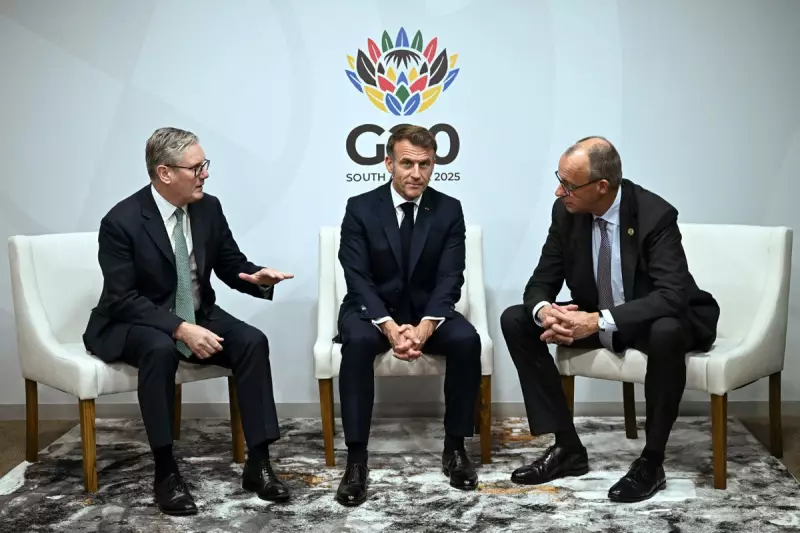
Recently, the G19 meeting in Johannesburg - which would have been the G20 had American representatives attended - issued a communique promoting renewable energy, equitable mineral agreements and debt relief for developing nations, all policies Trump strongly opposes.
Meanwhile, at COP30, though weakened by Trump's boycott of climate events, the UK, Europe and numerous other nations managed to maintain commitments to addressing climate change dangers.
While the US advocates for Russia's return to the G8 following a Ukrainian peace deal, other nations remain sceptical. German Chancellor Friedrich Merz stated: "At the moment, I cannot see that among the six members of today's G7 who are not America, there is a willingness to readmit Russia to this group."
European Peace Initiatives Gain Momentum
Europe, Ukraine, Canada and other genuine allies of Kyiv are carefully modifying a peculiar peace proposal that, despite American origins, shows strong indications of being a Kremlin document. As Sir Keir Starmer noted, the proposal requires "more work" before becoming acceptable.
A separate European proposal focusing on a ceasefire rather than a final peace agreement has been circulated. This plan offers no financial incentives for the Trump administration or American interests, guarantees future negotiations based on current frontlines, and most importantly ensures Ukraine's future security.
Russia summarily dismissed the plan as "completely unconstructive", while Trump maintained optimistic signals about progress. Uncertainty surrounds whether the 47th President was even aware of the 28-point Russian-American plan developed by his son-in-law Jared Kushner and chief envoy Steve Witkoff.

Beyond American borders, there exists both necessity and determination to ensure Russia emerges from its Ukrainian adventures without any perception of victory. Trump has suggested Russia should retain territories acquired through military effort, but a powerful alternative approach is emerging.
Europe's Overwhelming Strategic Advantage
The combined economic power of NATO nations excluding the US, Hungary and Slovenia exceeds Russia's economy by over four times. This bloc allocates 3.5-4% more of its budget to defence than the Kremlin and could mobilise approximately 3.2 million troops compared to Russia's 1.5 million.
This represents substantial power far beyond Russia's capacity to resist. Finland has already joined NATO to prevent becoming another Ukraine or Georgia. Bringing both nations under NATO's protective umbrella, or a similar mutual defence arrangement, would enhance Western security without requiring immediate massive new expenditures.
With Russian forces occupying portions of both Georgian and Ukrainian territory, the Kremlin would reconsider further advances if they risked confrontation with the best-equipped military and economic bloc on the planet, complete with advanced aircraft and long-range missiles.
As Europe advances its ceasefire proposal, it requires a credible threat to unsettle Putin. A NATO-style defence pact would achieve this objective. Rapid agreement on such an alliance would immediately place the Kremlin on the defensive.
While Russia can, does and will continue to threaten nuclear weapon deployment, neither China nor the US would tolerate even battlefield nuclear weapons use. Moscow would risk annihilation. Europe and its allies don't require American support to counter the Moscow threat. They possess the troops, financial resources and military capability - they simply need to demonstrate the courage and conviction to step decisively into history.