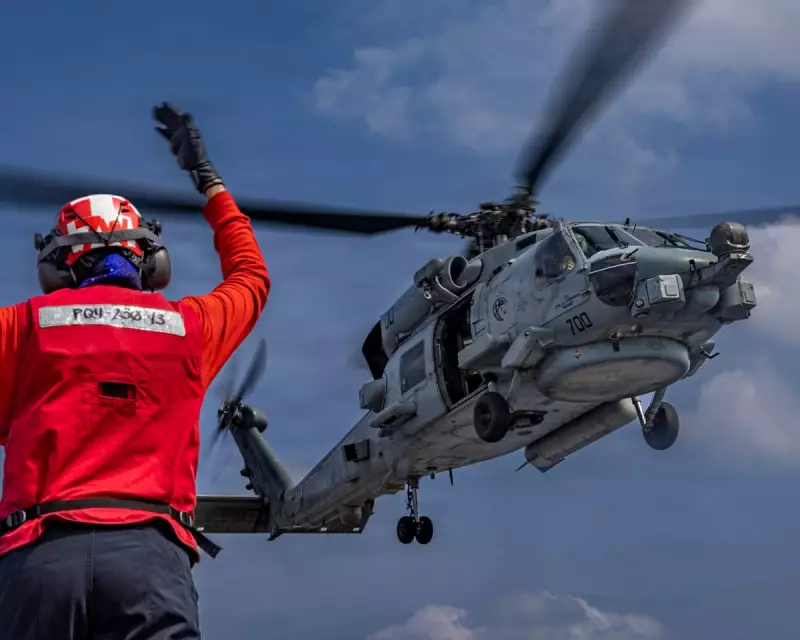
The Iranian government is reportedly preparing for a potential missile assault from the United States and Israel, following the deployment of key US naval assets to the region. Observers indicate that the arrival of the USS Abraham Lincoln aircraft carrier strike group has heightened tensions significantly.
Military Buildup and Strategic Positioning
Washington, in coordination with Israeli air capabilities, is believed to possess sufficient firepower to launch an attack designed to destabilise or overthrow the Iranian regime. The US fleet, which includes several guided-missile destroyers, has not yet reached its final operational positions but is already within striking distance of Iranian territory.
Over the weekend, the US military announced plans to conduct exercises in the region, explicitly stating the aim is "to demonstrate the ability to deploy, disperse, and sustain combat airpower." This show of force comes amidst a severe economic downturn in Iran, with the stock market experiencing a record daily fall on Monday as diplomatic prospects remain bleak.

Iran's Defiant Response and Internal Strife
Iranian officials have issued stern warnings in response to the military buildup. Foreign ministry spokesperson Esmail Baghaei stated that Iran's armed forces are "carefully monitoring every movement" and cautioned that threats "go against the principles of the international system." He vowed a "comprehensive and regrettable response to any aggression."
Internally, the regime faces profound challenges. New official figures reveal inflation has soared to 60%, exacerbating public discontent over falling living standards. Ali Larijani, secretary of Iran's supreme national security council, accused the US of attempting to "destroy Iran's social cohesion" as a precursor to military action, framing domestic unrest as a prelude to externally provoked conflict.
Complex Geopolitical Calculations
The potential for military action is fraught with complexity. It remains uncertain whether a US-led attack would reignite the widespread street protests that have rocked Iran. Many Iranians opposed to the clerical leadership also reject the concept of externally imposed regime change, creating a delicate political landscape.
Regional powers, including the United Arab Emirates, have declared they will not permit their airspace or territorial waters to be used for an attack on Iran. However, the positioning of the carrier strike group in the Mediterranean reduces reliance on such permissions from third parties.
Human Cost and International Scrutiny
The human toll of recent unrest continues to be a point of intense controversy. Estimates of protester fatalities vary dramatically, with the Human Rights Activists news agency reporting a death toll of 5,419, with a further 17,000 cases under investigation. United Nations special rapporteur Mai Sato noted she could not verify these figures but highlighted allegations of families being forced to pay ransoms to retrieve loved ones' bodies—a claim vehemently denied by Tehran.
Internet access has been severely restricted since 8 January, with Iranian communications authorities warning that the economy cannot withstand an outage exceeding twenty days. Meanwhile, in Europe, Italian Foreign Minister Antonio Tajani has recommended that the EU designate the Islamic Revolutionary Guards Corps as a proscribed organisation.
The situation remains volatile, with the US administration reportedly divided on pursuing regime change in a nation of 90 million people. Previous hesitations by the Trump administration, driven by concerns over protecting Israel from reprisals and the absence of a clear plan to remove Supreme Leader Ayatollah Ali Khamenei, have given way to renewed military posturing that keeps the region on a knife-edge.