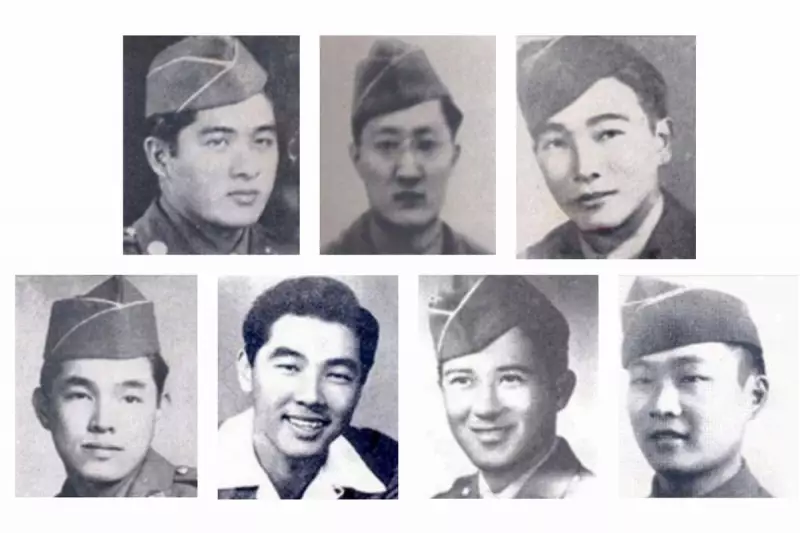
Decades-Long Recognition for Japanese American WWII Heroes
In a poignant ceremony held in Honolulu, seven Japanese American soldiers who made the ultimate sacrifice during World War II have been posthumously promoted to officer ranks. This solemn recognition comes more than eight decades after their deaths, finally honouring their service despite the prejudice they faced as individuals once branded "enemy aliens" by their own country.
A Ceremony of Remembrance and Respect
The moving event took place at a military memorial park in Honolulu, where framed photographs of the seven men were adorned with traditional white flower lei. Family members watched from tents as military personnel offered salutes to their ancestors, with the rain ceasing just as the ceremony commenced—a moment many described as symbolic.
The seven soldiers—Daniel Betsui, Jenhatsu Chinen, Robert Murata, Grover Nagaji, Akio Nishikawa, Hiroichi Tomita and Howard Urabe—were all students at the University of Hawaii and cadets in the Reserve Officer Training Corps when Japan attacked Pearl Harbor on December 7, 1941. They had been on track to become Army officers before history dramatically altered their paths.

From "Enemy Aliens" to Decorated Heroes
Following the Pearl Harbor attack, the United States barred most Japanese Americans from military service and designated them as enemy aliens. The seven cadets initially served in the Hawaii Territorial Guard but were soon removed from those positions.
They instead joined a civilian labour battalion known as the "Varsity Victory Volunteers," performing manual tasks such as digging ditches and breaking rocks. Their opportunity for combat service came in early 1943 when American leaders announced the formation of a segregated Japanese American regiment.
The seven men were among those who joined what became known as the 442nd Regimental Combat Team, which—along with the 100th Battalion comprised mostly of Japanese Americans from Hawaii—would become one of the most decorated units in American military history. Remarkably, some soldiers fought for the Allies while their relatives were detained in Japanese American internment camps back in the United States.
Ultimate Sacrifice in European Theatre
All seven soldiers died fighting in Europe in 1944. Six were killed during the campaign to liberate Italy from Nazi Germany, while Robert Murata fell to an artillery shell in eastern France. Despite Hawaii not yet being a state at the time of their births, all were American citizens because they were born in Hawaii after its annexation in 1898.
At the ceremony, the men were promoted to the rank of second lieutenant—the position they would have attained had they completed their ROTC program before the war intervened.
Family Reflections and Historical Context
Todd Murata, 65, nephew of Robert Murata, grew up hearing stories about his uncle's sacrifice. "It's an honour to be related to one of those people, those men, who volunteered for service," he reflected. "After all these years, people still remember them."
First Sergeant Nakoa Hoe of what is now the 100th Battalion, 442nd Regiment in the Army Reserve emphasised the importance of the recognition. "It is important for us to really kind of give back and recognise our forefathers and these veterans that we stand on the shoulders of," he said, noting that the once-segregated unit now includes a "multitude of cultures."
He added that the seven "sacrificed so much at a challenging time when their loyalty to their country was questioned and they even had family members imprisoned."
Broader Significance Amid Contemporary Debates
The ceremony comes amid ongoing national conversations about how American history is remembered and taught. Lieutenant Colonel Jerrod Melander, who previously led the University of Hawaii's ROTC program as professor of military science, stressed that honouring the seven soldiers isn't about contemporary diversity initiatives but rather recognising them for their merit.
"They served in the ultimate capacity of giving their lives for the country," Melander stated, revealing that he launched the commissioning effort in 2023 during the Biden administration and that the promotions were approved last year during the Trump administration.

Laura Lyons, interim vice provost for academic excellence at the University of Hawaii at Manoa, called their promotions especially significant. "Everyone's contribution to and sacrifice for the ideals of freedom and the security of this country should matter and should be acknowledged, regardless of who they are," she affirmed.
The University of Hawaii had previously awarded the men posthumous degrees in 2012, adding another layer to their belated recognition. This latest honour represents a crucial step in acknowledging the complex history of Japanese American service members who fought for a nation that initially questioned their loyalty, yet who demonstrated extraordinary courage and commitment to American ideals.