

Lockheed Martin, the world's largest arms manufacturer, has projected record-breaking profits and revenue for 2026, surpassing Wall Street's expectations as global conflicts continue to fuel demand for advanced military hardware. The company's shares experienced a significant 7.1% surge in early New York trading following the announcement, reflecting investor confidence in the defence sector's robust growth trajectory.
Geopolitical Tensions Drive Unprecedented Demand
The surge in defence spending is primarily attributed to ongoing conflicts in the Middle East and Russia's prolonged war in Ukraine, which have created sustained demand for sophisticated weapons systems. These geopolitical tensions were further exacerbated by the recent capture of the Venezuelan president by U.S. forces, an operation that utilised Lockheed Martin's advanced military technology including F-35 and F-22 fighter jets, RQ-170 stealth drones, and Sikorsky Black Hawk helicopters.
CEO Jim Taiclet revealed these operational details during a post-earnings conference call with investors, highlighting how real-world military engagements directly translate to increased business for major defence contractors. The company's strategic positioning in global defence markets has proven particularly advantageous during this period of heightened international instability.

Major Production Increases for Key Defence Systems
Earlier this month, Lockheed Martin secured a substantial seven-year agreement with the U.S. Department of Defense to dramatically increase production of Patriot PAC-3 missile interceptors. The contract will boost annual production from 600 units to an impressive 2,000 units, representing a more than threefold increase in manufacturing capacity for this critical air defence system.
In a parallel development announced on Thursday, the company reached another significant agreement with the Department of Defense to more than quadruple production of its Terminal High Altitude Area Defense (THAAD) missile interceptors. Production will escalate from 96 units annually to 400 units, further solidifying Lockheed Martin's position as a leading supplier of advanced missile defence technology.
Innovative Profit-Sharing Arrangements
The company has introduced innovative contractual arrangements that could benefit both Lockheed Martin and the U.S. government. Management explained that if the company exceeds specific production and profit targets on its Patriot and THAAD contracts, it will share increased profits with the government by reinvesting them into spare parts or factory improvements.
Conversely, the contracts include protective "make whole" provisions to safeguard Lockheed Martin against potential losses if Congressional appropriations fail to support planned multi-year munitions purchases. This balanced approach to risk management demonstrates the sophisticated contractual frameworks governing major defence procurement programmes.
Record-Breaking Performance Across Business Segments
During the fourth quarter, Lockheed Martin's missiles business unit, responsible for manufacturing the Patriot system, achieved the fastest sales growth with a remarkable 17.8% increase compared to the previous year. This performance underscores the heightened global demand for advanced missile defence capabilities.
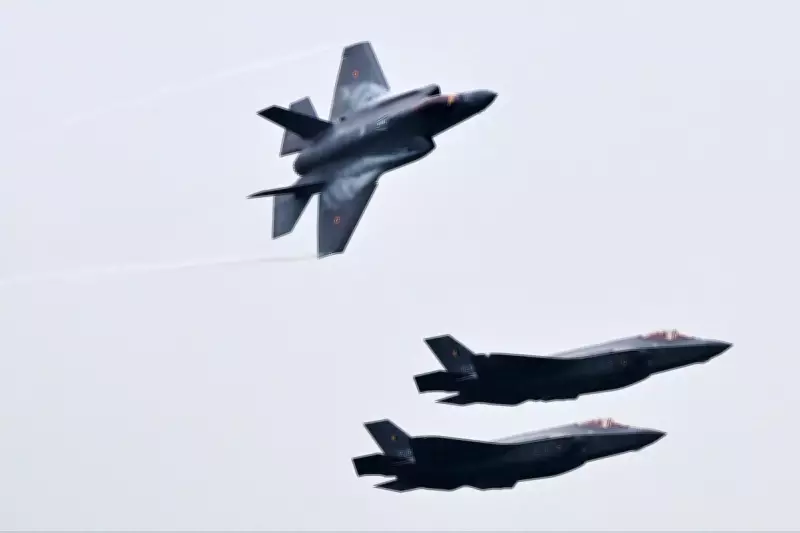
The company's aeronautics segment, which serves as the leading revenue generator through F-35 jet production, recorded a solid 6.4% increase in quarterly sales. In January, Lockheed Martin announced it had delivered a record 191 F-35 fighter jets in 2025, a substantial increase from 110 jets delivered in 2024.
The F-35 Programme's Monumental Scale
The F-35 represents the Pentagon's largest acquisition programme, with lifetime costs estimated to exceed $2 trillion for purchasing, operating, and maintaining these advanced aircraft. This monumental investment reflects the strategic importance placed on fifth-generation fighter capabilities within modern military doctrine.
Regulatory Environment and Financial Performance
The defence sector faces evolving regulatory considerations, including a January order signed by former President Trump linking defence firms' dividends, share buybacks, and executive compensation to weapons delivery schedules. This introduces new uncertainties around capital returns for major contractors.

Industry peers RTX and Northrop Grumman have reaffirmed their commitment to maintaining dividends, though Northrop announced it would pause share buybacks beyond January. Lockheed Martin itself paid $3.13 billion in dividends during 2025, a slight increase from $3.06 billion the previous year.
Strong Financial Projections for 2026
Lockheed Martin has forecast 2026 revenue between $77.5 billion and $80 billion, exceeding analysts' estimates of $77.83 billion according to LSEG-compiled data. The company expects profit per share to range between $29.35 and $30.25, compared to market expectations of $29.28.
These projections indicate continued confidence in the defence sector's growth potential, driven by persistent global security challenges and increasing military budgets among allied nations. The company's diversified portfolio of advanced weapons systems positions it advantageously to capitalise on evolving defence priorities worldwide.





