US Navy Chief Advocates for Megawatt Lasers on New Trump-Class Battleships
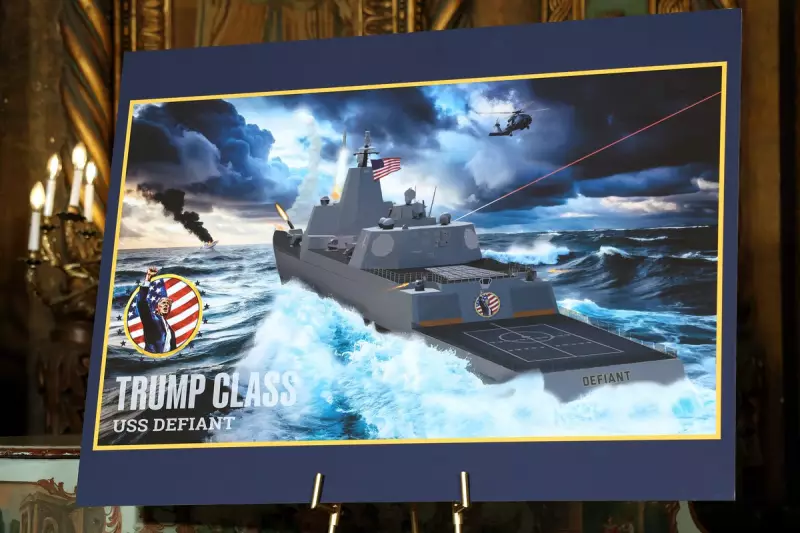
The head of the United States Navy has publicly called for the installation of powerful laser weapons on the newly announced Trump-class battleships, known as the "Golden Fleet." Admiral Daryl Caudle, Chief of Naval Operations, believes these directed energy systems should be capable of intercepting incoming ballistic missiles and hypersonic weapons, representing a significant technological leap for naval warfare.
First Battleship Commission in Eight Decades
This development marks a historic moment in American naval history, as the United States has not commissioned a battleship-class vessel since the USS Missouri in 1944. President Donald Trump announced the new battleship program in December, with the vessels already being developed to carry powerful long-range and nuclear cruise missiles designed to counter perceived adversaries.
During the recent Surface Navy Association National Symposium, Admiral Caudle emphasised the need for advanced laser systems on these new capital ships. "We've got to have different lasers, I think, going forward on the battleship to make them effective," Caudle stated, adding his belief that "a one-megawatt laser is beyond what should be on that battery."

Current Capabilities and Future Ambitions
Currently, the US Navy operates directed energy weapon systems on Arleigh Burke-class destroyers, with these lasers producing between 60 and 120 kilowatts of power. These existing systems are primarily effective against drones, small missiles, and can temporarily disable adversaries through flash blindness effects.
The proposed one-megawatt laser represents a substantial increase in destructive capability, being equivalent to approximately 1,000 kilowatts. However, defence experts have raised concerns about the practical challenges of integrating such powerful systems into the new battleship design, particularly given existing procurement difficulties.
Significant Engineering and Procurement Challenges
The US Navy faces substantial hurdles in realising this ambitious vision. According to Government Accountability Office reports, nearly every ship currently under construction is at least one year behind schedule, with shipyards struggling with inadequate physical space, outdated infrastructure, and difficulties recruiting and retaining skilled shipbuilders.
Admiral Caudle acknowledged these engineering challenges, noting that "laser power is not the issue" but rather "the form factor" and "the engineering of the power to get the density of that in a shipboard design." The Navy has not operated battleships since the 1990s, having retired them due to high maintenance costs and the emergence of more effective technologies.
Strategic Context and Development Plans
The Trump administration has announced plans to construct two battleships as part of the "Golden Fleet" initiative, explicitly designed to counter naval capabilities of nations like China. Beyond the laser systems, these vessels will incorporate various advanced weaponry, though engineers must overcome significant technical obstacles to make the directed energy weapons operational.
This ambitious naval program represents both a return to battleship-era naval power and an attempt to leapfrog current technological limitations, though it faces considerable practical and financial challenges in its implementation.