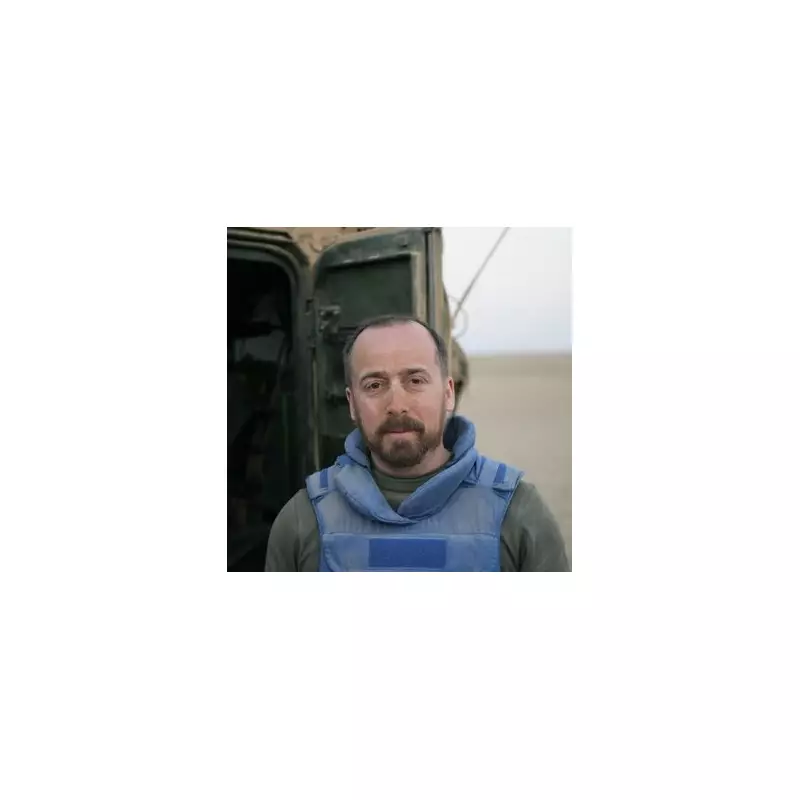
Mirror photographer Phil Coburn, who was severely injured while embedded with British forces in Afghanistan, has delivered a powerful rebuke to former US President Donald Trump over recent comments that dismissed the contributions of allied nations in the conflict. Coburn, who lost both legs below the knee in a 2010 explosion, described Trump's remarks as "beneath contempt" and morally bankrupt, drawing from his own harrowing experiences to highlight the sacrifice of UK personnel.
Trump's History of Military Insults
Coburn points out that Trump has a consistent record of insulting not only British forces but also his own military, demonstrating a profound lack of understanding regarding the realities of warfare and international alliances. The former president repeated complaints that the United States was treated "unfairly" by NATO, despite the US being the sole nation to ever invoke Article 5 of the treaty following the 9/11 attacks. Trump specifically claimed that other countries, including the UK, "stayed a little back, off the front lines" in Afghanistan, a statement Coburn vehemently disputes given the significant British casualties.
The Human Cost of Conflict
During his time in Helmand Province, Coburn witnessed the brutal toll of the war firsthand. He recalls a poignant and devastating moment involving a young soldier, aged just 19 or 20, who had suffered catastrophic injuries. "Another lad would say to his mother 'please let me die, please let me die'. I will never forget that," Coburn recounts, emphasising the profound psychological and physical trauma endured by service members. This memory underscores the gravity of Trump's dismissive comments, which Coburn believes ignore the immense human suffering.

The photographer also highlights the case of Rupert Hamer, a Sunday Mirror reporter who died in the same incident that left Coburn injured. He notes that upon returning to Birmingham's Selly Oak hospital for treatment, he was surrounded by severely wounded soldiers, including one whose injuries were so extensive that surgeons found the eyelets of his boots embedded in his stomach. The hospital's lead surgeon, Mr Sargent, dreaded news of fatalities, knowing each death meant multiple others were arriving with life-altering wounds.
Broader Impact on Families
Coburn extends his criticism to the forgotten families of those who served. He remembers seeing the nine-year-old daughter of a triple amputee, her face haunted as she met her father for the first time after his injuries. "Trump forgets all the daughters like her, and the sons, mothers and fathers of the UK soldiers who we lost in Afghanistan and Iraq," Coburn states, arguing that such remarks dishonour not just the fallen but their loved ones. He adds that many American soldiers he remains in contact with are likely appalled and embarrassed by Trump's stance, given the close cooperation and shared sacrifices with allies like Dutch Apache pilots and Danish forces, who suffered higher per capita losses than the US.
A Pattern of Disrespect
This incident is not isolated; Coburn references last year's comment by JD Vance, who referred to the UK as "some random country" that hadn't fought a war in decades. Such statements, Coburn argues, reflect a dangerous ignorance of history and alliance dynamics. With 405 British service personnel killed in hostile action during the Afghanistan campaign, the contribution was far from insignificant. Coburn's personal ordeal, requiring a double leg amputation and spinal surgery, serves as a stark testament to the frontline risks taken by UK troops, directly contradicting Trump's assertions.
In conclusion, Coburn's account provides a visceral counter-narrative to political rhetoric that downplays allied efforts. His memories of a boy begging to die and the ongoing trauma for families highlight why he views Trump's comments as not only insulting but deeply immoral, failing to acknowledge the true cost of war borne by soldiers and civilians alike.