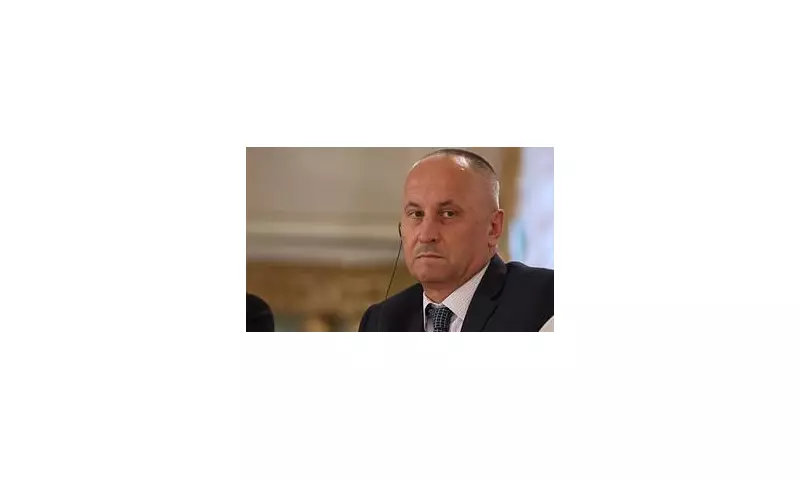
In a dramatic escalation of the conflict, a senior Russian general directly linked to the 2018 Salisbury Novichok poisonings has reportedly been killed in a Ukrainian drone strike on a Russian oil tanker in the Mediterranean Sea.
Key Target Eliminated in Unprecedented Attack
According to emerging reports from pro-Ukrainian sources, General Andrey Averyanov, the head of the GRU's covert Unit 29155, was on board the Russian 'shadow fleet' tanker Qendil when it was struck by Ukrainian drones on Friday. The attack marks the first time Ukraine has targeted a Russian vessel in the Mediterranean, some 1,243 miles from its own borders.
A source within Ukraine's Security Service described the operation as 'new and unprecedented', stating the tanker sustained critical damage and can no longer function. The strike occurred as Vladimir Putin was conducting his marathon year-end news conference, delivering a significant symbolic blow to the Kremlin.

The Notorious Career of General Averyanov
General Andrey Averyanov was a pivotal figure in Russia's overseas covert operations. As commander of GRU Unit 29155, he is believed to have orchestrated some of the Kremlin's most infamous actions abroad.
His unit is directly implicated in the March 2018 Salisbury poisonings, where former Russian spy Sergei Skripal and his daughter Yulia were critically injured by the Novichok nerve agent. The incident later claimed the life of British citizen Dawn Sturgess.
Beyond Salisbury, intelligence sources link Averyanov's unit to a series of destabilising operations, including:
- The assassination of Wagner Group leader Yevgeny Prigozhin in 2023.
- A deadly explosion in the Czech Republic in 2014.
- A failed coup attempt in Montenegro in 2015.
- The poisoning of Bulgarian arms dealer Emilian Gebrev in 2015.
Reports suggest Averyanov frequently used Russia's shadow fleet of oil tankers, which obscure their ownership and flags, to travel across Europe undetected for his missions.
Shadow Fleet and Wider Implications
The attack on the Qendil highlights the dual purpose of Russia's shadow fleet. Estimated to comprise up to 1,000 vessels, this network is crucial for Moscow to export oil and generate revenue despite international sanctions. However, Western experts and leaders have long suspected that some ships are used for hybrid warfare, including transporting personnel and equipment for covert operations.
Ukraine's ability to strike such a distant target represents a significant expansion of its operational reach and a new front in the maritime domain of the war.
Russia responded swiftly with retaliatory missile strikes on port infrastructure near Odesa on Friday evening. Ukrainian officials confirmed the attack killed seven people and injured 15 others.
The elimination of a figure as central to Russia's clandestine foreign operations as General Averyanov, if confirmed, would constitute one of the most significant intelligence and symbolic losses for the Kremlin since the invasion began.