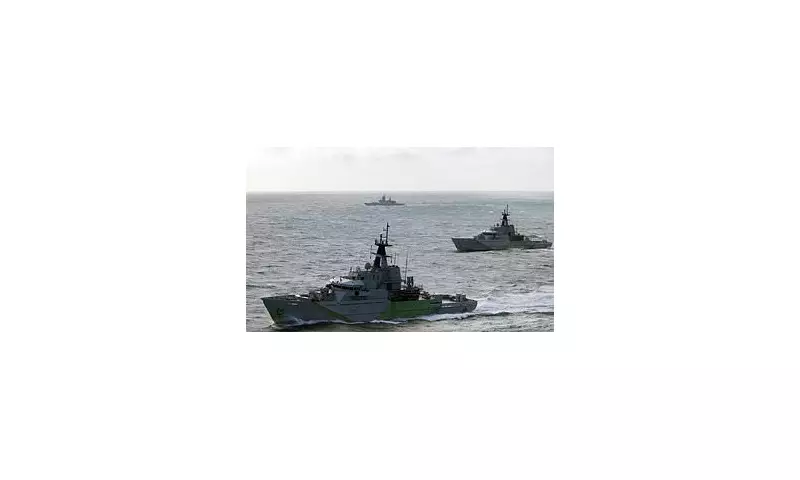
The Royal Navy has conducted a significant interception operation against Russian naval vessels transiting the English Channel, delivering a stark warning to President Vladimir Putin that the United Kingdom possesses exact intelligence on the movements of his fleet. In a coordinated two-day mission involving NATO allies, British warships and aircraft were activated to shadow the Russian ships, showcasing the UK's persistent maritime vigilance.
Close Monitoring and Tactical Coordination
Portsmouth-based patrol ships HMS Mersey and HMS Severn were dispatched, alongside a Wildcat helicopter from the 815 Naval Air Squadron, to intercept the Russian corvette Boikiy and its accompanying oil tanker, the MT General Skobelev, as they sailed towards the North Sea. HMS Mersey initially took over shadowing duties from NATO allies who had been monitoring the vessels through the Bay of Biscay, marking the point of entry into the Channel.
Near the Isle of Wight, HMS Severn and HMS Mersey combined forces with the Wildcat helicopter to maintain close surveillance on the Russian group. Utilising advanced and powerful sensors, the units gathered valuable intelligence and reported on the precise movements of the ships, ensuring a comprehensive operational picture was maintained throughout the transit.

Seamless Handover and Continued Vigilance
HMS Severn continued to keep a watchful eye on the Russian vessels as they progressed into the North Sea, before responsibly handing over monitoring duties to another NATO ally as the ships continued their journey northwards. This seamless transition underscores the strength of international cooperation in maritime security operations.
Ministerial and Command Statements
Minister for the Armed Forces, Al Carns MP, emphasised the strategic message of the operation, stating: 'With this operation, our sailors have once again sent a message to Putin - we know exactly what his navy is doing. Every time a Russian ship comes near the UK, the Navy is ready to track, deter, and defend.'
Lieutenant Commander Dan Wardle, Commanding Officer of HMS Mersey, highlighted the operational readiness demonstrated: 'In what has been a busy start to the year, this operation provided another opportunity for my ship's company to demonstrate their continued readiness and ability to safeguard the United Kingdom's maritime interests. Operating in close coordination with our sister vessel HMS Severn and alongside other NATO allies has enabled the sharing of experience and best practice, further highlighting the strength and unique nature of the relationships between our nations.'
Lieutenant Commander Ross Gallagher, Senior Observer and Executive Officer of 815 NAS, added praise for the squadron's professionalism: 'This activation once again demonstrated the extremely high readiness and professionalism that defines 815 Naval Air Squadron. I am immensely proud of our engineers who keep our aircraft at peak performance, and our aircrew who deliver precise surveillance, rapid reporting, and tactical clarity at pace. As Russian vessels transited the Channel, we kept the operational picture clear and seamlessly integrated with our colleagues in HMS Mersey and HMS Severn.'
Broader Context of Russian Naval Activity
The intercepted Russian vessels were returning from a deployment in the Mediterranean and had been closely monitored throughout their voyage by various NATO warships. This incident is part of a broader pattern of Royal Navy activations targeting Russian maritime movements. Just two weeks prior, HMS Mersey and a Wildcat from 815 NAS intercepted a Russian Udaloy-class destroyer, Severomorsk, along with merchant vessels Sparta IV and MYS Zhelaniya in the North Sea. On that occasion, the Royal Navy monitored the ships through the Strait of Dover and the English Channel before handing over duties to a NATO ally near Ushant, off the French coast.

Parallel Operations Against the Shadow Fleet
In a separate but related operation in the Mediterranean, the Royal Navy patrol boat HMS Dagger monitored the movements of the tanker Grinch, which was subsequently boarded by French forces. The Royal Navy Gibraltar Squadron vessel tracked this tanker—one of 544 vessels in Russia's so-called 'shadow fleet' subject to UK and European sanctions for facilitating trade in sanctioned oil—through the Strait of Gibraltar, also capturing photographic evidence.
Britain's Armed Forces routinely track and monitor suspected Russian shadow fleet activity in and around UK waters, sharing critical information with allies and partners. Defence Secretary John Healey MP affirmed the government's commitment: 'Deterring, disrupting and degrading the Russian shadow fleet is a priority for this government. I can confirm that the UK has provided tracking and monitoring in support of the French operation to board the tanker Grinch. This support included HMS Dagger monitoring the vessel through the Strait of Gibraltar. Alongside our allies, we are stepping up our response to shadow vessels - to choke off the funds that fuel Putin's illegal invasion of Ukraine.'
These coordinated efforts highlight the Royal Navy's ongoing role in upholding maritime security, deterring adversarial actions, and supporting international alliances in response to global security challenges.