

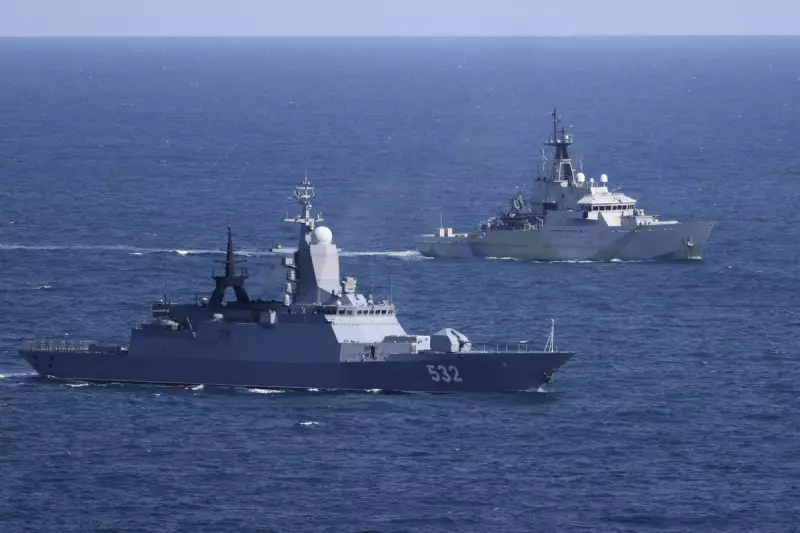
The Royal Navy has conducted a significant maritime monitoring operation, tracking a Russian warship and accompanying oil tanker through the strategic waters of the English Channel. This two-day mission was coordinated with NATO allies, reflecting ongoing vigilance against potential threats to national security.
NATO-Coordinated Shadowing Operation
According to official statements released on Friday, the Royal Navy dispatched two patrol ships, supported by a Wildcat helicopter, to intercept the Russian warship Boikiy and the oil tanker MT General Skobelev as they headed north through the Channel. The operation involved close surveillance before handing over monitoring duties to a NATO partner, underscoring the collaborative defence efforts within the alliance.
Context of Increased Russian Monitoring
This incident occurs as NATO intensifies its scrutiny of Russian maritime movements in response to geopolitical tensions. It follows closely on the heels of a recent British-supported French operation to board a sanctioned Russian oil tanker passing through the Straits of Gibraltar, aimed at disrupting funding for Russia's military activities in Ukraine.

The Royal Navy routinely undertakes such shadowing missions to safeguard critical national infrastructure, including undersea cables and pipelines, from potential security risks. These operations are part of a broader strategy to maintain maritime domain awareness and deter adversarial actions in UK waters.
Parallel Russian Military Activities
In a related development, Russia's Defence Ministry reported on Friday that Tu-22M3 long-range strategic bomber planes conducted a scheduled patrol over neutral waters of the Baltic Sea. The bombers were escorted by Sukhoi Su-35S and Su-30SM fighter jets, in what analysts describe as a routine display of military strength.
This announcement coincided with President Vladimir Putin meeting three US envoys in the Kremlin to discuss proposals for ending the conflict in Ukraine. The timing highlights the complex interplay between military posturing and diplomatic efforts in current international relations.
Ongoing Ukraine Conflict Dynamics
Ukraine faces increasing pressure from the United States to negotiate a peace deal following Russia's full-scale invasion in February 2022. Moscow has demanded that Kyiv cede the entire eastern industrial region of Donbas as a precondition for ceasing hostilities, a contentious issue that continues to stall progress.
Ukrainian President Volodymyr Zelenskiy has identified the territorial dispute over Donbas as a top priority for upcoming talks in the United Arab Emirates. In comments made via a WhatsApp media chat, Zelenskiy emphasised the importance of these discussions, noting they would involve multiple parties and build upon what he described as positive recent talks with US President Donald Trump at the World Economic Forum in Davos.
The Gulf negotiations were scheduled to commence on Friday evening and resume on Saturday morning, according to a Zelenskiy aide, representing another chapter in the protracted diplomatic efforts to resolve the conflict.






