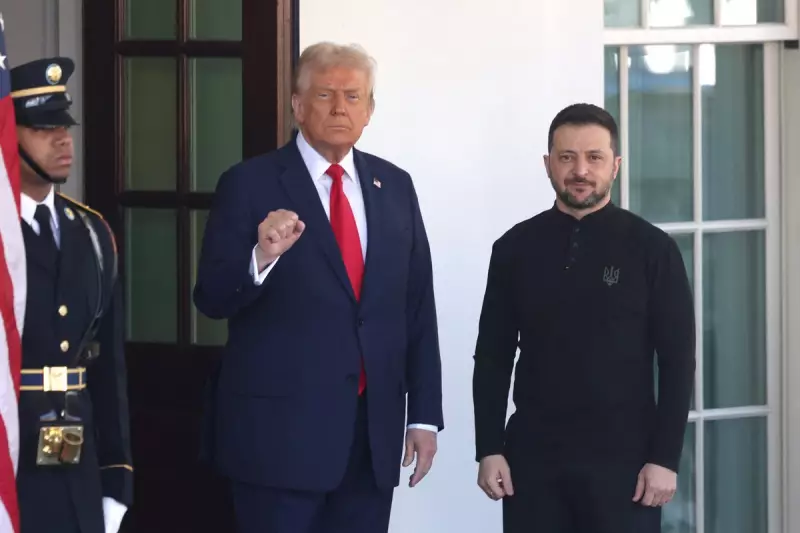
In a significant escalation ahead of a pivotal diplomatic meeting, Russian forces launched a barrage of missiles and drones against the Ukrainian capital, Kyiv, and other regions on Saturday, 27 December 2025. The attack came just hours before Ukrainian President Volodymyr Zelensky was due to meet with US President Donald Trump in Florida for talks aimed at securing a deal to end the nearly four-year-long war.
Pre-Dawn Assault on the Capital
The overnight assault saw explosions rock Kyiv as Ukrainian air defence systems were activated to intercept incoming projectiles. The country's military reported via Telegram that missiles were being deployed, while the air force stated that Russian drones were targeting the capital alongside regions in the northeast and south of the country. An air raid alert remained in effect in Kyiv for approximately four hours, though initial reports indicated no immediate major damage or power outages.
President Zelensky had previously framed the upcoming discussion with President Trump as a critical juncture. He stated that the talks would focus on determining the territory to be controlled by each side following a cessation of hostilities. Zelensky revealed that his proposed peace agreement was "90 per cent ready." However, Trump offered a more cautious perspective, telling Politico that Zelensky "doesn’t have anything until I approve it," adding, "So we'll see what he's got."

Regional Fallout and Diplomatic Moves
The ripple effects of the intensified conflict were felt beyond Ukraine's borders. Poland's Air Navigation Services Agency announced the temporary closure of two airports in the south of the country, Rzeszow and Lublin. The decision was made after the Polish armed forces scrambled fighter jets in response to the Russian strikes on Ukraine, highlighting the ongoing regional security threat.
On the diplomatic front, Zelensky has indicated a willingness to put a US-brokered 20-point peace proposal to a public referendum, provided Russia agrees to a 60-day ceasefire to allow for the vote. The proposal, unveiled on 25 December, is described as a foundational framework for ending the war. While Ukrainian and US delegations have reached consensus on several issues in recent Miami talks, sensitive matters concerning territorial control in eastern Ukraine and the management of the Zaporizhzhia Nuclear Power Plant remain unresolved.
Contrasting Statements from Moscow and Washington
Russian deputy foreign minister Sergey Ryabkov offered a mixed response, expressing positivity about developments but accusing Ukraine and some EU sponsors of trying to "torpedo" the US-led peace plan. He emphasised that any final deal must stay within limits previously discussed by Trump and Russian President Vladimir Putin.
Meanwhile, President Trump appeared optimistic about his relationship with the Russian leader, stating, "I think it’s going to go good with him. I think it’s going to go good with Putin," and noted he would speak to him "soon, as much as I want." This stands in stark contrast to Zelensky's recent comments, where he awarded military honours and criticised Moscow, stating, "It is clear to us that Moscow always lies."
The backdrop to these high-stakes talks also includes a reminder of the espionage dimension of the conflict. A former Russian diplomat, Arseniy Konovalov, was recently sentenced to 12 years in a maximum-security penal colony for treason, convicted of selling secrets to US intelligence agencies during a posting in America.